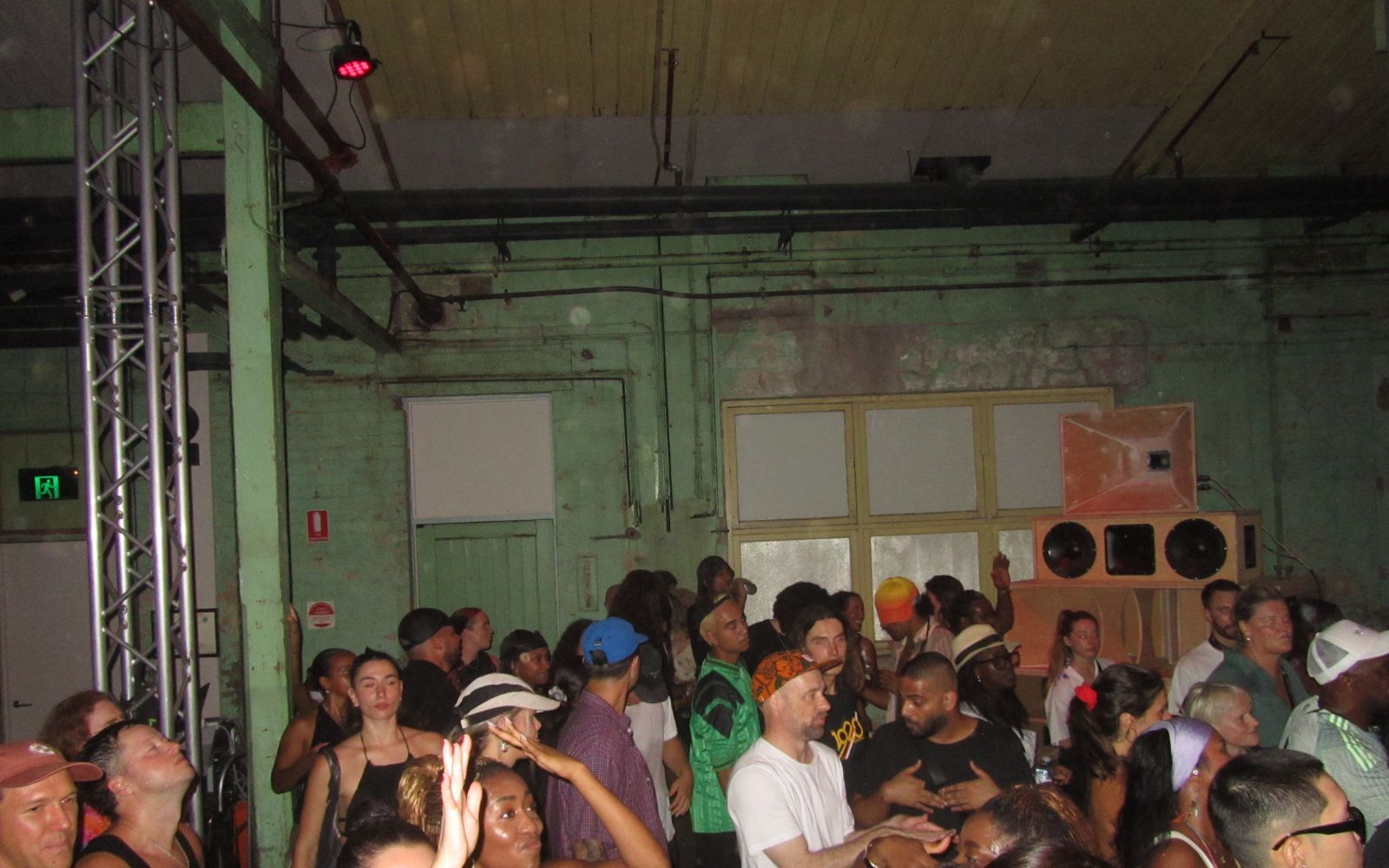
Melbourne has marked itself as the epicentre of sound system culture for Australia for the past 20 years.
Directly inspired by the scene in the UK, which has its roots in the Windrush generation and Caribbean immigration, the Melbourne scene has evolved and expanded slowly, with momentum for growth a constant uphill battle.
From venues generally not accepting sound systems into their space, to the actual monetary cost, it seems like building a sound system in Melbourne is an inaccessible undertaking.
However, despite all of these factors plus a pandemic, it seems that Melbourne is entering a golden era for sound system culture coming into summer 2025, and to see how it got to this point, it’s pertinent to look back into the past.
Melbourne sound system events – December
- Jamaican Music and Food Festival with Heartical Hi-Powa, Solidarity Sound and DIY Hifi, Saturday 6 December, tickets: here
- Tribe Sound System at the Night Cat, Saturday 6 December, tickets: here
- Gateway Festival, Low Pass stage powered by Folly Hifi, Saturday 6 December, tickets: here
- Free Sunday Sessions at 3 Ravens Brewery with Sub Yard Sound System, Sunday 7 December, more info: here
- Free Sunday Sessions at 3 Ravens Brewery with Adrian’s Wall Sound System, Sunday 21 December, more info: here
- Stepper with Goody’s Hifi at The Toff, Saturday 13 December, tickets: here
- NYE Dub n Grub with Heartical Hi Powa, Wednesday 31 December, tickets: here
Check out our gig guide, our festival guide, our live music venue guide and our nightclub guide. Follow us on Instagram here.
View this post on Instagram
What is a sound system?
What takes a speaker box beyond just a tool for amplifying music, and turns it into a pillar of a community? A sound system consists of three main components; the equipment, the crew, and the sound.
The equipment encompasses the speakers and speaker boxes, which are all hand-built and unique designs, powered by multiple amplifiers to produce their own unique sound.
The crew is the people behind the sound that make the events possible. This includes an operator or ‘sound boy’, who shapes the sound by working the ‘pre-amp’, the DJ or ‘selector’, who selects which tracks will play, and often an emcee who will talk over the music to connect to the audience, and ‘box boys’, who are often younger members of the crew, looking to learn the ropes and provide muscle to push boxes and equipment.
The sound informs every decision in regards to equipment, crew and community. Whether you want your sound system to play reggae, techno, jungle, or dubstep, determines how you will approach building your sound, and the crew that surrounds the speakers.
From the UK to Melbourne: how sound system culture found its way down under
In the 1950’s, the UK received an influx of immigrants from the Caribbean and other former British colonies, which is known as the ‘Windrush generation’. At the time, these migrant communities were not accepted into traditional club spaces.
“We needed our own sound system to have our own parties because of the racism practiced by the clubs, because even though they were playing black music, we still couldn’t get into those clubs. So because of that, we had to have our parties in houses, community centres or church halls.
“They were called blues parties. And those were our clubs, until it became the warehouse scene in the in the late eighties. So [a sound system] is a cornerstone. It’s a meeting place”. – Zepherin Saint [Tribe Sound System]
At the same time there was a large group of people, involved in the free party scene of the 1980s into the 90s with the ‘traveller’ scene, a movement inspired by the post-punk movement and made up of disenfranchised individuals of the Thatcher era, choosing to live an alternative lifestyle of travelling in vans and trucks with sound systems, finding abandoned sites and setting up raves.
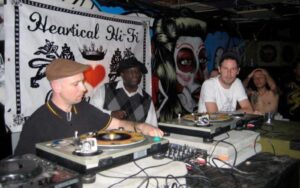
Derek Marr, AKA Stryka D [Heartical Hifi] was a young man enthralled in this scene at the time, and through events like Notting Hill Carnival, discovered the roots of Sound System Culture.
Derek moved to Australia 2001, to a country whose sound system culture was inspired by the activism of the traveller scene, however the movement remained extremely loose and underground.
Milton Westcarr, a former sound man for Jah Trinity Sound System in the UK, had recently moved to Australia and began building what was to become Earthshaker Sound system in Adelaide, and Bedlam Sound System had shipped from the UK to power a dance in conjunction with ‘Earthdream’ in 2000, which also involved Virus Sound System collaborators Mutoid Waste Co.
In 2003, inspired by Milton, and seeing an opportunity to create something fresh in Melbourne’s underground, Derek began construction on Heartical Hifi’s first ‘J-Bin’ or ‘Scoop’ designed sub boxes; a design used by many of the legendary Caribbean sounds from the UK – Channel One, Iration Steppas, and Aba Shanti I, to name a few. It would not be until 2005 when the first 4-scoop stack was completed.
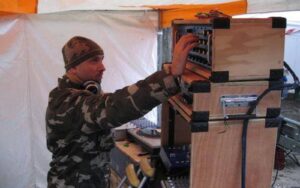
“There were no sound systems that I was aware of that were playing ‘message music’; reggae and dub, at that time in Australia,” Marr says.
Despite a vibrant underground music community, musical venues were mainly dominated by live rock bands or DJs playing more crowd pleasing genres, that kind of thing” – Stryka D
Heartical then laid dormant for another two years, with difficulty finding a suitable venue to play; a hurdle that all sounds today still deal with, as many clubs are bound by strict noise pollution laws, and many struggled to understand the cultural significance and importance of bringing a sound system in, especially when they have their own PA equipment.
That was until an old ANZ bank vault in the basement of Flinders Street Hotel was repurposed into a music venue in 2007. With no sound restrictions, Heartical Hifi finally found a space to play the music in the way it was meant to be played.
This venue was called The Night Owl [now Sub Club], and it would be the first venue to allow Derek to bring in the sound system in. The event was dubbed Dub Club Melbourne Basement Sessions; the only monthly night in Melbourne pushing traditional Roots, Reggae and Dub music on a purpose-built Sound System. Alongside it was Wobble, a club night pushing more up-tempo and high energy sounds such as Drum n Bass and Dubstep, which brought more people into the scene from outside genres.
“I think people were intrigued into what we were trying to do, and, we almost had to take an educational approach to it. So if we could make a flyer, on the flip of the of the hand flier there’ll be like a blurb about the culture or its history, so we felt that we sort of had to teach people about what soundsystem culture is, and its history.” – Stryka D
Dub Club Melbourne became the cornerstone for a small community, being one of Melbourne’s only club nights that were pushing a traditional roots sound and bass music on purpose-built sound systems, and the Night Owl became the cornerstone for the small sound system community.
Derek then set his sights on Sydney Road Street party; a community event hosted by the Merribek council on the first Sunday of March, where the street would be converted into a bustling market, with venues packed and live music funded by the council. Seeing the potential in this event, and mirroring the roots of free street parties in the UK, Derek would use the parking lot of St. Ambroses Hall on Albert st to setup Heartical Hifi for a free dance each year.
“Derek’s Sydney Road Carnival was a huge event. I think the biggest one probably had 1200 or 1500 people at it. He had 16 scoops in and it was in a car park, it was free entry, he was outside as a renegade part of a community event,’
People would check out the council sanctioned stuff and then Derek did his thing, and they see the renegade dance and go, wow, what’s this? And that brought a lot of people into it.” – Adrian Hough, Adrian’s Wall Sound System.
2012 – 2020: The Melbourne momentum builds
In 2011, Adrian Hough of Adrian’s Wall landed in Melbourne from his small town in the UK, High Wycombe. Derek, giving his address for Adrian to ship his sound system from the UK, wasted no time in expanding his vision for Melbourne’s sound system scene, and in May of 2012, Dub Club Melbourne hosted Australia’s first known traditional sound clash, with Adrian’s Wall and Heartical Hifi both playing at the same dance.
This would be Australia’s first known taste of a traditional, roots-based soundsystem clash, and the significance of this dance would push sound system culture in Melbourne into a new era – up until then, Heartical Hifi was the sole purveyor of soundsystem culture in Melbourne. Suddenly, the community had seen the competitive side of the culture, and the individuality of each sound, which inspired the community to take action and bring their own approach to Sound Systems
Over the next 8 years, Melbourne slowly saw more crews begin to take their own approach to sound systems. Inspired by the work of Derek over the years and later Adrian, many of the new sounds would debut at Dub Club’s Basement Sessions, or Adrian’s sound clash event, Forward Ever.
Solidarity Soundsystem, DIY Hifi, Goodys Hifi, El Gran Mono, Sub Yard Sound, General Feelings Sound, and Echo Chamber Sound are a few sounds that came up in this era, and are still pushing the culture towards where we are today, each bringing a unique flavour into the scene with inspirations varying wildly.
Community is the driving force of Sound System Culture. Many of the sounds that were built from 2012-2020 were either directly or indirectly assisted by the established members of the community. People like Chris, [Virus Sound System], Derek and Adrian all have worked to facilitate the growth of new sounds and crews. From providing them a platform to perform, to helping with questions and building boxes, it’s fair to say that many of the sounds that are around today would not exist without the community’s help.
“It has to be [community driven], there’s so much stuff you have to learn from pretty much nothing. You need the help of the entire community. It’s just impossible without it.” – H, Goodys Hifi
Field guide to the Sound Systems of Melbourne [2020] – A collaborative effort spearheaded by El Gran Mono to document all active sound systems in Melbourne at the time, with over 18 active sound system crews involved.
COVID to today: how a pandemic further ignited a movement
In 2020, the scene would experience a great reset. As was the case with virtually all live music, many members of the community could not survive the harsh lockdowns that Melbourne experienced through COVID, and many Sound System crews departed from the scene. Yet at the same time, job seeker, and harsh lockdowns meant that people in the community [particularly the younger crowd] had the time and money to undertake building speakers.
Sounds such as Housewife’s Choice, Rudi Soundsystem, Tribe Soundsystem, Hyper Global Hifi and Yabai Hifi have all established themselves in the scene post-covid, and are already core members of the community pushing the traditional side of sound system culture, while bringing a unique flavour and approach to the practice.
Since the lifting of the pandemic’s restrictions, Sound System Culture in Melbourne has seen even further growth, with the scene almost coming into a golden era as we enter summer of 2025. The second instalment of Heavy Congress in Nov this year, bringing 9 DIY Melbourne sound systems together at Rochford Winery, and the Return of Dub Club Melbourne after a decade hiatus back in Aug, are marking a distinct effort to bring sound system communities together, and expand sound system culture beyond the underground in Australia.
And at the same time, Melbourne’s sound system culture still functions as a thriving underground community. Younger sounds such as Yabai Hifi, Redback Sound, and Goodys Hifi are continuing to host exclusive DIY dances, with a heavy focus on community building and curation, echoing the free party scene of the UK, and bringing sound system culture into the “bush doof”.
“An underground community is authentic. That’s what it is. not trying to be somebody else. It’s also not being closed off or cliquey because that is not what an underground community is. It’s inviting,” – Zepherin Saint, Tribe Sound System.
It’s welcoming. And, it’s educational, because you’re you’re being introduced to new forms of music, new types of different types of people. And it’s got to be completely diverse.”
Australia is slowly building a name for itself in the wider sound system world, bringing with it the echoes of the UK’s free party scene in the 80s, yet slowly distinguishing itself from those UK and Caribbean roots that it was built upon as younger members of the community begin to build upon what’s happening in Australia.
Melding inspirations from Aotearoa, Colombia, Jamaica, the UK and our own Australian history, Melbourne’s sound system culture remains at the forefront for the rest of Australia, and is an underground movement to keep a close eye on coming into 2026.
For more information, head here.
