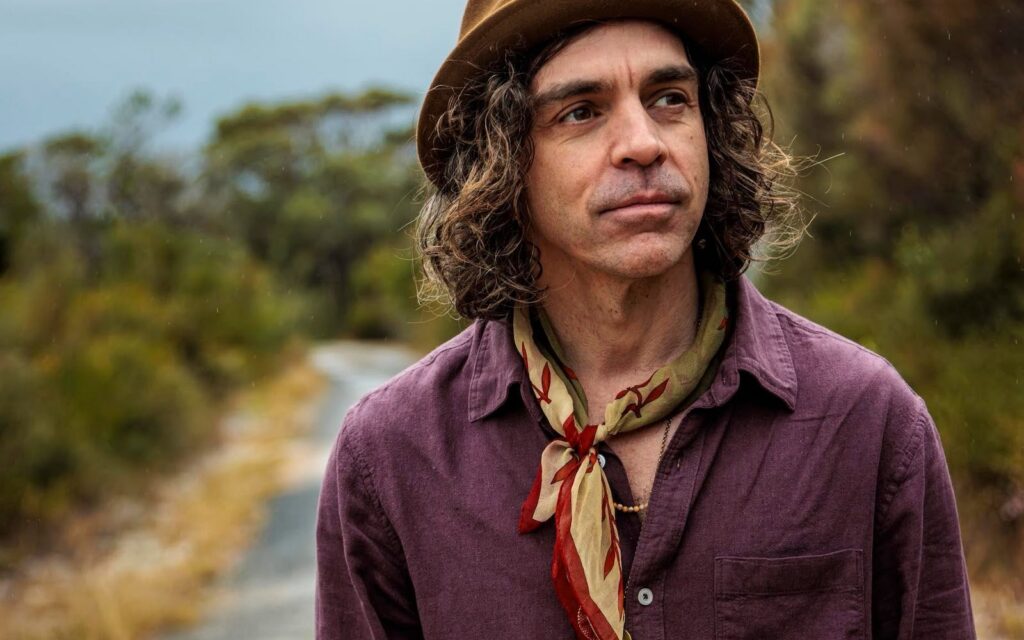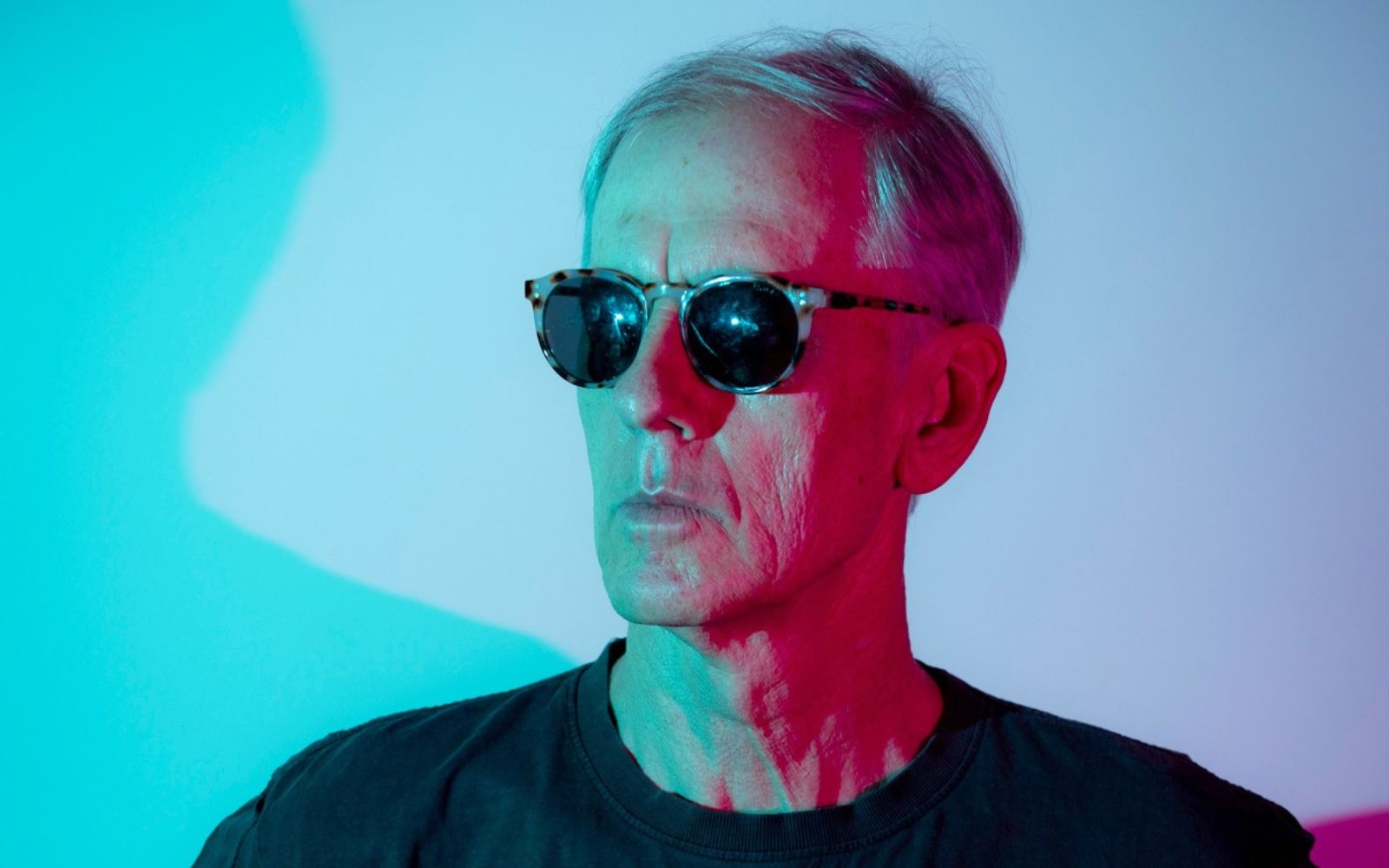
Robert Forster writes lyrics as one would a storybook, non-fiction as a pseudo autobiography, music journalism posed as a rulebook.
Robert Forster’s lyrics are questions left unanswered by a phantom incapable of reciprocating; the listener is left longing, ‘stranded at low-tide where the river bends’.
He describes love in small habits, as action.
The Go-Betweens began with Lee Remick — a song about romance before he’d experienced it; a Hollywood actress is cast as the love interest, though he has no time for clichés.
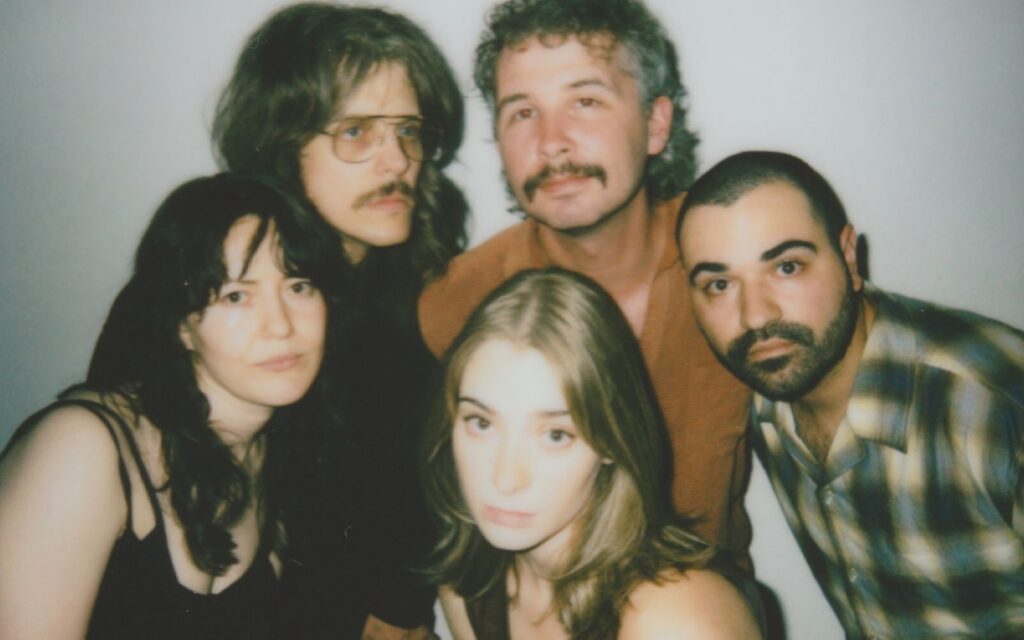
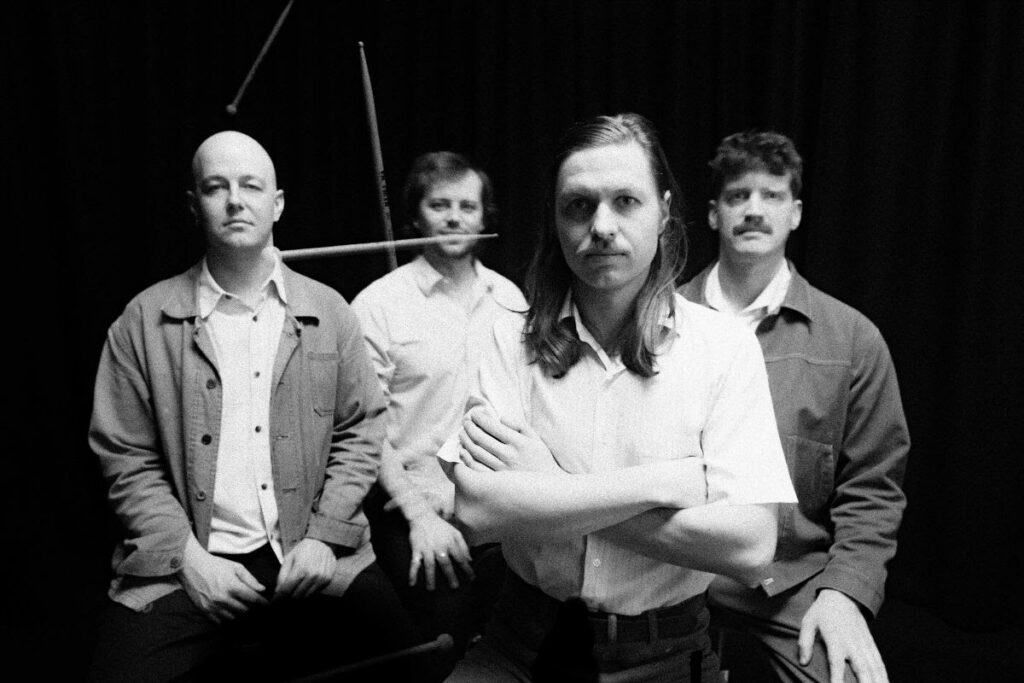
Six albums later, the five-piece band fissioned into a duo with the explosion of two inner-band relationships. Now, on September 12 at Thornbury Theatre, Forster returns to Australia with a Swedish band.
Robert Forster
- Thornbury Theatre
- 12 September
- Tickets here
Check out our gig guide, our festival guide, our live music venue guide and our nightclub guide. Follow us on Instagram here.
View this post on Instagram
I am of the generation which explored genre back to front.
I’d click through tabs open to Tumblr blogs, YouTube mixes, 8tracks playlists; the vast library of musical reference points laid out before me like a buffet to pick away at.
The albums of my virtual adolescence — such as Peter Bjorn and John’s Writer’s Block — paved the way towards their jangle pop predecessors like The Go-Betweens, which I reinvestigated in adulthood.
These journeys in genre felt as much a rite of passage as coming of age; as formative as one too.
Robert Forster’s discography as a love letter to the mundane
Where the internet serves as an open access archive, Forster’s discography acts as a chronological documentation of his relationship with love.
As with any faithful body of work, there is a through-line of reoccurring motifs. Where affection was once described in the daily ritual of washing your lover’s hair in the 1986 Go-Betweens single Head Full Of Steam, it now re-emerges in Forster’s present-day kitchen as Strawberries.
Tenderness is in the inherent knowing of one another’s habits; even when they are not physically present.
“I’ve written a song on guitar and I’ve got a melodic idea,” Forster reflects. “I’m standing in the kitchen and I’m eating another punnet of strawberries all to myself.”
“My wife is there, and she has joked to me that I always eat the whole punnet … and so I’m standing there, doing it again and suddenly I realise; ‘Well, this is the song,’ just as I realised that Lee Remick was the subject of that song all those years ago … as a twenty-year-old, [thinking] ‘Well, if there’s not someone real [as a love interest] in my life, then I will go to a film star that I liked and I’ll write a song about her.'”
Even when speaking to Forster over the phone, the mise-en-scène is set. Asked where he is presently, he replies, “I’m in suburban Brisbane … I have an old cane chair and I’m sitting in my driveway, talking to you.”
As an expat of the sunshine state myself, I’m acquainted with the cacophony of crows colouring the backdrop. I hear a gentle rustling and imagine the jacarandas dancing; the jasmine of Strawberries’ second track Good To Cry perfuming the air.
The Go-Betweens remain the great invoker of my homesickness, the soundtrack to my drives; responsible for the loss of a lot of shelf space and the most tender love song I’ve ever heard.
They’re a band so evocative of their origins that there is infrastructure under their name — a four-lane toll road stretched languid like a cat across the Brisbane River.
With Forster’s lyricism, the whole floor plan is rolled out before the listener.
Romantic and residential experiences co-habitate. One only needs to look at 1986’s The Wrong Road to see the roof, a room in a lighthouse near the park, a lightbulb which blinds … Listen again and see the picture-perfect lawn of Spring Rain: the hollowed-out pool, the dizzying cul-de-sacs, handwritten letters (of which his bandmate and ex-girlfriend Lindy Morrison collected).
Two years later on 16 Lovers Lane, cats in the alleyway ‘dreaming of birds that are blue’ are symbolic of a lover’s limerence, re-emerging as ‘bluebirds soaring in the sky’ in 2025’s Good To Cry; neighbours bickering, the image of love gone wrong.
Where domestic disputes boil over in 1988’s Love Goes On!, steam rises in Forster’s Breakfast On The Train. The third track off Forster’s latest solo album depicts a pair who know each other intimately yet never candidly acknowledge it.
They’re always in transition: chaining bikes, running for trains, a blur of motion and verbs. Where in Love Goes On! a girl is brought home, Breakfast On The Train exists within the grey area, the confines of a hotel room.
Lyrics like ‘They made love quickly once / There was a family in the room next door / They were woken by the banging and the roar’ transport the listener right back to the spectre of the neighbour.
As Forster habitually sings to a phantom lover, an adjacent presence is always felt; yet never seen. Quite literally so, in 1988’s The Wrong Road — where there are ‘ghosts in the next room’ who ‘hear you cough’.
As neighbours are regular run-ins, so too are the infrastructure which serves to homogenise suburbia: the movie house, shoe-maker, butcher, carwash, the train tracks of Little Joe re-emerging at every platform of Forster’s career.
Everything in his unwavering lyricism circles round the round-about. Every sight within the neighbourhood has been seen. The world of suburban Brisbane is small, the country in which it sits isolated; its recycled imagery symptomatic of these realities.
The listener is forced to consider the context in which Forster first emerged. As he declares, “It’s being able to think sideways. It’s being able to not think, ‘I’ve got to idolise this queen of the skies or this fantasy’ … It’s what is right in your life, like right there.”
Brisbane in the 1970s fell under the shadow of premier Johannes Bjelke-Petersen’s iron fist. The very year The Go-Betweens formed, he’d announced: “The day of political street marches is over. Anybody who holds a street march, spontaneous or otherwise, will know they’re acting illegally.”
I wonder, reckoning with the repression facing freedom of speech, of expression — is songwriting to Robert Forster simply another coded way of communicating feeling?
Does songwriting sit within the same vein as a social nicety instinctively actioned from a fear of saying how one truly feels, or is it the implied, raw truth; one which you can sing but not speak?
I pose this question to Forster. He’s tentative.
“Wow, uh, probably neither … That’s a hard question,” he replies.
“I just write what I find … close to me. I don’t have a great imagination. I want what I write to have meaning.
“That’s what I search for because I find a lot of lyrics that I listen to I’ve either heard before … or I find I can’t understand it. You know, it’s just a puzzle of words. So I try to be understood, also because I’m not a very straightforward person.”
The architecture of Australian cultural cringe
Australia is built on what architect Robin Boyd coined ‘Featurism’. There is an innate cultural insecurity harboured here, arising from our status as convicts. We are outcasts from elsewhere, burning with a self-hatred and green-eyed stare projected ever outwards.
Australia’s music scene is no exception. It has long stood under the looming dark of the Victorian Terrace’s imported shadow; our eyes cast bashfully at our feet, hypnotised by the tessellated tiles of Europe.
There is a proclivity to cower behind the iron-wrought facades of other countries — their styles, their sounds. We are a nation eager to impress; dolling our streets up in response to royal visits, international sporting events and exhibitions.
The mask of the clumsily re-appropriated Victorian Terrace, the misplaced Gothic Revival of Melbourne’s churches and banks, is to me the loudness associated with songs we widely consider to be provocative, impassioned and popular.
Yet, Forster’s catalogue reminds me of the quiet song’s resonance. In lieu of bells and whistles there is an unassuming, reverent technicality and intimacy; the stripping down of elaborate wallpaper.
If anything, it is the unacclimated terrace which best embodies the feeling of being in a stale relationship; the savouring of a souring aftertaste, of living in an inhospitable home.
Martin Newell of The Cleaners From Venus — a band of a familiar jangle pop persuasion and era — holds a mirror to Robert Forster’s metaphor.
Writing from the rubble after a partner has left him, the single Night Starvation entraps its listeners within a domestic shell and the reticent end of day, where ‘time is the only thing you left to me’.
The two-tiered terrace house, by virtue of its upstairs/downstairs division, acts as a quite literal barricade between two people. You can live in the same residence and yet lead very separate lives.
As with the first track off Forster’s latest release, both songs establish a tragi-comedy aspect, akin to the work of social realist filmmaker Mike Leigh’s Happy Go-Lucky (2008) and Another Year (2010).
It is agony expressed in laughter — a self-pitying Newell moaning about how ‘All [his] money’s just about spent / And somehow [he’s] got to pay the rent / On a terraced house two up, two down / [He] bet[s she’s] really laughing now’; Forster expressing opposites attracting as ‘I was corporate, you were folk, our differences we thought a joke / One that got funnier with time’.
Perhaps this explains the ironic inclination to entitle the 1999 Go-Betweens compilation album Bellavista Terrace: Best of The Go-Betweens. It is a deceptive title, one which conjures images of a singular building rather than the street in Paddington, Brisbane.
Quite fittingly, I think of Robert Forster’s catalogue as the lanky Queenslander; awkward, yet proud on its stilt podium.
Where the Victorian Terrace’s foundations were laid on the naivety of British settlers — a lack of consideration for the very soil on which they stood, “… the fierce summer sun accepted philosophically” — the Queenslander remains one of the few examples of Australian architecture constructed in consolidation with the climate.
It was a practical surrender to its vulnerability; the topography, the risk of flood, the rising heat. The aesthetics only followed after.
Just as the Queenslander relinquishes itself to subtropical rainfall, as does Forster’s lyricism. The forecast remains the same across his entire discography.
‘The day turns to grey’ on The Go-Betweens’ 1981 debut album Send Me A Lullaby and ‘a drizzle, a threat of rain’ persists forty-four years later on Breakfast On The Train. It is always monsoon season; always drenched in the imagery.
Lightning too, to describe his flash-bang romances; Lindy Morrison and himself ‘twin flames of lightning’ — a strike which ‘burns away [their] kindness’ in 2005’s Finding You, released when the band splintered into a two-piece.
Two duets, eighteen years apart
On Strawberries, Forster and Morén — who stands as producer as well as on stage — unlatch the balustrade gate.
The latest release can be seen as the opening of a new chapter simultaneously collaboratively and independently of their respective bands. It is a partnership which feels only natural when considering the similarities in their hit singles’ construction, released eighteen years apart.
Both 2006’s Young Folks and 1988’s Streets Of Your Town were presented as duets, demolishing the veneer of what romantic relationships should look like. The singles present an uncomplicated initial ‘spark’ between two people; an intimate experience bound to the present.
Yet, it could likewise serve as an unspoken duel. Unlike with Strawberries, both Morén and Forster’s concerted hits were constructed in a manner more hostile to the stage.
As Young Folks was envisioned and delivered as a duet between Morén and The Concretes’ Victoria Bergsman, the single had to be pitched up to cater for her range.
Inadvertently, this resulted in the distinctive whistling hook becoming more difficult to perform live. Yet the decision paid off: becoming a means of re-appropriating the wolf whistle.
Young Folks became a complicated song because the relationship we have to relationships is too — more than we could ever anticipate.
Love appears so easy on paper, on screen; it is an ever-abiding ‘honeymoon’ period. As fellow Go-Betweens label-mates The Smiths once crooned: ‘It’s so easy to love’, but it is also ‘so easy to hate’.
Similarly, where whistling served as a placeholder for another instrument in Young Folks, Streets Of Your Town was declared by The Go-Betweens violinist and backing vocalist Amanda Brown as “… always difficult to play live, if only because the flamenco guitar solo is done by [bass player] John Willsteed … It was much more of a studio construction, and maybe the best version of it ever is on the album [16 Lovers Lane].”
There are recurring refrains in both hits. ‘
We don’t care about the young folks / Talking about the young folks’ deflect outside judgement in Peter Bjorn and John’s hit.
The Go-Betweens’ Streets Of Your Town runs rings ‘Round and round, up and down / Through the streets of your town / Everyday I make my way / Through the streets of your town’.
In direct contrast to Forster and Morén’s previous works, Strawberries was tracked live at Stockholm’s INGRID studios. The Swedish band’s active performance was considered from the inception of its recording, in its arrangements. Overdubs were kept to a minimum.
The result is a refreshingly humble album with an ingrained sense of intimacy; the closeness that comes with a romance reflected in an equally intimate song structure.
There lies the sensation of sharing a room with a lover, a mirror to the experience of an audience cramped together in a venue with their favourite band.
The allure of simplicity is, time and time again, reminiscent of Robin Boyd’s cynicism.
I think back to his seminal 1960 text The Australian Ugliness; how he’d noted that “At any rate, the pattern of features, the concentration of frills and surface effects, was apparent as soon as the first native-born generation became of age to build its own houses, and the number of free immigrants grew to significant proportions.”
Perhaps in the same way first-generation Australians post the Second World War came of age with a more developed, critical eye on national design tastes, I am undergoing the same experience with the cultural cringe we feel towards home-grown arts and culture.
Finding a home in other musicians’ work
Being situated in the middle ground of three unique cultures has afforded me a singular opportunity: the chance to create my own model of culture, my own national identity in its own zeitgeist, my own image of what being Australian is — because I am that very image. It needn’t be more complicated than that.
I’d read a piece on The Go-Betweens from Melody Maker, written by Lynden Barber and published in October 1983. Immediately, I was struck by the first sentence — written by an Australian journalist for a weekly British magazine no less. The first sentence penned?
“The Go-Betweens’ country of origin has been of crucial importance in forging their identity.”
Lynden goes on:
“Unlike many groups in this country, they still maintain an admirable idealism — an uncompromising belief in their music and a distaste for the manipulative moguls operating inside the major record corporations. They don’t like Britain much, they’re here briefly because their record company is Rough Trade. It has faults, but they feel it’s been about the best option on offer.”
I stew on the Melody Maker excerpt as I sieve through my own conversation with Forster. When questioned about his decision to play with a markedly ‘Swedish’ band when his own career is so tethered to Brisbane, to Australia, Forster had declared:
“… I’m very much interested in new places, new people, and new cities. That’s part of the reason when Peter Morén … invited me over to Sweden [after] we met at Splendour in the Grass in 2016, to go over there and put a tour together … Why I just said ‘yes’, you know, that’s an invitation.”
“I’d never spent much time in Stockholm, and so I’m always up for new challenges, but I’ll never lose my Australian-ness. That’s just something that’s baked in. And so I feel confident, you know, going into other places and doing things with other musicians overseas, because I feel quite secure in who I am and what I do.”
Now, I’m returned to the present — six years away from home, wrapped up in a woolly robe instead of a beach towel — eyes still on the screen, ears still stuffed with earbuds.
I can pinpoint at this very moment why Robert Forster’s discography feels so deeply personal — as though he is peering out through the casement windows and straight into my soul, “let[ting] the light in” as he proclaimed in 2008’s The Evangelist.
Much like the trepidation of entering into the great unknown of a new relationship, embarking upon a new body of work is a great unfurling; a blossoming of oneself which lingers with the smell of beautiful bougainvillea strung over South Bank’s Arbour Walkway, unfazed by a homesick stomach.
“That’s the other thing, MJ, is that unexpected things happen,” Forster tells me.
“You know, like if you do good work … things can happen that you can never plan. And I think that’s one of the great wonders of, you know, making music or doing art is that you just don’t know where it’s going to go … Once you put it out into the world, anything can happen.”
The first track off Strawberries is an affecting three minute song entitled Tell It Back To Me.
Forster requests of the listener: ‘Tell me what you see / Tell it back to me / What do you see in the distance? / New love is old love is good love / We see it all’. It’s a song that is optimistic about all the possibilities of the future, as Forster himself is.
When asked about how it feels observing a new generation run with a scene he’d actively ushered — turn it into something which is both a homage and a reclamation — Forster had reflected:
“Well, I find it fantastic. I mean, I’m very happy that it’s turned out that way. Because you know, like when The Go-Betweens started … I had no idea … So now that … we get referenced, I find it absolutely amazing and a great compliment. I find it extraordinary.
“But I think that’s just the way that all art goes, you know — it’s one generation picking up something that the previous generation dismissed. And then, you know, they run with it.”
Tell It Back To Me epitomises what I find so poignant about Forster’s work. There is an acceptance of the human experience as a nuanced thing; a hotel room in the grand scheme of things that we have the keys to only once. His songs are open-plan living. It’s returning to the quaintness of your hometown after time away; stagnant, yet changed.
It is leaving the house with the burden of three coats upon your shoulders, yet equipped with the knowledge that the clouds always have their way of parting.
It is Brisbane, it is Sweden — it is universal.
For more information, head here.