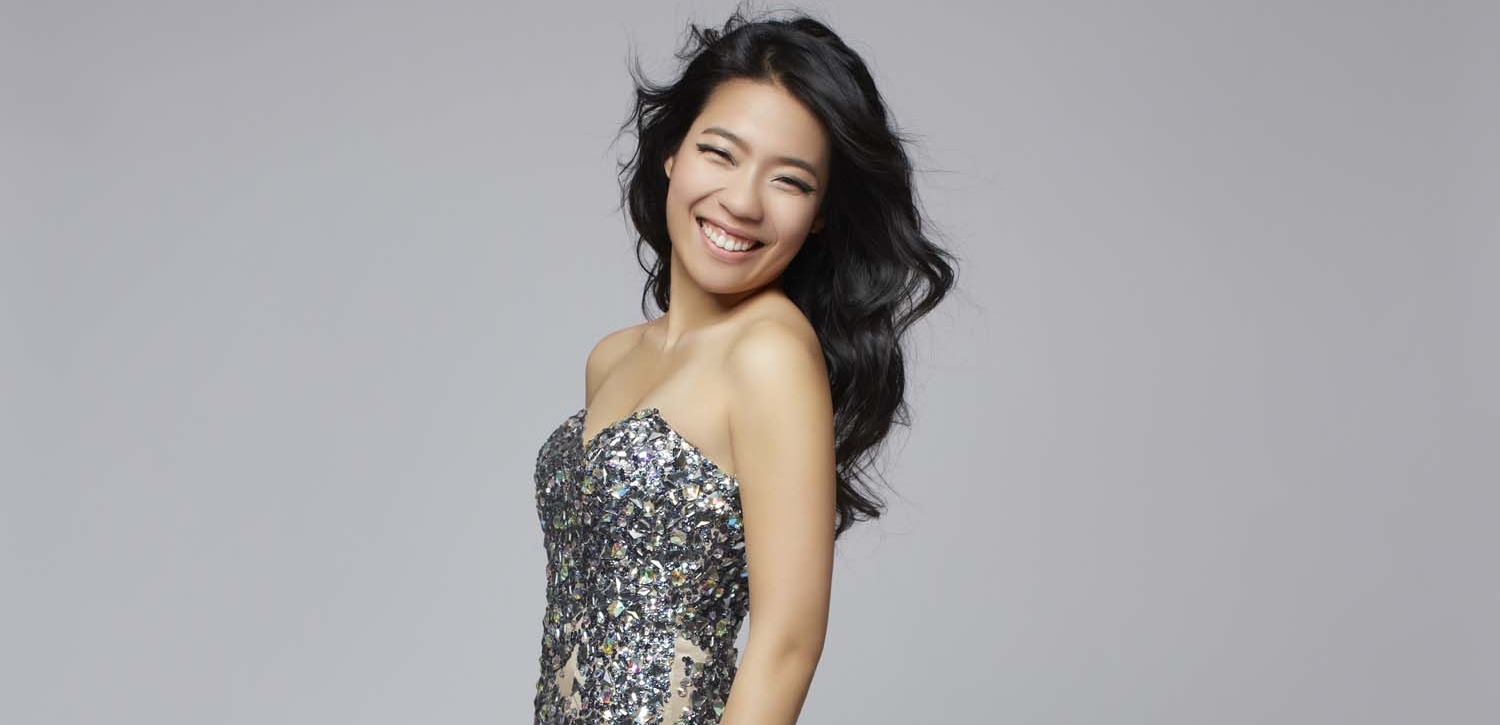
The MSO production will include excerpts from Prokofiev’s Romeo and Juliet, alongside Mussorgsky’s Night on Bald Mountain and Rachmaninov’s Piano Concerto No. 2. The two additional performances also come from Russian composers, both of whom worked prior to Prokofiev. Korean pianist Joyce Yang will be performing Rachmaninov’s Piano Concerto No. 2 – a work that she has great love and reverence for.
“It’s one of my favourite concerti,” she says. “I have performed it many times over the years, and I’m looking forward to playing it in Melbourne with the MSO.”
Yang’s become a world renowned pianist during the last decade, exhibiting her advanced skills while performing the likes of Albéniz, Debussy and Ginastera, and working with the New York Philharmonic, Chicago Symphony, Los Angeles Philharmonic, Philadelphia Orchestra, and symphony orchestras in Baltimore, Detroit, Houston, Milwaukee, San Francisco, Sydney, and Melbourne. Yang’s primary fixation, however, has been with Rachmaninov’s work – learning and performing the large majority of his compositions.
“Rachmaninov’s music has been very important throughout my career,” she says. “During the last decade I’ve performed all of his concerti, as well as a number of his solo compositions. His music possesses many unique powers. It can bring out certain emotions and feelings that performers and listeners wouldn’t otherwise have access to in daily life.”
Rachmaninov was active from the 1890s through until his death in the 1940s. The completed Piano Concerto No. 2 – containing a total of three movements – was first performed in 1901, and it played a big role in boosting the composer’s popularity and critical standing. Though, the circumstances leading up to its creation weren’t exactly rosy.
“Rachmaninov’s Symphony No. 1 had been harshly criticised following its premiere in 1897,” says Yang. “After this Rachmaninov became very depressed, and the depression slowed down his creativity. So the second piano concerto wasn’t written until several years after the symphony, and he dedicated it to the doctor who helped him overcome his writer’s block and depression [Nikolai Dahl].”
It’s difficult to say whether it’s in spite of or thanks to these personal difficulties, but Rachmaninov’s Piano Concerto No. 2 comprises myriad emotions, encompassing gleaming beauty and melancholic longing.
“The beginning is like an awakening,” says Yang. “The opening melody is an outpouring of emotions – an appeal to humanity’s shared traits and emotional fluctuations. Then as the piece progresses, there are many moments of triumph, but these are interwoven with ruminative sections and frustrated deviations.”
Indeed, the concerto is quite conspicuously cathartic, allowing you to witness the composer’s battle against his demons and his determined push back into an exuberant state of mind. By the concerto’s third and final movement, the outcome becomes apparent. “Hope will prevail,” says Yang.
This won’t be Yang’s first time working with the MSO. She was down here in 2014 to perform another Rachmaninov concerto, Rhapsody on the Theme by Paganini. For this weekend’s performance the focus will be on her solo piano, but she’s still required to work in close unity with the MSO. She has great confidence in this collaboration, and underlines the importance of spontaneity.
“Of course you need to know all of your notes. If you don’t play the right notes then the emotional affect won’t be realised. But it’s very important that the musicians can think on their feet, and move with the emotion of the piece. Rachmaninov is such a brilliant, gifted composer. There is great complexity to the piano concerto, but it’s also so beautiful and immersive. It doesn’t sound overly-complicated, which allows the emotions to truly envelop the audience.”
There’s no doubt that many people feel reluctance towards classical music and attending performances from symphony orchestras. This could stem from a sense that it’ll be too high brow or go straight over their head. However, Rachmaninov’s Piano Concerto No. 2 is rich in a whole spectrum of feelings that can prompt deep thoughts and trigger an emotional response from audiences, and the same goes for the other pieces featured in the MSO’s Romeo and Juliet programme.
“Newcomers couldn’t find a more suitable programme than this,” Yang says. “It would be impossible to hear these pieces and not become emotionally involved.”
BY AUGUSTUS WELBY