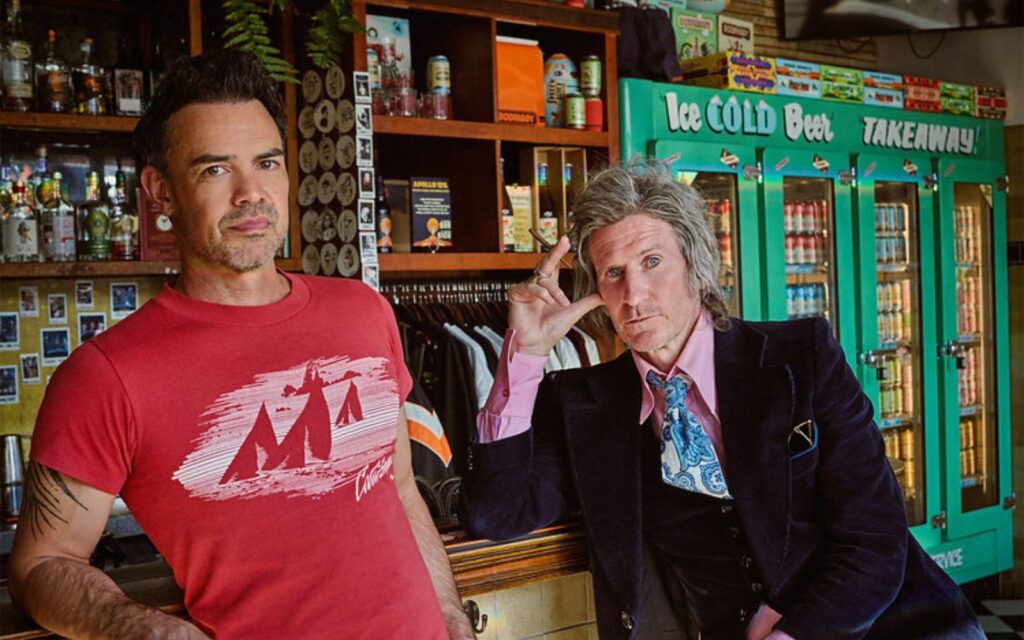
Melbourne has welcomed many great New Zealand musicians over the years, but arguably none better than Mike Rudd.
Born in Christchurch in 1945, Rudd (Spectrum) brought his band, Chants R&B, to Melbourne in 1966 but the band split up soon after. Rudd then joined singer-songwriter Ross Wilson and guitarist Ross Hannaford (later of Daddy Cool fame) in one of Wilson’s first bands, The Party Machine.
When The Party Machine parted ways in early 1969, Rudd joined Wilson in his new band Sons of the Vegetal Mother before leaving to form his own progressive rock band Spectrum in April 1969. The band comprised Rudd on lead vocals, guitar and harmonica, Bill Putt on bass, Mark Kennedy on drums, and Lee Neale on organ.
Mike Rudd had the fortune – some might say misfortune – of having his biggest hit early in his Australian career. Spectrum’s very first single was the classic I’ll Be Gone, which reached #1 nationally in 1971 (Kent Music Report). Later singles by Spectrum, and its more rock-focused successors, The Indelible Murtceps and Ariel, could not repeat the feat.
Check out our gig guide, our festival guide, our live music venue guide and our nightclub guide. Follow us on Instagram here.
How I’ll Be Gone became an accidental classic
I’ll Be Gone was recorded at Armstrong Studios in Albert Park, Melbourne in August 1970, but not released until January 1971 due to the 1970 ‘Record Ban’’ dispute between major record labels and commercial radio. The record labels, including EMI, CBS, RCA, Warner and Australia’s Festival, had demanded payment from radio stations for records played on commercial radio which until then they had provided free; the stations had refused. The dispute was finally resolved on 24 October 1970.
Spectrum had gone into the studio to record a promotional song, Launching Place Part Two, for the upcoming Launching Place Music Festival, which was held on 31 December 1970 at the town 90 kilometres east of Melbourne. Once they had finished recording, producer Howard Gable asked if they had anything else to put down.
Remembering Ross Wilson’s enthusiastic endorsement of the song, Rudd suggested I’ll Be Gone. By this time Mike Rudd had incorporated the captivating harmonica melody that transforms the song, lending it the gentle reflective country-rock feel that made I’ll Be Gone an instant hit and enduring classic.
‘’The song didn’t actually take very long to write”, Rudd told writer Jeff Jenkins, ‘’but it changed over the period of about a year. Initially I didn’t have the harmonica in it, and that was a big transition’’.
The band were in Sydney when the single was finally released, and were ‘’slightly shocked’’ to hear that it had been edited and shortened by 56 seconds, and was now in mono rather than stereo as originally recorded.
Rudd, in a move he agreed in hindsight was almost inexplicable, refused to allow the song to go on their first album Spectrum Part One (1971) because it wasn’t a match for the rest of the material on that album.
“It’s still a matter of some disbelief for myself that we didn’t include I’ll Be Gone on that album. I’m sure it couldn’t happen these days. We were so underground we didn’t know what was going on in the real world” he told the MILESAGO website.
Melbourne’s pub rock boom forces Spectrum to live a double life
While I’ll Be Gone was a major chart success, Spectrum’s intense and intellectual concert-style progressive rock performances were not a great match for the emerging pub scene.
The drinking age for pubs had recently been lowered to 18 in Queensland, South Australia and Tasmania, and changes to Victoria’s hotel entertainment laws had seen the unlicensed town hall dances and discos being replaced in popularity by gigs in pubs.
Spectrum responded by inventing an alter-ego band which they called The Indelible Murtceps (Spectrum spelt backwards).
The Indelible Murtceps provided a dance-band alternative to Spectrum, and were popular with the hordes of younger punters, whose favourite catch-cry was now not so much ‘’cool, man’’ as ‘’suck more piss’’.
The early days of pub rock, fueled by booze and cigarettes (and other ‘stuff’) and ruled by bands such as Billy Thorpe and the Aztecs had arrived. The ‘’Murtceps’’ were ready for a piece of that pie, leaving Spectrum free to chase the less-profitable alt-rock concert scene when the opportunity arose.
The black and white film clip of I’ll Be Gone by director Chris Löfvén is one of Australia’s first ‘video’ clips, and is considered by Mike Rudd to have been a major contributing factor to the song’s success.
“TV was desperate for clips” he said later. The clip begins with a contemplative Mike Rudd hiking alone on a dirt road located in the Tullamarine area north west of Melbourne, only to be drenched by water from a puddle hit by a passing open-top Mini Moke.
Unfazed, Mike rambles on, happy that, to quote the song, “Movin’ round comes naturally/ movin’ round and feeling free. That’s for me”. Löfvén later directed Daddy Cool’s famous Eagle Rock film clip.
I’ll Be Gone, with its hypnotic shuffling tempo and wistful, beguiling harmonica melody, tapped into the anxieties and fears of many young people during the latter stages of the Vietnam War. At the time of the single’s release, Australia was involved in this war and many twenty-year old Australian men were required to register for National Service.
Their fate was then decided by a twice-yearly “Birthday Ballot”, a lottery in which numbered wooden ballot balls or marbles were drawn from a hand-spun barrel. Those whose birthdates matched the numbers drawn could eventually find themselves fighting as ‘’Nashos’’ in the jungles of South-east Asia, or in jail in Australia as so-called ‘’Draft Dodgers’’ for refusing to participate.
I’ll Be Gone first charted on 11 January 1971 and stayed there for 25 weeks, peaking at #1 on the national charts (Kent Music Report). It was named by the Australian Performing Rights Association (APRA) in May 2001 (as part of their 75th anniversary celebrations), as one of the Top 30 Australian Songs All Time. The song has been covered by Margrt RoadKnight, Colleen Hewitt, John Williamson, John Schumann and the Vagabond Crew, and Manfred Mann’s Earth Band.
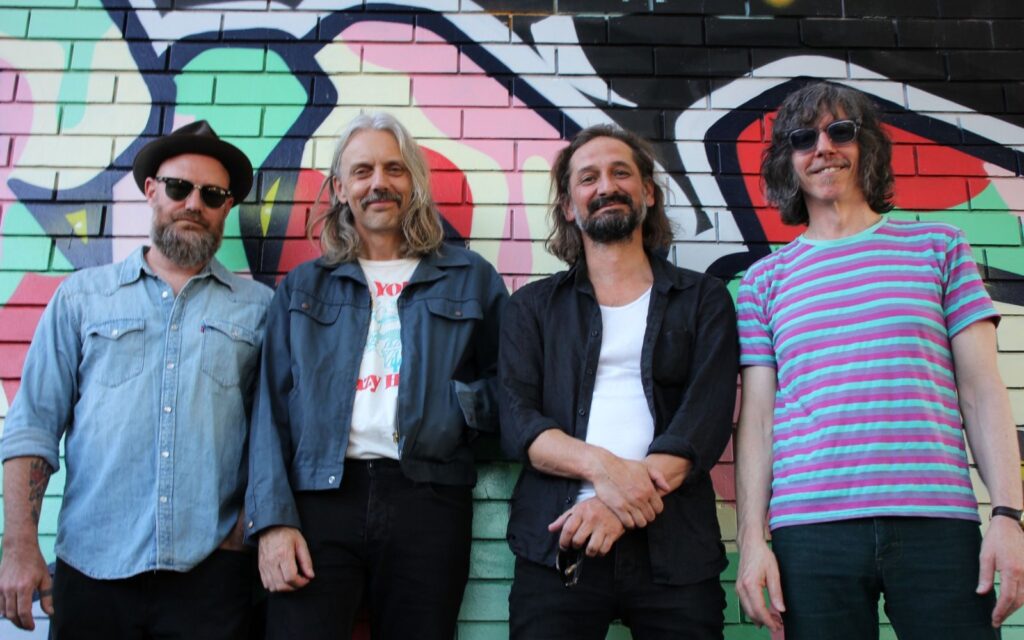
Mike Rudd and Spectrum continue to perform. I saw Mike play a solo gig at Stingo Blues at the Yorkshire Stingo Hotel in Abbotsford one Sunday afternoon in mid-October Melbourne this year (2025). He was excellent, his voice and playing better than ever!
For more information, head here.