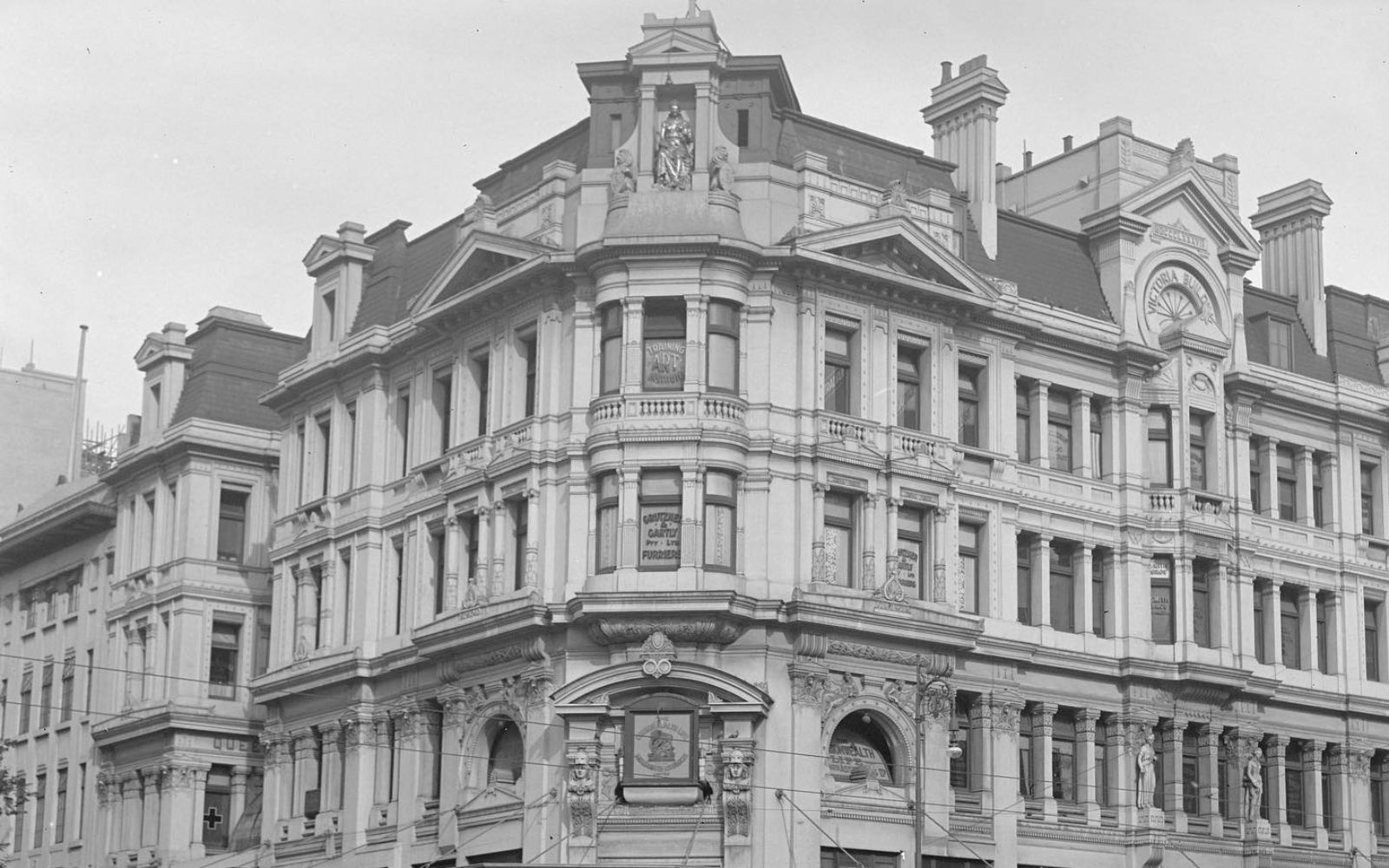
Photography: State Library of Victoria
'The Lost City of Melbourne' director and producer Gus Berger reveals the mass demolitions of Melbourne heritage buildings which began in the 1950s.
During the 1850s, Melbourne was the fastest-growing city in the world and during the 1880s, it was the world’s richest city – a history now largely forgotten to time.
The rapid influx of migrants during Victoria’s gold rush meant that Australia’s largest port city saw a colossal need for civil infrastructure. As a result, elegant Victorian buildings filled the city. Nearly every corner of early Melbourne was fit with the craftsmanship of architectural visionaries.
So why were these structures the victims of mass demolitions a hundred years later? That’s the question Berger poses in his documentary, The Lost City of Melbourne.
“There was this perfect storm, really, that was occurring in Melbourne in the mid-’50s,” Berger says. “I think it was really a whole combination of factors that was really impacting upon the mindset (of) not just of the people in Melbourne, but that of the government.”
The perfect storm Berger is talking about are the leading factors that led to Victoria’s idea of a modern city. The 1950s meant the Queen’s first visit and the 1956 Olympic games, placing the city and its politicians under unprecedented scrutiny – not only by the judgment of monarchical standards, but also by being watched by the entire world.
“I think that when the queen came for the Olympic Games in ’56, it was just this catalyst for ‘Hang on a minute’,” Berger continues, “you know, we’ve suddenly got the queen coming and visiting – I’m sure that we were probably 95% a monarchy at that time. So, at that point, it was a big deal.”
Berger also connects the lack of heritage protection to the changes.
“I think it was just this real perfect storm and it was allowed to happen because one, there was no heritage protection. But secondly, there wasn’t much of a heritage awareness either.”
Berger’s film The Lost City of Melbourne is more than just bereavement, however, it’s filled with footage that stands as a testament. While footage of the demolitions is undoubtedly projected in a harsh context, there’s also plenty of rare, re-developed footage of the city that once was that serves it justice. Its narrative and historical standpoint encapsulate all the facets and issues in this period, but also Melbourne’s old beauty.
The Victorian state government at the time didn’t see these architectural styles as history, but as a means of function. Many of the interiors of these buildings didn’t support various workplaces and had to be completely refurbished to support a myriad of different industries.
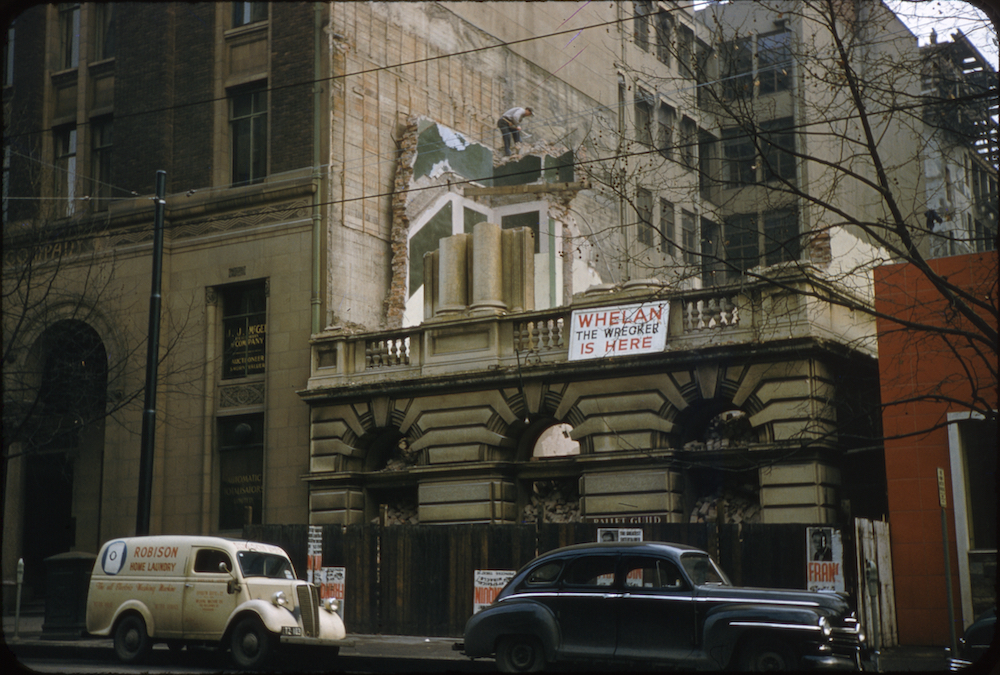
Unlike today, where heritage protection only extends to the exteriors of buildings, and interiors can be broadly changed at will, solely-interior modifications weren’t considered practical in the 50s. Rapid expansion began, and as a result, rapid demolition.
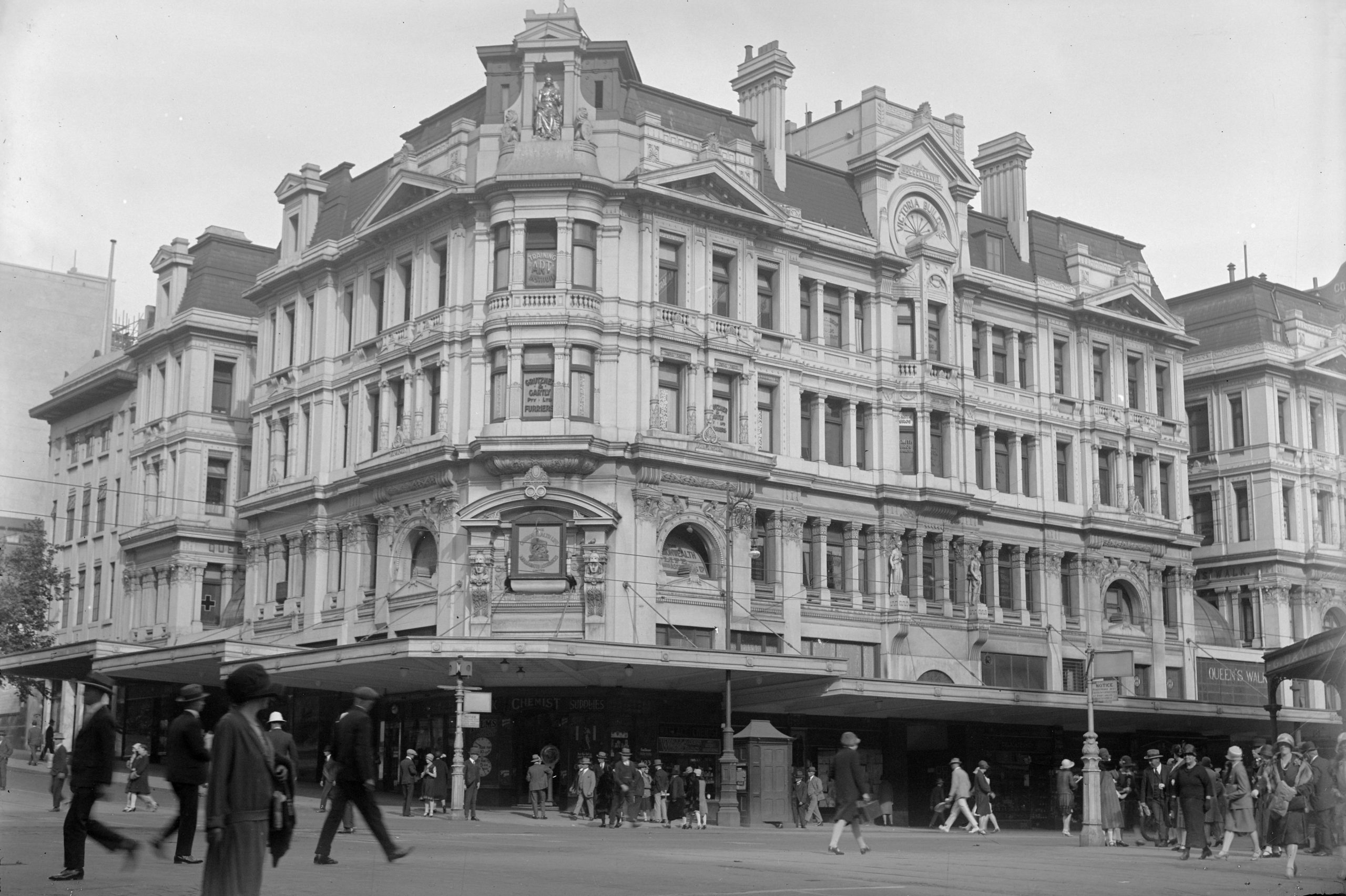
Not everyone felt the change was necessary, though. “There were a lot of people that were aghast at what was happening to all these old buildings, they saw value in it, but I just don’t think that they felt that they had a voice, and there probably wasn’t enough for them to stop that juggernaut that was going on, which was like, ‘We’ve got to be modern,’” Berger says.
Could we have kept these buildings intact and refurbished them adequately to support modern norms? For many of these buildings, there were underwhelming heating systems, a limited number of toilets and other amenities, and little consideration for fire hazards and other safety precautions. However, Berger contends some of these shortcomings could have been worked around, using the GPO as an example.
“Within the GPO building on the corner of Bourke Street Mall on Elizabeth Street, the shops and the restaurants and cafes inside that building seem to be really functional and they look great,” Berger says.
The GPO building was built in 1861 and stood in the way of the demolitions in the 1950s, but because it was the headquarters of Australia Post meant it remained standing. It wasn’t until the early 90s, when Australia Post decided to move to opening smaller shop fronts, that it emptied. By then, developers saw this not as an opportunity to destroy, but to re-invent.
“You wouldn’t know it from the outside, it looks as if it’s still pretty much intact,” Berger continues. “With clever architects, clever architecture and good builders and good town planning, you can have both.”
Although heritage listings have been widely implemented at certain stages in Australia’s history, buildings that have an intensely rich history are still being knocked down today, with relics of Melbourne architecture seeing a slow decline as population growth and real estate prices have skyrocketed over the previous decades.
“There’s definitely a lot of buildings that seem to keep getting knocked down because they don’t have that level of significance of heritage value,” Berger says. “It’s a shame, because I think that there are some things that just don’t have that level of protection, and they’re just not safe from development.”
Head to The Lost City of Melbourne website here for the latest screenings.