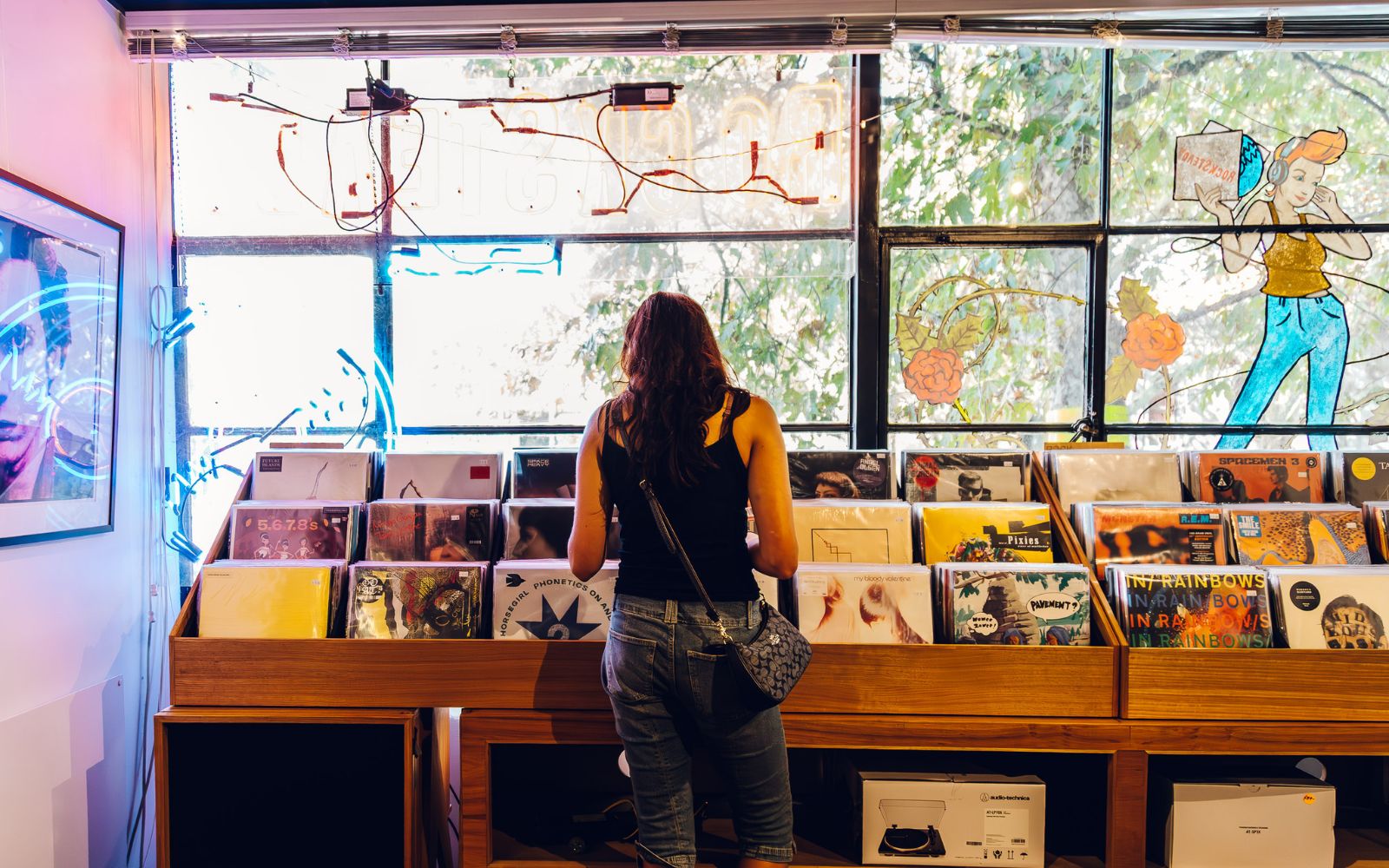
Melbourne has more record shops per head of population than any other city on the planet, new research reveals.
Research commissioned by the Victorian Music Development Office and delivered by Ethan Holben and Audience Strategies confirms what locals have long suspected: Melbourne reigns supreme when it comes to vinyl culture. For The Record takes a broad look at Victoria’s vinyl ecosystem, from pressing plants through major and micro-distributors to the retailers whose support and curation of local releases plays a crucial role in times where visibility of domestic music remains a hot topic.
For The Record reveals Melbourne’s 5.9 stores per 100,000 residents exceeds Tokyo at 2.3, London at 4.9 and Berlin at 2.9. Victoria is also home to 50 percent of the nation’s independent vinyl stores and 66 percent of Australia’s pressing plants, cementing its position as the country’s undisputed vinyl hub.
Melbourne – For The Record key findings
- Melbourne has 5.9 record stores per 100,000 residents, exceeding Tokyo (2.3), London (4.9) and Berlin (2.9)
- Victorian stores stock Australian music at 25 to 50 percent of their inventory, substantially exceeding streaming consumption where Australian artists account for only 8.4 percent of top tracks
- Victoria’s store count grew 18 percent since 2023, while national vinyl sales increased 5.6 percent to $44.5 million
- No surveyed store describes itself as financially strong despite growth figures
- Regional Victoria faces access disadvantage with one store per 150,000 to 200,000 residents versus one per 62,000 in Melbourne
- Store ownership reflects capital requirements of $50,000 to $75,000
- Vinyl pricing threatens youth access to the format
Check out our gig guide, our festival guide, our live music venue guide and our nightclub guide. Follow us on Instagram here.
View this post on Instagram
Victorian stores champion Australian music significantly more than streaming platforms, stocking local releases at 25 to 50 percent of their inventory compared to streaming consumption where Australian artists account for only 8.4 percent of top tracks. This positions independent record stores as vital champions of homegrown talent, offering visibility and shelf space that digital platforms increasingly fail to provide.
Behind the headline-grabbing statistics lies a more complex reality. Victoria’s store count grew 18 percent since 2023 and national vinyl sales increased 5.6 percent to $44.5 million, yet no surveyed store describes itself as financially strong.
The research says most independent outlets are simply getting by, navigating the economics of a format where a $45 record’s income distribution creates a multiplier effect when pressed and sold locally, but retail margins remain tight.
Systemic barriers constrain equitable participation across the ecosystem. Regional Victoria faces significant access disadvantage with one store per 150,000 to 200,000 residents compared to one per 62,000 in Melbourne. Ownership homogeneity reflects substantial capital requirements of $50,000 to $75,000, while vinyl pricing increasingly threatens youth access to the format.
For The Record also explores the growing importance of stores as cultural third places, particularly as in-store performances offer access to live music for young people in safe spaces. As venue accessibility becomes more challenging for underage music fans, record stores fill a crucial gap in the cultural landscape.
According to the research, buying local vinyl sustains the scene more effectively than any other consumer action. Supporting the Victorian music scene while shopping for loved ones this festive season becomes simple: visit an independent record store and buy a record, ideally one produced and manufactured locally. Every purchase strengthens the entire ecosystem, from artists and labels through pressing plants to the stores themselves.
For more information, head here.