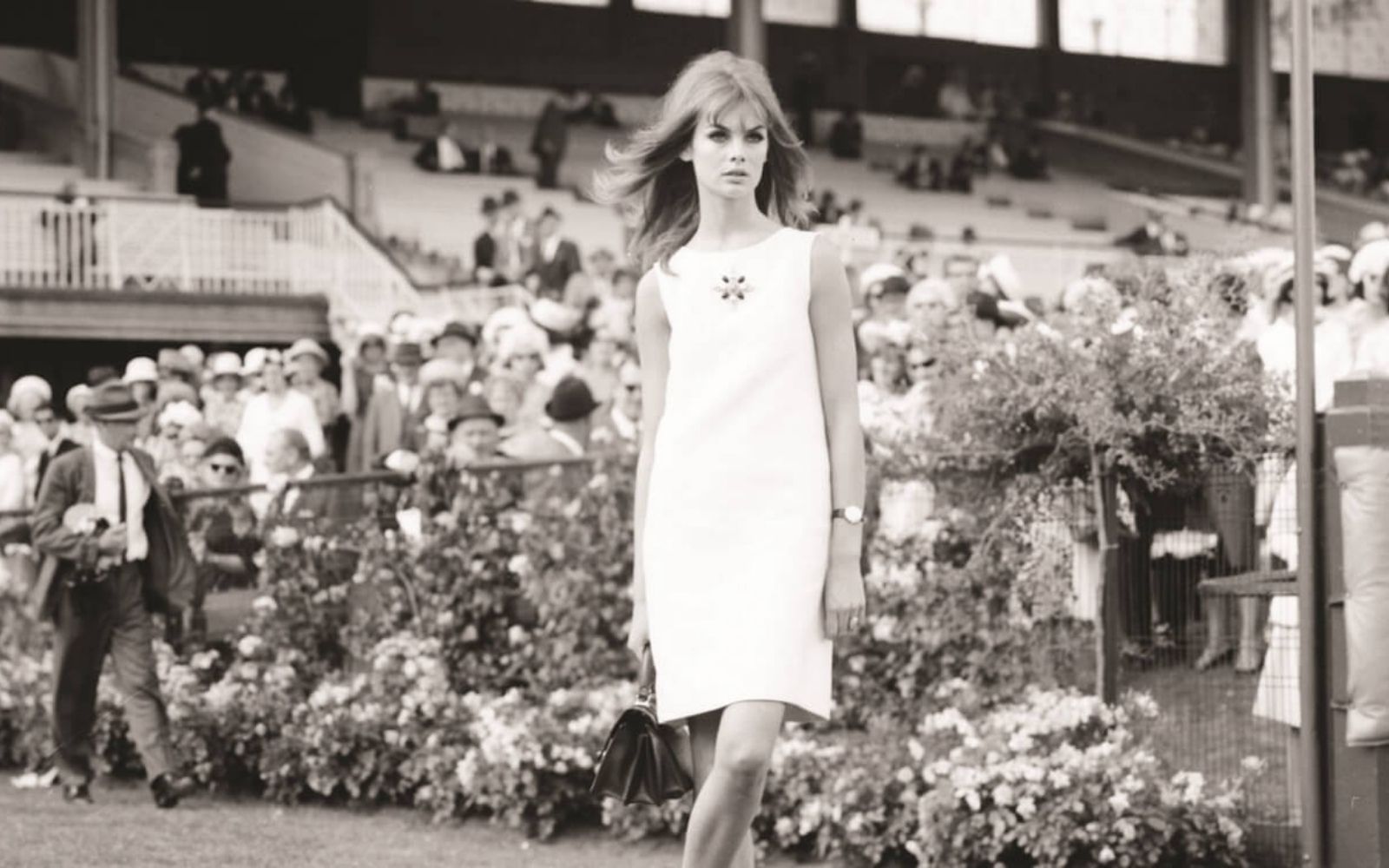
Melbourne in the 1960s was a musical mecca, says Old Treasury Building Museum curator Ann Wilcox.
The 1960s is one of the most romanticised periods in history. Subsequent generations have often longed for a return to the era of free love, drug experimentation, anti-war protest, and subversive movements in fashion and music.
But was Melbourne in the 1960s really such a utopia? This is a question that Swinging Sixties, an exhibition now showing at the Old Treasury Building Museum, seeks to answer.
Swinging Sixties
- Where: Old Treasure Building
- Until 2027
- Free
Stay up to date with what’s happening in and around Melbourne here.
In the popular imagination, the 1960s are regarded as a time of revolutionary social upheaval. Gone was the conservatism of the 1950s and in its place came a significantly more liberated attitude to sex, drugs, and creativity. But this is inevitably a somewhat reductive account. For instance, from a music perspective, the influence of psychedelic drugs and free love didn’t take hold until the latter part of the decade.
“When we think about music in the 60s, what comes to mind is rock and roll, obviously, The Beatles, the Stones, and things like that,” says historian Ann Wilcox, who did the music research for the Swinging Sixties exhibition. “But flower power and the influence that drug culture had on the music industry and music sounds and tastes, really, that was probably the 60s in America. It really didn’t reach Australia until really late 60s, early 70s.”
View this post on Instagram
One thing that is undeniable, however, is that teenagers and 20-somethings emerged as a powerful demographic in the 1960s. By 1971, close to 40% of Melbourne’s population was aged under 21.
“This is a trend that will never be repeated,” says Wilcox.
Due to this demographic anomaly, created by the post war baby boom, young people began demanding rights and embracing new music and fashion. “They were protesting authority, and it really was that moment where the term ‘generation gap’ came into fruition,” Wilcox says.
Not only was there a push for new things, but young people were also more prosperous than they’d ever been before.
“There was full employment, there was rising wages, young people had money to spend, and for the first time, really, teenagers and 20-somethings were really clear market segments,” Wilcox says.
If you were a music fan living in Australia in the 1960s, Melbourne was the place to be.
“I guess it really started with The Beatles tour in 1964,” Wilcox says. “I think there was about 20-30,000 screaming fans at Essendon Airport. They had to hold young girls back behind the barricades. Another 250,000 people lined the road from Essendon Airport to the hotel, and then another 50,000 people were outside the hotel.”
The Swinging Sixties exhibition includes several photographs depicting the pandemonium that accompanied the Fab Four’s visit. “We have photos of The Beatles arriving at Essendon Airport. We have The Beatles at Town Hall. We have them on the balcony of the Southern Cross Hotel with this incredible crowd of people with mounted police,” Wilcox says.
In the wake of The Beatles tour, Melbourne’s music scene exploded. Several venues emerged catering to different tastes and demographics. “We had discotheques in the city, which played live music into the very early hours of the morning,” says Wilcox. “They were in converted old buildings in the CBD.”
The exhibition includes photographs taken inside some of Melbourne’s most popular discotheques, including The Thumpin’ Tum, the Catcher and Sebastian’s. Sebastian’s and the Thumpin’ Tum is where the more affluent mods would hang out, while the working class sharpies would frequent The Catcher.
“It was always the mods against the sharps,” syas Wilcox. “So, you know, there was that demographic rivalry in Melbourne.”
Despite these subcultural divides, Wilcox says the behaviour at Melbourne’s 1960s discotheques was fairly innocuous by today’s standards.“There was no alcohol, there was very little drugs. It really was just an innocent venue for young kids to go and dance all night, which was quite extraordinary, really.”
View this post on Instagram
The exhibition also looks at the influence of Australian musicians Normie Rowe, Johnny Farnham and The Seekers. “I think they first performed together in a South Yarra coffee bar, actually, in 1963,” Wilcox says of The Seekers.
There are also a few copies of the pop music magazine Go-Set, featuring the writing of music journalists Lily Brett and Molly Meldrum and pioneering fashion designer Prue Acton.
“It was the first music magazine in Australia and it was launched with a clear declaration of generational difference. It wasn’t for the oldies at all. It was for the young people,” Wilcox says.
This generation divide is key to the story of the 1960s. Young people were asserting their power, but the majority of society remained quite conservative. “Most people really had children in their 20s and they settled down to a life in the suburbs,” says Wilcox.
But from a music perspective, the 1960s was an incredibly exciting decade.
“We have a whole bunch of really extraordinary photography [in the exhibition] that was taken during the 60s that really shows what kind of musical mecca Melbourne was at the time,” says Wilcox.
Swingin Sixties is on at the Old Treasury Building Museum until 2027. More info here.
This article was made in partnership with the Old Treasury Building.