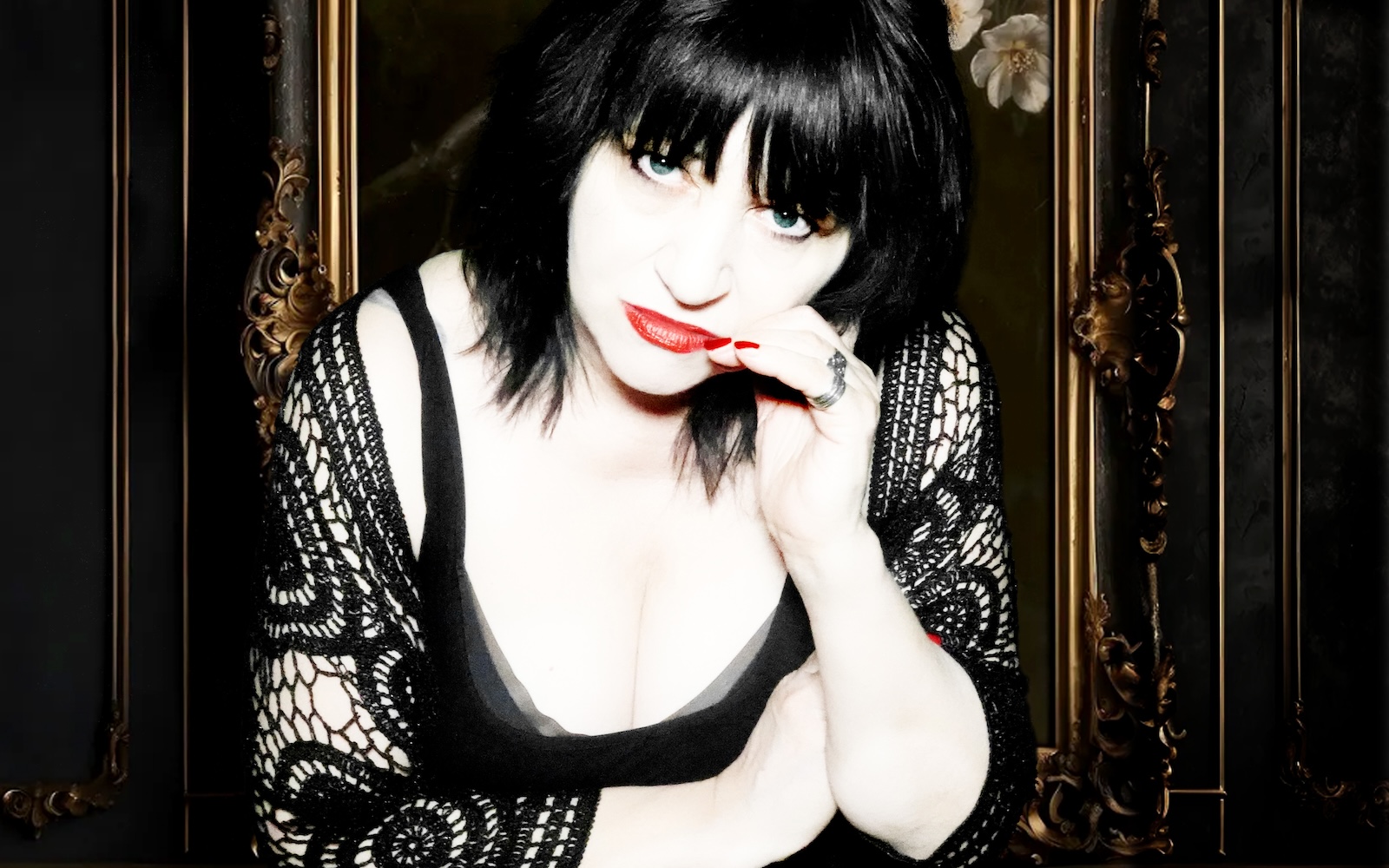
Lydia Lunch has always done women’s work in a man’s world. It is a world of urban decay to be confronted.
Few artists are better suited to inhabit the music of Suicide than Lunch, who will do so on 17 June at The Tote, alongside Andrew Coates of Melbourne band Black Cab. She is no passive admirer, having shaped No Wave alongside vocalist Alan Vega and instrumentalist Martin Rev. Collectively, their visceral sonic frameworks hold a mirror to the abrasive psychic landscape of New York City — hardened, if anything, by human fragility.
Over the years, the tribute has toured several times. Yet the upcoming Melbourne show marks its Australian debut, commemorating the 10th anniversary of Vega’s passing. Why now?
Stay up to date with what’s happening in and around Melbourne here.
“Why not bring it to Australia now?” Lunch challenges. “Usually in Europe, I do it with Mark Rutano, but doing it with Andrew brings a different, sexier, more sinister side to that we’re doing. And of course, doing [the So Real it Hurts] shows with Tex Perkins, a rock and roll hero. I cannot wait. And also, I love coming to Australia, let’s face that.”
There is a comparison to be made between New York and Melbourne — both locales which never sleep, one eye open to subversion. Aesthete cities such as these are often the most honest. They do not shield their inhabitants from the harsher realities of urban life. Rather, their counter-cultures are a sponge drenched with the violence of the street.
“Anybody that grew up in a former penal colony probably has something to give that is not based on that perversity,” Lunch reasons. “Hence the sensitivity of someone like Rowland S. Howard … Yet also the brutality of someone like the Beast of Bourbon[’s] Tex Perkins.”
Lunch herself has long shared an affinity with Melbourne’s underground lineage.
In 1982, she collaborated with Rowland S. Howard on a reinterpretation of Lee Hazlewood and Nancy Sinatra’s Some Velvet Morning. Howard played the strung-out narrator, grumbling through the haze of a hangover; Lunch, the enigmatic “Phaedra” figure — destructive and seductively vivifying all at once, as much an exposé on stage as the mythological theatricality and constructed aesthetic the character itself implies. For her, contradictions have never cancelled each other out.
There is something distinctly New York about Lydia Lunch as New York is distinctively her. These sensibilities are shared with fellow citizens Valerie Solanas and Martha Rosler: all of whom are uninterested in sanitising experience. Rosler’s Semiotics of the Kitchen (1975) feels spiritually aligned with Lunch’s cookbook The Need to Feed, with both assessing the kitchen as a performative space loaded with social meaning.
Given this mutual attitude, it is unsurprising that at age 16 Lunch found a home in Suicide and the Big Apple.
“Suicide [was] the first concert I saw after running away the second time to New York,” Lunch recalls. “I’m like, ‘I’m in. These are my peeps.’ And I was younger than Martin Rev’s son. They kind of adopted me at that point. And he would give me vitamins, which would make me turn red like niacin.”
The Suicide material shares thematic terrain with Lunch’s own work and, as a consequence, becomes newly forthright through her female perspective. Her covers become a means of inserting herself into the narrative and continuing it; freedom rather than mere imitation for someone who once described herself as “chronically misunderstood”. Frankie Teardrop in particular takes on a different power in her hands.
“I think my version is even more intense than the original,” Lunch declares. “After all, there are very intense females as well, and we have intense relations, we have intense feelings, and there’s no reason they shouldn’t be expressed, even if they were originally written by a man … There is so much room for me to proselytise my own words.”
Lunch’s reputation precedes her. She has long been labelled a diva, aggressive, obnoxious; a self-avowed “verbal boxer”. Yet why shouldn’t she be expressive, angry?
“I’m not professing a fucking dogma philosophy,” she says. “I’m proposing a variety of possibilities. I’m not a solutionist. I am here to propose what the problem is … I am rap without the beat. The beat is what I’m going to give you with my tongue.”
Lydia Lunch encapsulates the resonance of the spoken, sung and screamed word — art’s ability to articulate feelings we ourselves do not know how to. The sentiments of Suicide and her own work remain as relevant as they are united. To witness the raw power of them first-hand is a gift Melbourne is lucky enough to receive.
For more information on Lydia Lunch, head here.