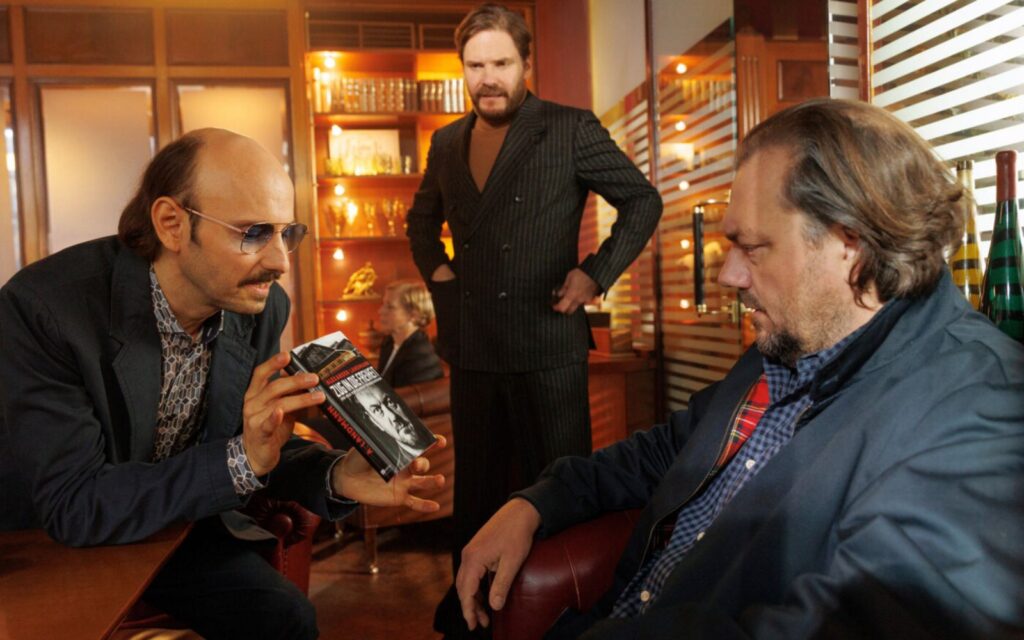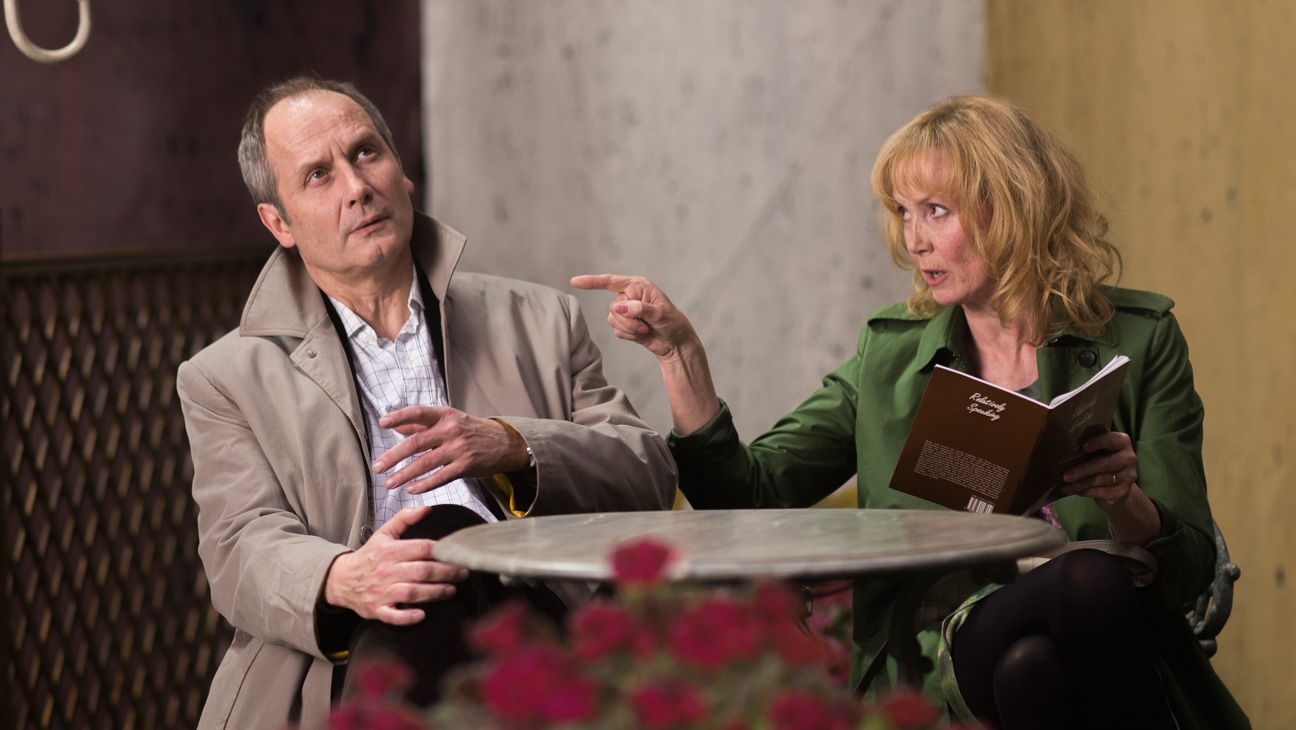
Adapted from the Alan Ayckbourn play of the same name, Life of Riley (Aimer, bore et chanter) marks Alain Resnais’s third Ayckbourn adaptation and final film. Inspired by its stage origins, the film’s hyper-theatrical stylisation is both alienating and alluring, resulting in a slightly imbalanced comedy of manners.
Following the reactions of three couples after the discovery that their friend George Riley has been diagnosed with terminal cancer, Resnais’s treatment of Life of Riley is whimsical, yet appropriately wistful. Stage-like sets and injected scenic artworks (by French cartoonist Blutch), establish a theatrical world akin to the text’s origins, which develops an increased focus on the six characters and Alan Ayckbourn’s (French-translated) witty repartee. However, the knowingly heightened performances from a consistently charming ensemble cast only further alienate and ultimately distract the viewer, as do other elements of the artificial and surreal (close-ups featuring jarringly black and white backdrops, and a gopher that sometimes appears between scenes).
Yet Resnais’s rejection of realism prevents any potential emotional connection with the characters, which is detrimental to the viewer’s prolonged engagement, but also beneficial in bringing Ayckbourn’s ideas of facing death and not-so-happily-ever-after endings to the foreground. For a director so interested in experimenting with the medium of film, this light tragicomedy may lack substance but stays true to Resnais’s playful sense of form.
BY DANIEL COGHLAN