The federal government has dropped $659.6 million on a high speed rail network that's been designed to eventually connect Melbourne and Sydney.
The funding kicks off a two-year development phase for the Newcastle to Sydney section — the opening leg of a broader east coast high speed rail corridor that the government’s own business case maps out to link Melbourne, Canberra, Sydney and Brisbane.
It’s not a Melbourne bullet train tomorrow, but it’s the foundational infrastructure that makes one possible, and Melbourne is written into the network’s plans from the ground up. The development phase will lock in design, environmental approvals, costings and construction sequencing before major building contracts are handed out. It follows a positive assessment from Infrastructure Australia, which recommended the detailed planning phase proceed.
Stay up to date with what’s happening in and around Melbourne here.
What the high speed rail business case means for Melbourne
The business case, released alongside the funding announcement, is full of properly eye-watering numbers.
The first section alone involves 115 kilometres of tunnel, trains clocking up to 320 km/h and six brand new stations stretching from Broadmeadow in Newcastle to Western Sydney International. The economic benefits are projected at between $50.8 and $59.7 billion over 50 years of operations. Between 52,000 and 104,000 new homes are expected to be unlocked along the corridor. And the project is forecast to generate more than 99,000 jobs across construction, advanced manufacturing and tourism.
The case for extending the network to Melbourne is baked into the document. The east coast corridor is home to more than 21.5 million people — close to 80 per cent of Australia’s total population — with that number forecast to hit 28.5 million by 2051. Around 18.3 million passenger flights currently run between Melbourne, Canberra, Sydney, Newcastle and Brisbane each year, and nearly a third of the country’s domestic aviation emissions come from those routes alone. The business case frames Melbourne, Sydney and Brisbane as the three economic anchors the high speed rail network exists to connect, with the east coast contributing $1,850 billion — or 72 per cent — of national GDP.
The population density argument is one of the more compelling data points in the document. The Newcastle to Sydney corridor sits at 624 people per square kilometre, which is actually more than double the density of the Barcelona to Zaragoza high speed rail corridor in Spain — a line that’s been running for years. The business case takes aim at what it calls the “density myth,” arguing Australia’s east coast has more than enough density to support a full high speed rail network.
What the high speed rail line will actually look like
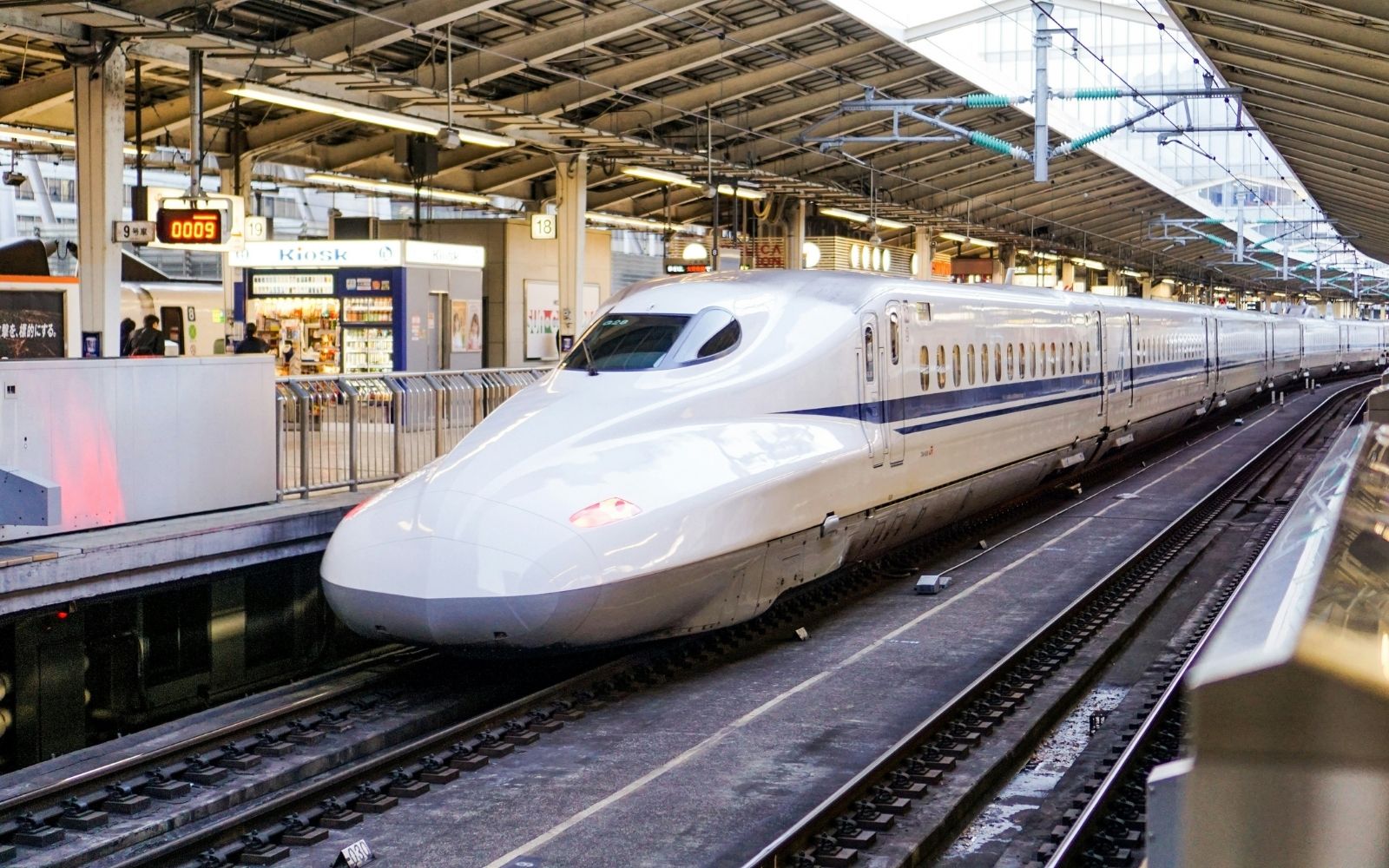
The trains themselves will be 200-metre, eight-carriage units running at up to 320 km/h on open track and 200 km/h through the 115 kilometres of tunnelled sections. Passengers will spend about 30 minutes underground between Sydney and Gosford — comparable to travel times on modern metro systems globally. The tunnels will run in a twin-tube configuration, with two parallel bores each housing one track. Stations are locked in at Broadmeadow, Morisset, Gosford, Surry Hills, Parramatta and Western Sydney International, all being designed as critical interchange hubs to support future connections and expansions to both Brisbane and Melbourne.
How much will high speed rail cost?
The P90 cost estimate for the Newcastle to Sydney leg sits at $61.2 billion, with a further $32.4 billion for the extension to Western Sydney International. The government has also stress-tested the figures against a “high range” scenario accounting for cost overrun risks common in mega-projects. A range of public and private financing models will be assessed during the development phase before a final investment decision is made.
Construction is being targeted by the end of the decade, with the Newcastle to Central Coast section aimed for 2037 and the extension to Sydney Central by 2039. The project will be the first in Australia to fully embed advanced manufacturing techniques, with dedicated off-site facilities producing modular, pre-manufactured components for tunnel linings and other infrastructure.
When will high speed rail reach Melbourne?
The broader network vision lays out a timeline for connecting all four east coast capitals by 2060. The high speed rail stations being built now are explicitly designed to accommodate the eventual southern expansion toward Canberra and Melbourne, with the business case describing the line as the foundational piece for a network that stretches from Brisbane to Melbourne. Four decades of feasibility studies have now turned into real money and a published business case — with Melbourne at the other end of the line.
The announcement follows a wave of major rail infrastructure commitments in Melbourne, including the Melbourne Airport Rail Link breaking ground at Sunshine and the Suburban Rail Loop commencing major construction on its first tunnelled section between Cheltenham and Box Hill. The Airport Rail Link’s earlier planning phase and new station builds across Melbourne’s west suggest a broader push toward overhauling the way the city connects to the rest of the country.
For more information, head here.