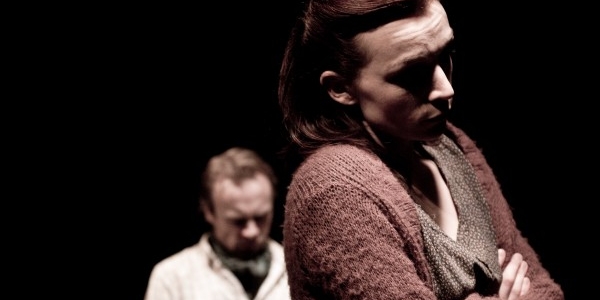
Foxfinder, a new play by acclaimed British playwright Dawn King, will make its Australian debut when it opens the Red Stitch Actors Theatre’s second season for 2013. King’s bleak dystopian world could be the far past, immediate present or the distant future, but the parable of the foxfinder is one of resounding relevance. The foxes are a symbol of menace and political anarchy, as Bloor states “there is a cancer here Judith and if you ignore it, it will destroy you.”
“It’s about desire and deceit and what people will do to save themselves and the people they love when their lives as they know it are under threat,” says Rosie Lockhart who plays Judith and Samuel’s neighbour, Sarah Box. “Morality is constantly questioned, it’s about moral panic,” she explains. “What is right, is it right if you save someone you love at the cost of betraying someone else, when you are terrified of losing everything?”
For Lockhart the play has taken new significance in light of recent political goings on. Particularly, she has found herself reflecting on the controversy engulfing the national security agency and the seemingly endless squabbles and spills of our own political leaders. Lockhart’s character Sarah is somewhat of a dissident. “The threat of the foxes seems absurd to a contemporary audience and she [Sarah] presents an idea against it. From there it unfolds with all these wonderful twists and turns. Sarah questions the political system and becomes more open about it as the play progresses. In that way she’s kind of the audience,” she says.
The actress is reminded of Edward Snowden and “the power of an individual who does just take that leap and risk everything to illuminate ill doings for the good of us all. It’s a heretic act.” While Sarah’s cogitations are less extreme, there is a shared essence of rebellion which informs her character. “I think about Edward Snowden. He has spoken out against something that he believes so strongly is wrong and yet in return his life is ultimately threatened. Similarly if they characters speak out against the foxfinder then they lose everything. For her that’s the giganticness of it, but the reality is, in her isolated world, she might just be extinguished.” She quotes a recent statement from Snowden about the Obama administration, “these are the old, bad tools of political aggression. Their purpose is to frighten, not me, but those who would come after me.”
The relevance becomes clear as she describes a group of characters who work tirelessly to support a system that they don’t fully understand and out of fear, adhere to its strictures. “I think about people in power, in the play it’s the foxfinder, a 19-year-old boy with the ultimate power. When someone’s so certain of what they are doing for the whole, whether it’s right or wrong we kind of accept it. If we don’t, we’re ousted and we’re punished and that is what threatens everyone in this play, including the foxfinder.”
Lockhart graduated from the Victorian College of the Arts last year before joining the Red Stitch Ensemble. At the VCA she was a part of Article 1, a show loosely based on Antigone. For it she found herself writing a monologue informed by her own pervasive sense of political apathy. Her discontent has yet to abate. “It’s so frustrating, it just goes around and around, ‘I don’t want Abbott. I don’t want Rudd. So what do we do? Do we just sit back or do we protest?” she says. “The overhaul of the Gillard government has really rattled me and highlights how little we know about what goes on in our governments. We go along with it, that’s what democracy is, and majority rules. I was profoundly disturbed but I can’t really articulate why, it was on an instinctual level, not a political one. It has made me question integrity and alliances, both politically and personally.”
While the circular debates of the past few weeks may well have many looking for a rock to crawl under, for Lockhart this is not the case, “in a way it’s made me more politically engaged, because I care about people and this play is also about friendship, my friendship with Judith, and supporting each other through the really hard times.”
Despite its political pertinence, the plays removed rural setting makes the journey metaphorical and humane and the friendship reminds of the importance of human connectedness. As Lockhart explains, “the femininity of the dialogue between us is beautifully juxtaposed with Samuel and William’s pragmatic bloke to bloke conversations. ‘How are you going – in all this awfulness and failure – are you looking after yourself?’ Amongst the harshness of it all there’s a real beauty in that.”
BY JO ROBIN