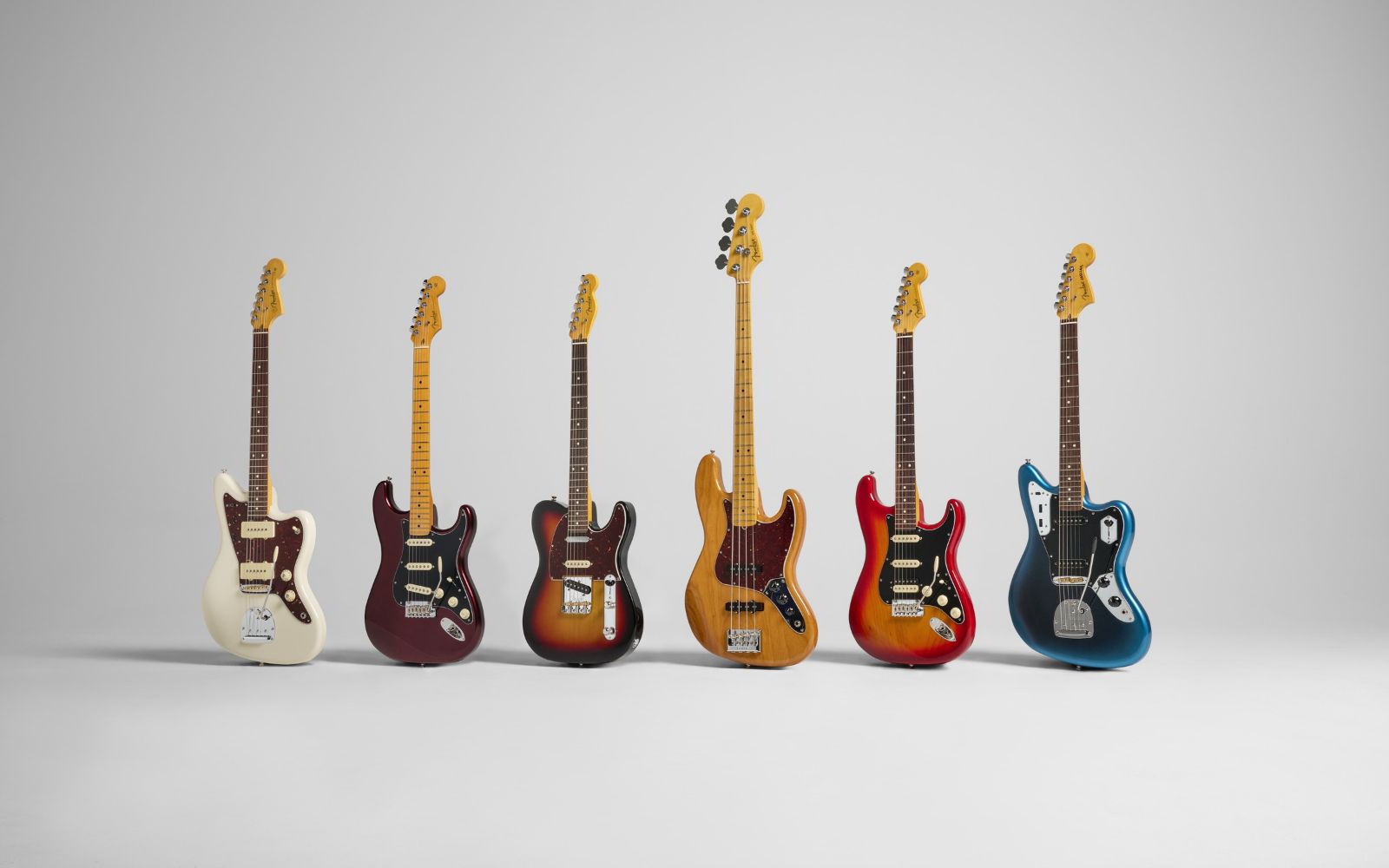
Why the Telecaster and Stratocaster were nearly perfect from day one, and how Fender keeps the rest evolving.
There are a handful of companies whose products have shaped the course of history in their respective fields.
Ford Motor Company pioneered the mass-produced automobile in the early 20th century, while companies like Levi’s have produced jeans and denim for work and fashion for over 170 years.
Fender has been producing world-class instruments for eight decades.
Fender turns 80
- Fender has refreshed its flagship American Professional series, with 10 models available now.
- Upgrades include new V-Mod III pickups, redesigned bridges and Push-Push tone controls.
- Left-handed models arrive in Spring 2027.
Stay up to date with what’s happening in and around Melbourne here.
View this post on Instagram
Its guitars have been wielded by guitar heroes like Jimi Hendrix, Bonnie Raitt and Stevie Ray Vaughan, through to more contemporary stars like Blu DeTiger, Mk.gee, H.E.R and Tash Sultana.
All of these players had to start somewhere, but wildly different as their genres may be, a Fender is their common link, be it Hendrix’s Stratocaster or Blu’s Jazz Bass.
The huge swathe of offerings from Fender has helped its longevity, with a range of instruments for players of all levels.
As we celebrate Fender’s 80th birthday this year, coupled with the Telecaster’s 75th anniversary and the Stratocaster’s 75th on the horizon, it’s important to understand why a company like Fender has had such staying power.
Much like those brands, Fender’s identity is one built on craftsmanship, reliability and trust.
While varying models might feature refined additions, cool finishes, limited production runs and an artist’s signature spec, they all share Fender’s DNA: instruments and tools built to be played, gigged and modified.
That craft is part of the reason Fender has weathered the ebb and flow of the trend cycle, often leading the charge.
Fender’s most iconic guitars, the single-cutaway Telecaster and the double-horned Stratocaster, have paved the way for electric guitars since their arrival on the market in the early ’50s.
To be frank, they haven’t changed all that much since their inception, a testament to their largely perfect initial design.
Being electric guitars, they feature different pickups that pick up the sound of the strings like a little microphone and send it out to an amplifier.
Over the last 70+ years, pickup design has changed a lot, and many Telecasters and Stratocasters now come available with various pickup options.
Fender electric guitars have also always been designed with modifications in mind, allowing players to adjust, swap and remove things like pickups, knobs, switches and pickguards.
These decisions help you to experiment before settling on a custom instrument, be it different pickups, a different aesthetic with a coloured pickguard, various pickup switching options and more.
This leads the player to pursuing their own perfect instrument (sometimes to no end!), making a Fender your one-and-only, your main squeeze.
Customising your own Fender enables you to build the one guitar that does everything you need.
The backbone of all this is stellar design, and Fender’s designs were pretty perfect to begin with.
View this post on Instagram
The double cutaway of the Fender Stratocaster allowed players to reach higher frets and squealier notes, opening the door to rock and roll, blues and jazzy lead playing.
Fender’s most recent flagship offering, the revised American Professional Series, follows those early design principles, tying together some famous pickup configurations, iconic colourways and wood choices.
While still entirely customisable, the new series proves Fender has its ears to the ground, or the pub floor, and is listening to how musicians are using and modifying their instruments.
As the name suggests, the range is built for the working musician, with premium components and woods, along with hardy finishes.
A gigging guitar or bass will take a beating, an inevitability, but Fender doesn’t shy away from that.
Instead it’s doing its darndest to ensure there’s a guitar for everyone, of every level, regardless of your inspiration, aspirations or even aesthetic preference.
The list of players who’ve trusted Fender for decades is a testament to both the brand’s enduring appeal, as well as how reliable its instruments are.
Your heroes trust them night after night, and Fender’s design philosophy, though relatively simple, has cleared the path for an entire generation of players who’ve followed.
As the range grows, the new, young stars continue to trust them, and for the same good reason that players of the ’60s, ’70s and beyond did too.
Much like a great pair of Levi’s jeans, a guitar should feel like home. You should be able to work, play and create with it, all the while remaining focused on your craft, and not the shortfalls of a badly designed guitar, or alternatively a badly stitched seam.
It’s the absence of problems that makes Fender so reliable, allowing you to shift attention entirely to your playing and your expression.
Brands come and go, as do trends in fashion and music, but the staying power of a company like Fender is a tribute to world-class instruments and musician-focused philosophy at its core.
At their foundation, Fender instruments are well designed and built. Colourways, playing style, electronic components and the like might come and go with the seasons, but with a Fender guitar at the core of all that, it’s tough not to appreciate its legacy.
For more information, head here.
This article was made in partnership with Fender.