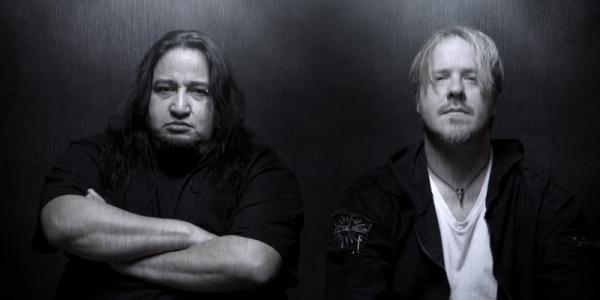
“[Fans are] picking the top songs that they want to hear. It’s not really the setlist. It’s songs they want to add to the setlist,” says frontman Burton C. Bell. “Pretty much everything they want to hear we already play, but there’s three or four songs that we haven’t played in a while that we’re going to add to it.”
Demanufacture will still be represented, as will Genexus. “We have three songs from Genexus,” Bell says. “There’ll be songs pretty much from every album – except Transgression.”
Released in 2005, Transgression is an outlier in the Fear Factory catalogue. It was one of two albums made during guitarist Dino Cazares’ seven-year absence from the band, and the title reflects Bell’s creative ambitions for the record.
“It’s a transgression against Fear Factory. So what’s a transgression? Go against what you normally do,” he says. “It’s a rock album, and our fans just didn’t get it. But a lot of people do like that record. A lot of people had never heard Fear Factory and they heard that record and they liked it. It’s a rock record, and we were trying different things. So it’s a transgression against Fear Factory – against the normal sound that our fans are accustomed to.”
The lineup of Fear Factory has changed numerous times over the years, with Bell the only member to appear on each album. For him, every record has creative value – all of the various experiments with genre and production have expanded their arsenal and given them something to respond to when moving forward.
“Each album is a time capsule of what I was feeling or what I was thinking or what we were going through,” Bell says. “Every album represents a certain time period of our career, of our lives.”
Genexus came out last August, and it’s the third album made since Cazares returned to the band. Fear Factory have been around for over 20 years, making nine records overall. For Bell, there’s one primary element that drives the creation of new material.
“Survival. You’ve got to keep producing albums, you’ve got to keep touring. In a world culture that has developed into even faster than Depeche Mode – you know Depeche Mode’s Fast Fashion. Everything is much quicker. Everyone’s attention is shortened. So you have to keep on going out there so that people don’t forget, because they will. Fear Factory’s always done records every three years.
“We wish to continue being musicians and to continue doing that you’ve just got to keep working. So we put out an album and then you tour for two years and then you go and write and record a new one.”
With the exception of Transgression, the band have approached each record with the intention to make the perfect Fear Factory album – something that demonstrates all of their strengths at once. This was especially the case with Genexus.
“This is a record that we actually researched ourselves and had to relearn what was the best part to Fear Factory. What do the fans like? What are the songs that go off live? [The plan was to] basically become reacquainted with ourselves and go from there. Writing this record was a long process. It took a while, but I think we did it right. A lot of fans love this record.”
BY AUGUSTUS WELBY