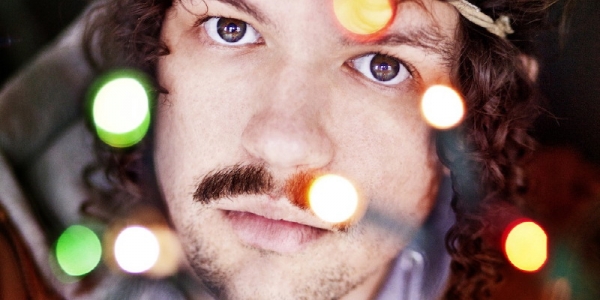
Smith is finding the experience of being reviewed and deconstructed in the media a humorous one. He’s out on the town when we chat (and sounds rather, um, festive) and he admits that the very notion of a review of his band’s music and him as a person confuses and frustrates him. “I always feel a sense of non-belief whenever I see people dissecting us and I try to never expose myself to it whenever possible,” Smith begins. “I was really excited and felt satisfied about having a teenage milestone fulfilled with Pitchfork acknowledging our existence as a band but I didn’t read the review and will never read it because I heard it was snarky. I can’t stand being in that situation where someone is talking shit about you and you have no appropriate way to respond. There’s never really an appropriate way to respond but especially not through the internet. Then you just look petty.”
The latest album was recorded in North Carolina, as Smith mentions he needed a break from the city, and is brutally frank when asked about the influence the recording space had on the album. “None really,” he says. “Music is about the unconscious, you know? I don’t think being there influenced the sound of the album at all. I guess I don’t know though, I’m no expert on my own subconscious. I’m just standing near the gate of Darwin Deez, I see some stuff but I don’t know what the fuck is going on in there.”
So why the choice? “North Carolina seemed like the most relaxing and cheap option. I’d been on the road for a year and a half, I wanted to go home and breathe the air in North Carolina.”
It seems that it was his approach to writing and not recording that was the catalyst for the band’s new sound. He agrees that you’re damned if you do and damned if you don’t with album number two. Repeat your pattern and you’re accused of being formulaic, change too much the sound (and identity) of your band that has been appropriated in the minds of your fans and you’re accused of some sort of creative betrayal. What can you do but write for yourself in a world where people seem to be more focused on what music they hate than what they like? “Recording is just a different room, with a different microphone and a different amplifier – that never really changes much,” he says dryly. “The writing was different because I wrote the lyrics first. I’ve never done that in all of my years of writing. They ended up shaping the songs in a way that changed the whole sound. It’s one thing to compose a melody and then find the lyrics – you repeat that melody three or four times and then you go to the chorus and that’s that – but it’s another thing to write a melody dictated by the lyrics. It means that the melody changes constantly in the songs; none of the lines have a melody that ever exactly repeats. Even the four lines within the chorus, the melody is different and that is totally different for me but I think it makes a much more complex time that has taken a lot more time to create and will take much more time to have it come into your heart as a listener. I know these songs are harder for people to respond to but I’m stubborn on that because that’s what I wanted.”
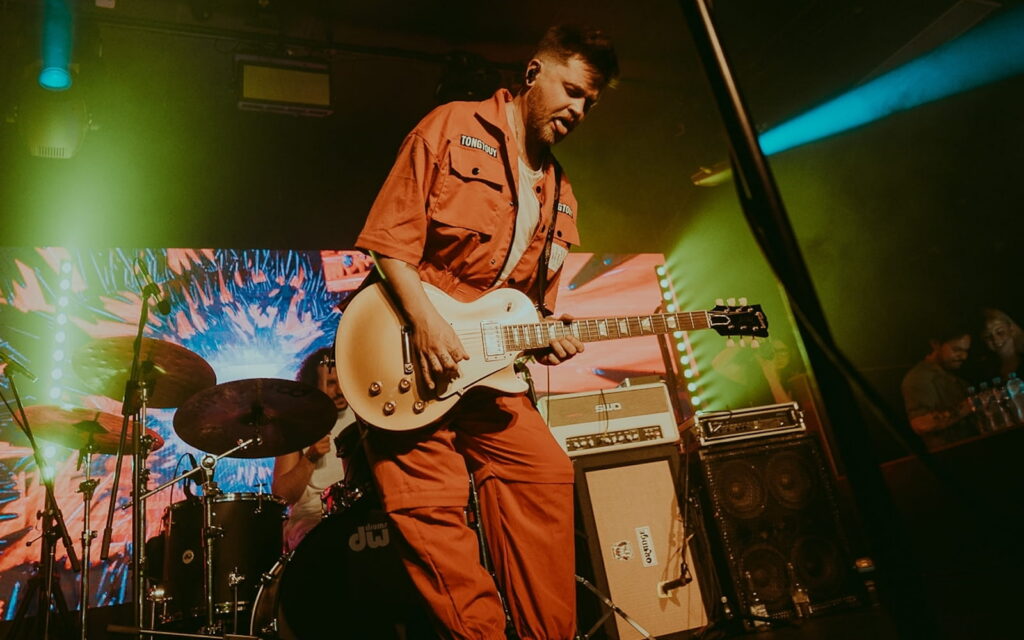
Smith is really enjoying playing these songs live as well as how they fit together with the debut. “I have my songs I like to play. I like to play Moonlit, that’s totally my favourite song to play. There’s a guitar solo in it, I go long, and that’s my new joy in life. I enjoy how the albums complement each other, that’s nice. Together they have variety and it’s kinda educational what people respond to and what they don’t. As time goes on I’ll be frustrated with it all but it’s great for now.”
BY KRISSI WEISS