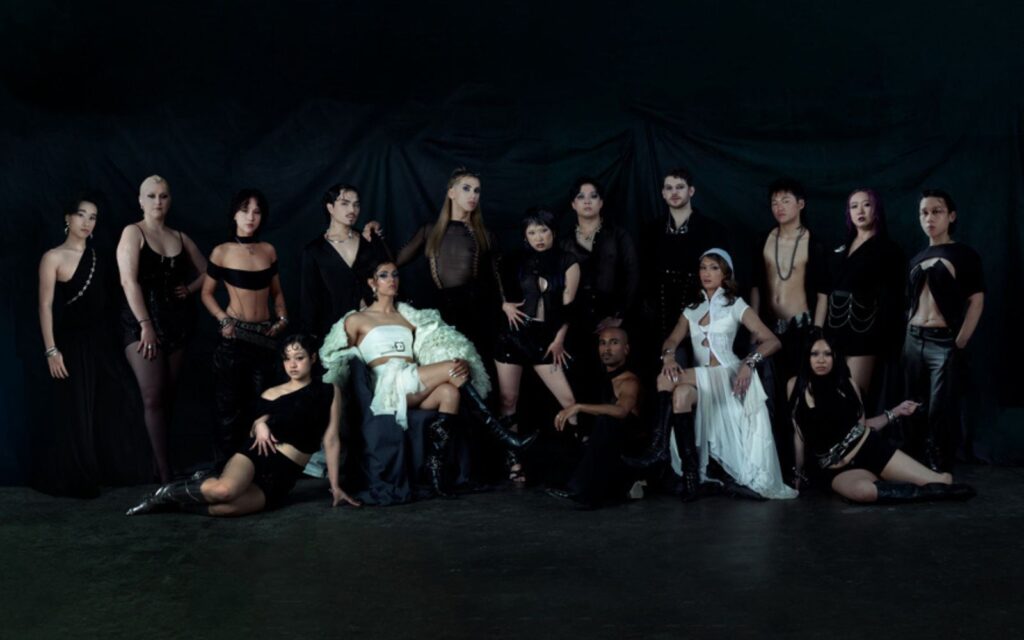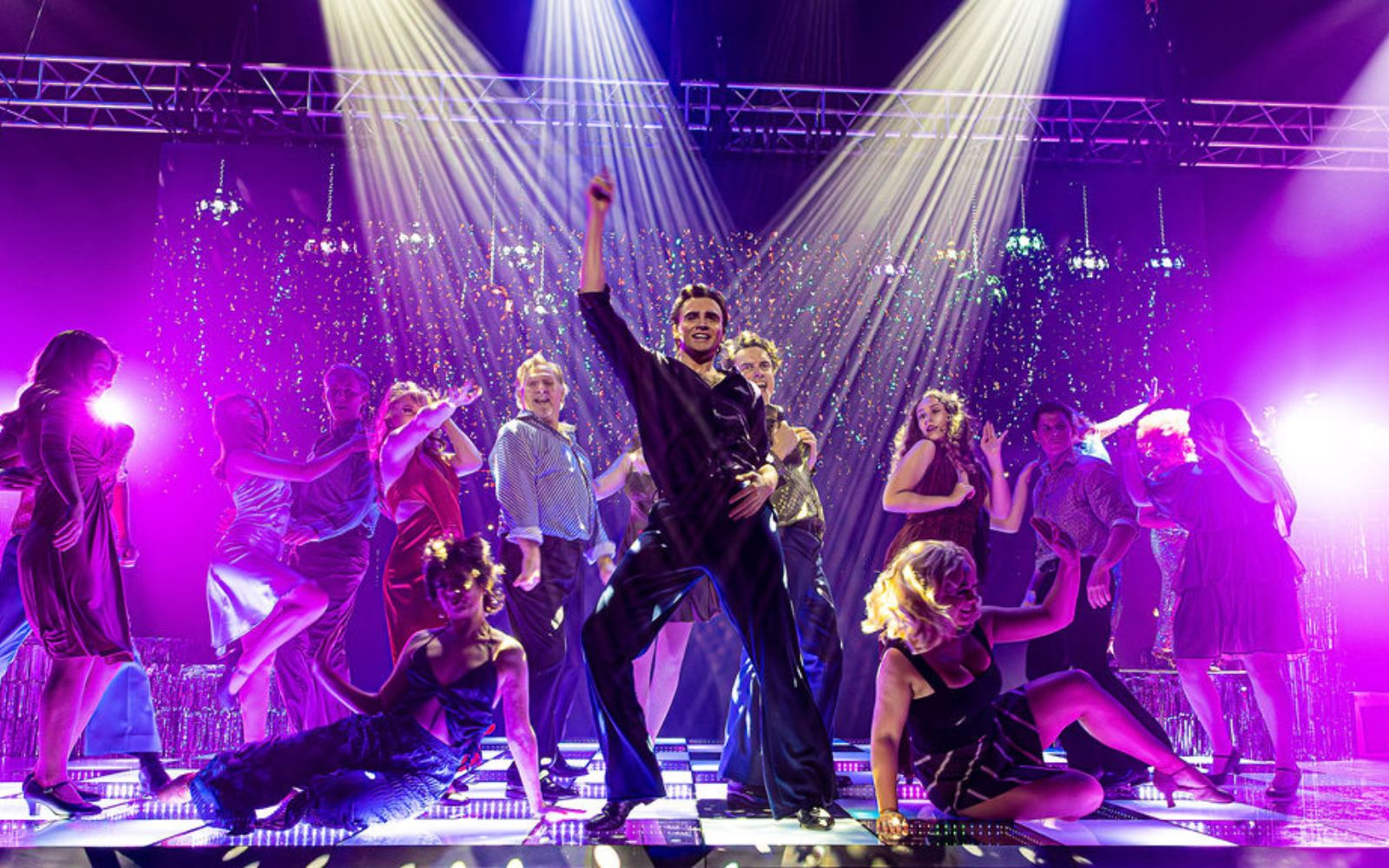
Drew Anthony Creative's production of Saturday Night Fever comes to the Athenaeum Theatre in January.
The original Saturday Night Fever film was released in 1977. It stars John Travolta as Tony Manero, a young, working-class Italian-American who spends his weekends on the dance floor as a means of escaping from the pressures of daily life.
The film established Travolta as a major star, earning him an Academy Award nomination for Best Actor. Many stage adaptations have followed, including a brand new musical production from director Drew Anthony, which comes to the Athenaeum Theatre for three weeks in January, with Ethan Churchill in the role of Tony.
“I decided to do Saturday Night Fever because it’s such a well-known show. It’s such a crowd-pleasing show. It’s a great brand name and people really resonate with it,” Anthony says.
Saturday Night Fever
- 8 – 25 January 2026
- Athenaeum Theatre 1
- Tickets here
Stay up to date with what’s happening in and around Melbourne here.
The original screenplay was based on an article in New York magazine. Written by journalist Nik Cohn, the article focused on the culture in Brooklyn of young Italian-Americans going to nightclubs.
“He wrote what became a really well-known article and that was the source and the driving reason behind creating Saturday Night Fever,” Anthony says.
View this post on Instagram
It’s impossible to separate the dramatic action of Saturday Night Fever from its soundtrack, which features several iconic songs by the Bee Gees, including Stayin’ Alive and How Deep Is Your Love. However, unlike Travolta’s next film, Grease, the Saturday Night Fever soundtrack is not narrative-driven. In fact, the film’s original director, John G. Avildsen, wasn’t inclined to prominently feature music.
“The first director was like, I don’t want that, that’s not how I see the film, so they were like, bye bye.” Anthony says.
Avildsen was replaced by John Badham, who saw how essential disco music was for conveying the story of Tony and his Italian-American peers finding escapism on the dance floor. The Bee Gees were commissioned to write some original songs for the film, and the soundtrack went on to become the best-selling album of all time until Michael Jackson’s Thriller was released five years later.
The first stage musical of Saturday Night Fever debuted on London’s West End in 1998.
“When it was decided that Saturday Night Fever had been such a great success as a film that it should be turned into a musical, it was just a matter of cleverly working those songs in so that they made sense within the context of the musical, which I think that they do,” Anthony says.
Anthony’s production – which premiered in Perth in 2024 – places more emphasis on the story’s darker elements than the majority of stage adaptations.
“People think, ‘It’s such a happy, bright, amazing film,’ because they’re homing in on that one moment where he’s on the dance floor,” Anthony says. “In actual fact, it’s a very intense story. There’s physical abuse, there’s misogyny, there’s male toxicity, there’s a rape. Our production leans into that in a much more truthful way than previous versions of this musical. “
But the heavier themes exist side by side with the iconic soundtrack and the scenes of Tony dancing in the 2001 Odyssey discotheque.
“We absolutely weave those songs and dance routines into our production,” Anthony says. “But it’s much more like the film than previous versions of the musical.”
Along with Churchill, Anthony’s production features Regan Barber as Stephanie and Izzi Green as Annette, two of Tony’s dance partners at the Odyssey 2001.
“Every single character in the stage version wants a life that’s different to the life that they’re living,” Anthony explains. “Everybody is affected and everybody wants out and everybody’s trying for something a little more aspirational.”
Anthony took home best director at the 2024 BroadwayWorld Awards Perth for his work on Saturday Night Fever, while Churchill was named best performer. But beyond the industry accolades, Anthony believes audiences are connecting with the production as a result of the current economic conditions.
“[There’s a] synergy between the story as it resonated in 1977 and the story as it resonates with audiences now,” he says. “We live in a time where people are just striving and trying – everyone’s aspiring to position themselves better than they possibly are. And I think that that’s why our production in Perth 18 months ago just really hit the spot with people, because they saw a lot of themselves in the characters in that story.”
Get your tickets for Saturday Night Fever here.