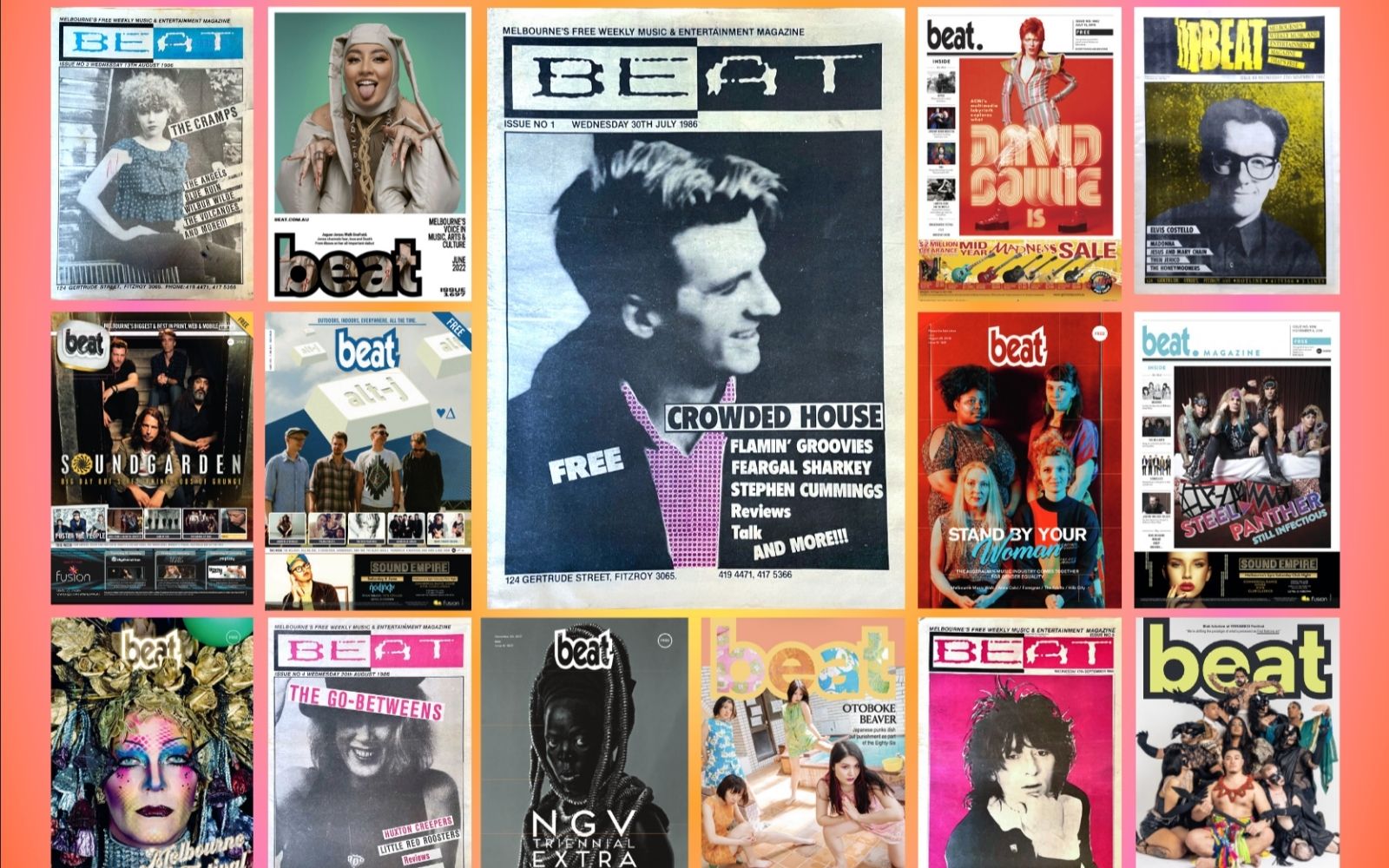
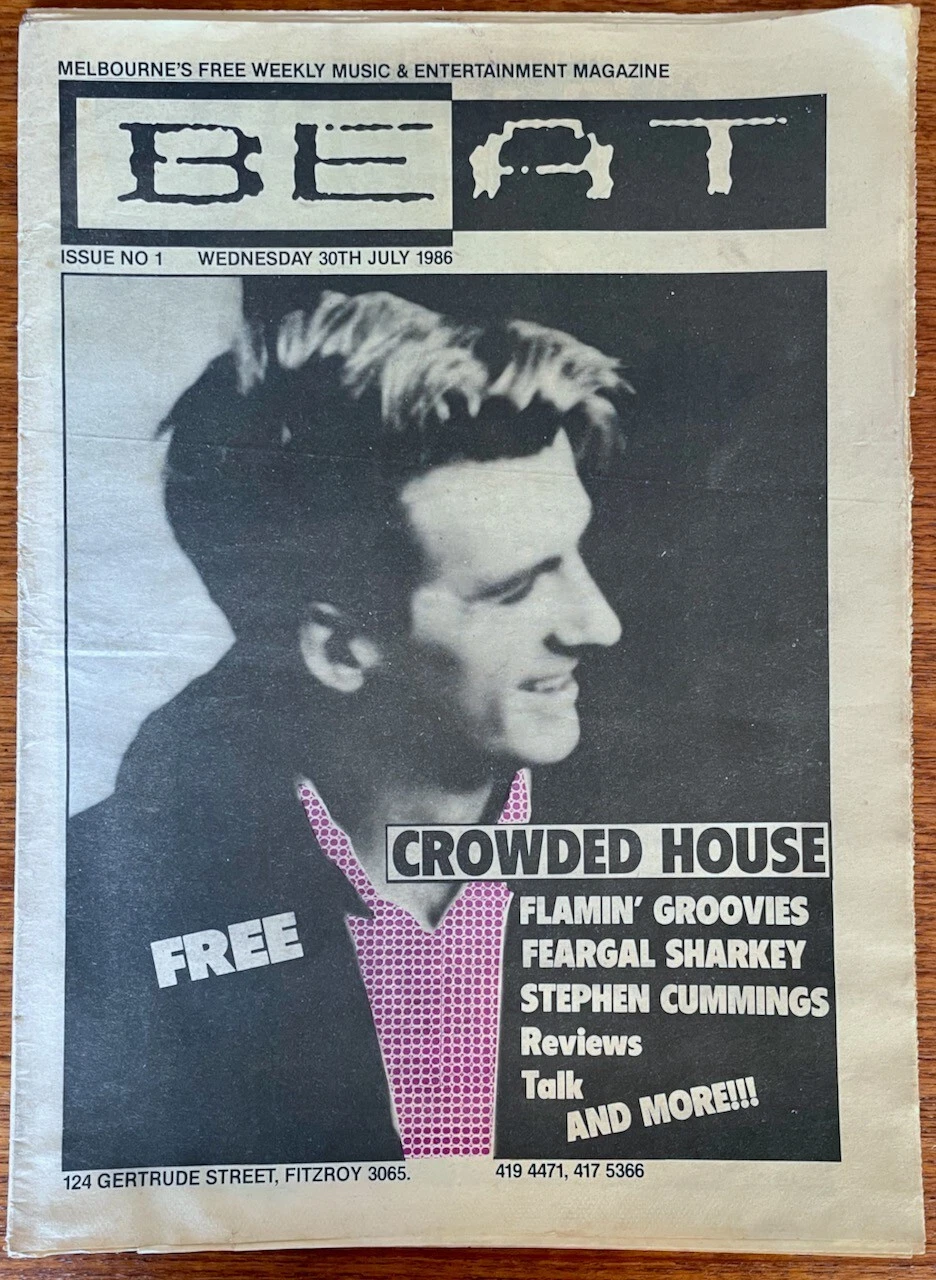
On 30 July 1986, the first issue of Beat hit the streets of Melbourne with typical foresight - a new band called Crowded House on the cover.
40 years on, it’s still here – Victoria’s voice in music, arts and culture, Australia’s longest-running free music and entertainment magazine, 1,745 issues deep, reaching over 1.4 million people every month across its website, socials, e-newsletter and, of course, magazine.
Rivals have come and gone in that time. Plenty didn’t see out the decade they launched in. Beat hasn’t just survived, it’s bigger than ever.
It very nearly didn’t outlast its own launch. Founder Rob Furst sold every ad in that first issue himself and turned a profit – before discovering that “profits have a nasty habit of disappearing once you pay staff, printers and distributors”, and, more alarmingly, that “we had no content for issue two”.
Stay up to date with what’s happening in and around Melbourne here.
But Beat has never really been a numbers thing. It’s a people thing – generations of writers, designers, salespeople and editors who passed through the office, gave it a few of their best and most chaotic years, and carried it with them long after they left.
Rob clocked that dynamic from the off. Flogging ad space to “hairdressers, nightclubs, record stores, fashion retailers, promoters and dreamers” – anyone who’d answer the phone – he built the magazine into the place a scene-rich city could, in his words, “find each other”.
So to mark the milestone, we put a callout to former editors: tell us what you remember. What came in wasn’t a tidy institutional history. It was funnier, messier and far more honest than that – a pile of 2am deadlines, ‘secret’ love affairs, career-defining covers and the occasional catastrophic fuck-up, all delivered with the love that you can only feel for a place that changed your life.
The job that demanded everything
Nobody fell into editing Beat gently. For Jaymz Clements, who ran the magazine from 2008 to 2011, the climb started at the very bottom rung. “Beat was my dream job: I started there as an intern and ended up the editor,” he says. Along the way he absorbed an education no university offers – the ins and outs of publishing, the music industry, hospitality, PR.
Taryn Stenvei’s entry was equally unlikely. “In 2011, I was 23, fresh off four months in South America, driving down the Hume from Sydney, my old home, to Melbourne, my new one,” she recalls. The role she’d applied for went to someone else. Then fate intervened. “I didn’t get the job. But thankfully, the guy who did immediately hated it, so I got the call back.
“Two weeks later, I was in the corner of the Beat office, intimidated, captivated, exhilarated.” From that corner she worked her way up to music editor – a position she describes as carrying an “almost mythical status”. She doesn’t pretend it was easy.
“Music editor at Beat isn’t exactly a casual job. It demands everything, so that’s what I gave it. But it kind of gave me everything too.”
What none of them dressed up was the reality of the gig. Long hours. Advertisers to keep happy. A magazine to fill, every single week, no matter what.
The deadline, the pizza and the towers of CDs
If there’s one thing every Beat editor remembers in their bones, it’s the deadline. A genuine, recurring, sleep-destroying, then-weekly event.
Jaymz summons it as a litany: “The 2am Monday night deadlines…the crappy Monday night deadline pizza…the towers of CDs everywhere…the free gigs…the hangovers.” The hangovers explain almost everything: being bribed with $5 vouchers to make it to sales meetings on time, being yelled at for never paying attention in those meetings, and “Lily Allen and I nearly making each other spew. Because of the hangovers.”
Out of all that mess, a full magazine appeared every week like clockwork. That’s the part Jaymz is still proud of, three decades of pop culture later: “The fact that we could put out a full 148 page magazine in a damn week. Despite the hangovers.”
“Beat never missed an issue, which still seems slightly miraculous,” Rob says.
For James Di Fabrizio, the defining grind was the annual comedy issue. “Nothing will eclipse the delusional glory of sending the annual Comedy Festival issue to printers after editing the magazine til 5am,” he says.
The deadlines were also, in hindsight, the forge. James is clear about what came out the other side of all those late nights. “I never could have anticipated the incredible, lifelong friendships that were forged in the fires of weekly print deadlines and the occasional (OK, all too often) late-night odyssey.”
Wind the clock back to the 90s and the deadline ran on an even more analogue kind of slog. Mary Mihelakos, who edited Beat for a decade from the mid-90s, remembers production weeks that read like an endurance event: into the Richmond office mid-morning, then not crawling out until four the next morning with the artwork finally done.
She’d drop the pages at Streamline Press in Fitzroy on the way home, grab a few hours’ sleep, then be back at her desk by 11 to chase the final deadline that night. “It was relentless,” she says, “but there was an incredible sense of camaraderie and purpose.”
And the craft itself was gloriously physical. A bromide room where photos were reproduced and resized, pages glued by hand onto graph paper, writers turning up with handwritten stories or floppy discs, musicians dropping in with demos. “I feel like a dinosaur describing it now,” Mary says, “but that’s how newspapers and magazines were made.”
The covers that made careers
Here’s the thing about a grassroots music magazine: it can put an unknown band on the cover purely because the editor believes in them.
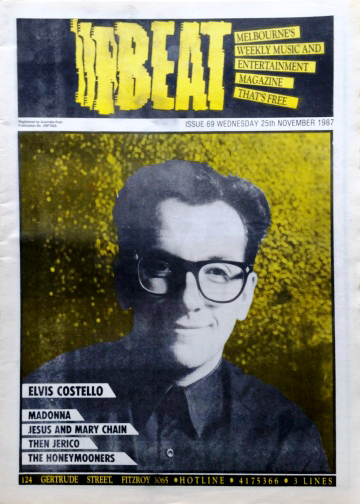
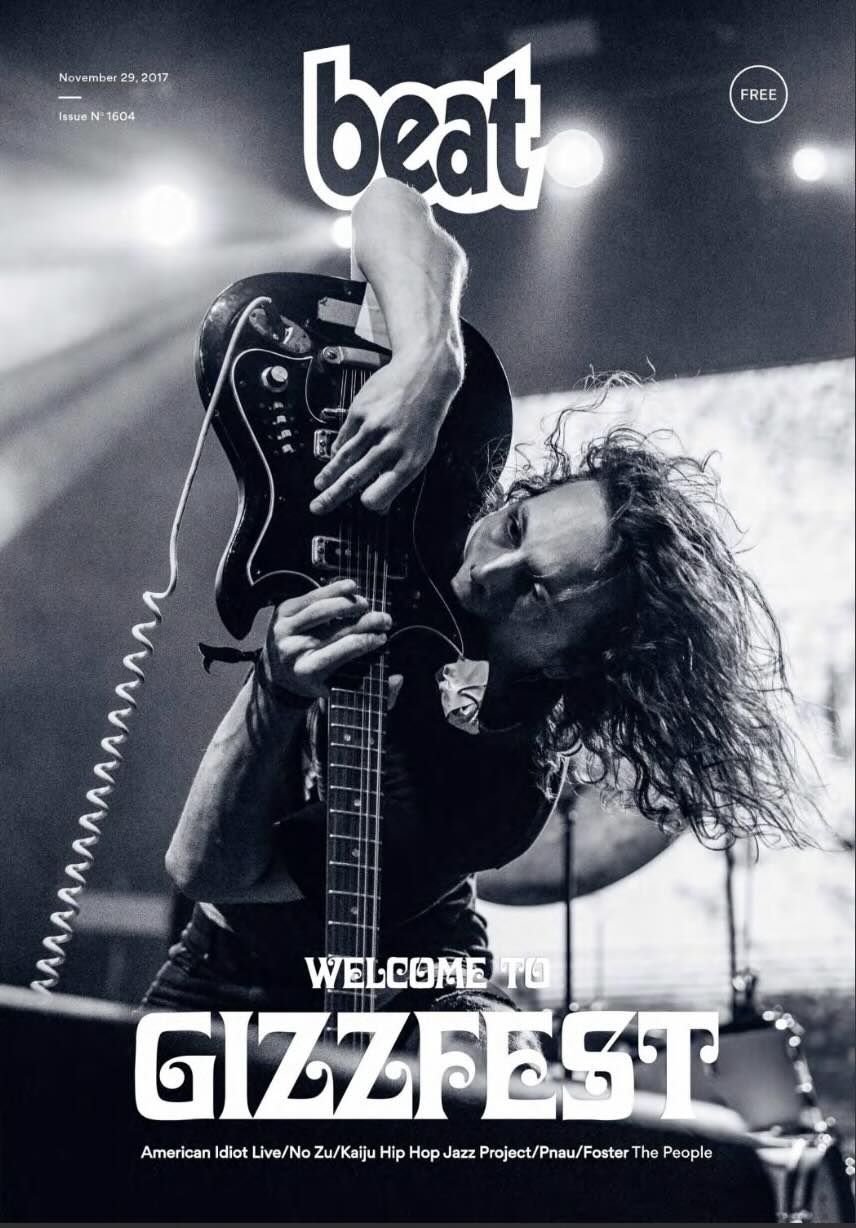
Taryn landed one of the great calls of the era – “giving King Giz their first ever magazine cover.” James frames this power as the real magic of street press. “You could bypass the machinery of major media publications and label politics; we gave so many incredible artists their first-ever cover and watched them soar to incredible heights.”
Mary has a similar trophy in the drawer, just on cassette. Late in 2000 she interviewed a then-unknown two-piece called the White Stripes – one of Jack White’s earliest sit-downs, recorded months before the band broke worldwide. She’s still got the tape.
For Ali Hawken, who left the masthead in mid-2014, the cover wins are still paying dividends at home. “I’m still milking that Snoop Dogg cover story for some ‘cool-mum’ points from my teenage daughter.”
The one that got away (onto the front page)
With great editorial freedom comes great capacity for public embarrassment.
Ali still winces at the time she blew Splendour’s secret headliner. Proofing pages late on a print deadline, she clocked what looked like a missing gig listing and, in a burst of initiative, slotted in Alt-J for Splendour – not realising it was the festival’s highly-confidential headline reveal. “Come Wednesday morning, when the mag hit the pavement, we were the laughing stock of our competitors’ social feeds, and on the receiving end of some furious phone calls. Not my finest hour,” she says.
The most legendary catastrophe in Beat’s 40 years wasn’t a leak or a typo, but a full-frontal self-portrait. Asked what you could get away with in street press that you couldn’t anywhere else, Ali says: “Luke Benge…need I say more?”
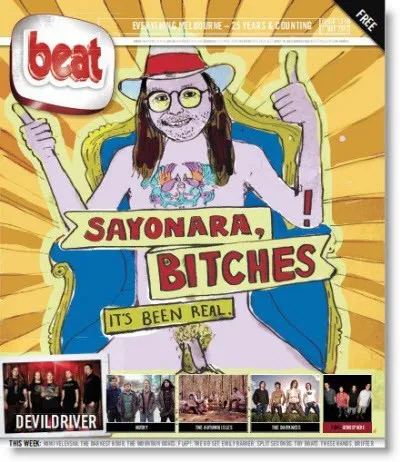
In May 2012, tens of thousands of copies of Beat landed across Melbourne with a cartoon of a naked man where Kaiser Chiefs should have been, the line “Sayonara, Bitches! It’s been real” splashed above his dick. Benge was leaving for New York, and on his final day he quietly switched the artwork, sent it off and flew out the day before it landed.
Confronted with a nude caricature and a farewell message, readers assumed the obvious: this was Beat’s last-ever issue. The editors who lived it can laugh now. Jaymz, who’d vacated the chair the year before, counts his timing as a blessing. Taryn, on staff at the time and keen to establish her innocence, files the whole episode under “the Great Beat Cover Hi-Jacking of 2012 (still laughing, and I swear I didn’t know).”
The punchline nobody saw coming? It worked. Looking back on the stunt, Taryn remembered the fallout with something close to glee:
“The week after that, Beat had more ads than it had in months. We were the most talked about thing in town. It was glorious.”
Like the centre of the universe
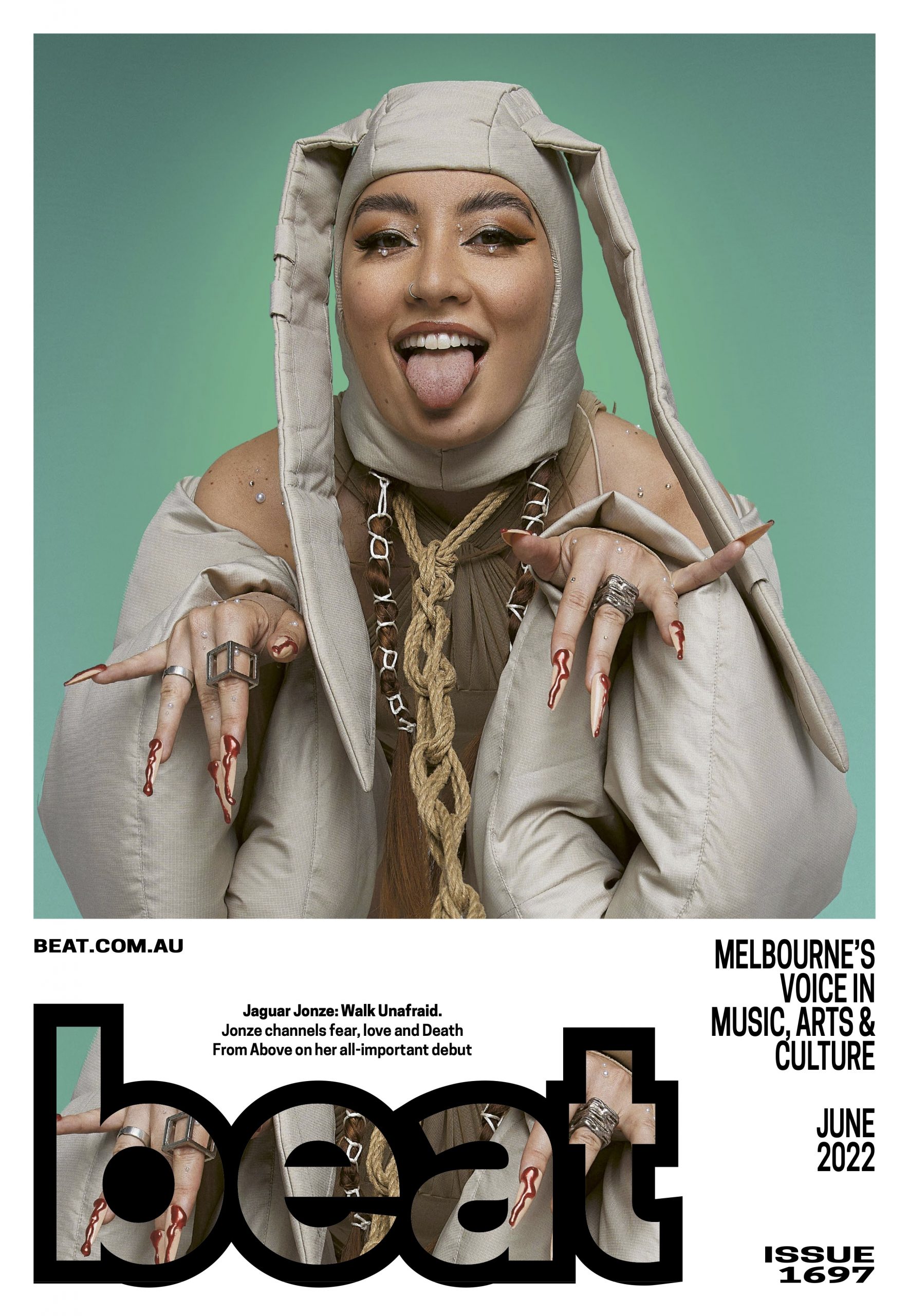
Ask these editors what Melbourne felt like during their Beat years and the answer is unanimous: enormous. The scene wasn’t a backdrop to the job. It was the whole point.
Melbourne felt “like the centre of the universe,” James (Di Fabrizio) says, and “for some reason, we all dressed like members of the same imaginary band.”
Mary has the anecdote that proves the point. Sing Sing Studios sat in the backstreets near the Richmond office, and one night she felt a vast rumble of bass roll down the lane. She followed it to Gordon Street and found the kerb lined with limousines.
Inside, Dr Dre and Aaliyah were recording – Aaliyah in town to film Queen of the Damned, only months before her death in 2001. The centre of the universe, give or take a few hundred metres of laneway.
For Ali, her era was a high-water mark for live music. “My stint at Beat, which wrapped up in mid-2014, feels in hindsight like the golden age of music festivals,” – a time when Big Day Out, Splendour, Falls, Soundwave and Bluesfest were all in their prime.
Taryn, who lived the Melbourne of the early 2010s as a writer and editor, frames it as a wave she got to ride at exactly the right moment – part of “the cresting wave of the insanely good music scene that was Melbourne in the 2010s.” Then, almost as an aside, she lands the truest line about this city: “though it’s perpetually A+, hey.”
The nights themselves have outlived the venues that hosted them. James’ pick for a room he’d resurrect is gloriously specific: “The 12am set at Ding Dong Lounge was everything you could want from a sticky, delirious bandroom.”
What Beat gave back
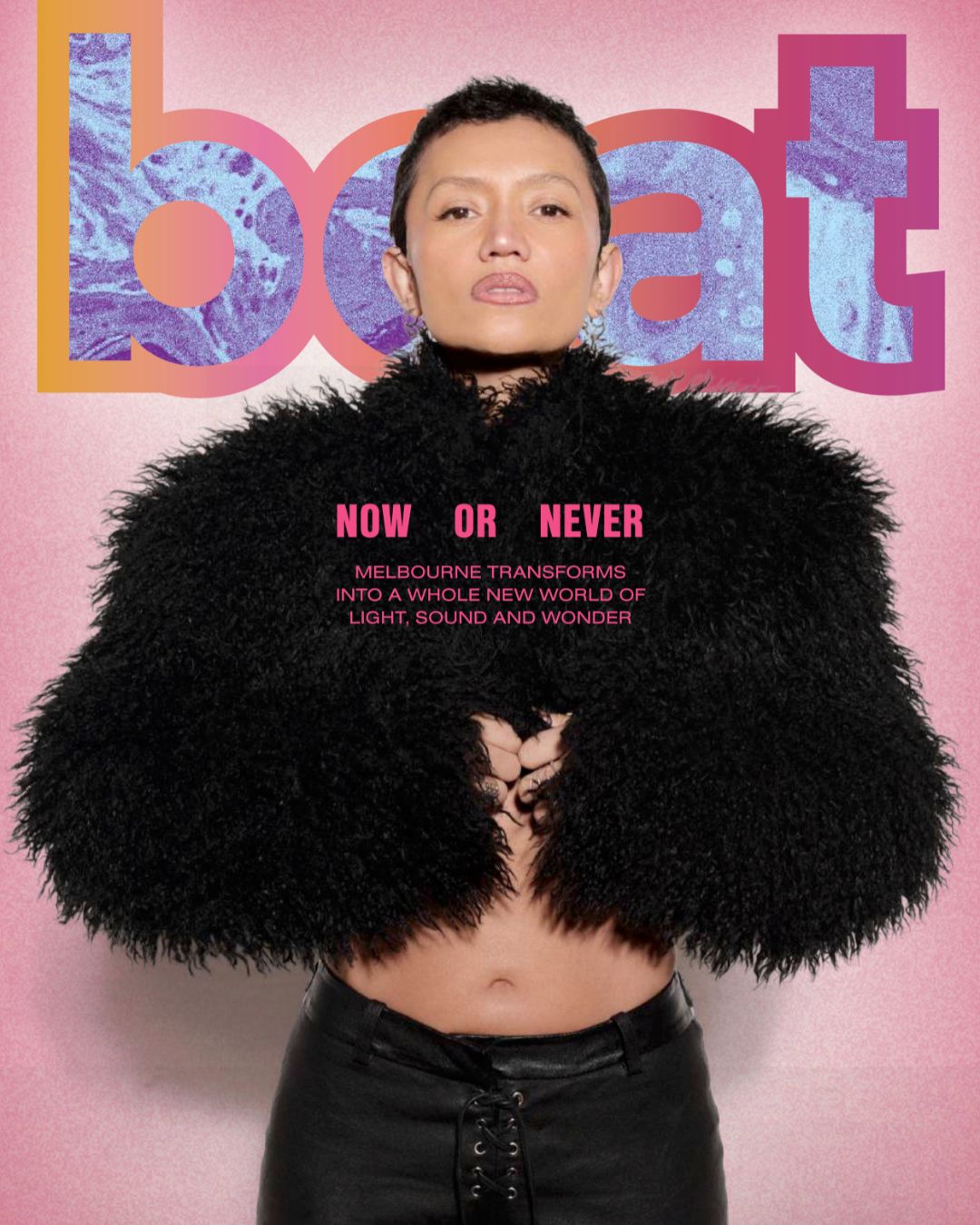
Jaymz rattles off everything he loved about working at Beat in a single breath. “I loved the people. I loved the vibe. I loved what our magazine meant to people. I loved supporting the bands and industry that supported us. I loved being a part of the fabric of Melbourne.”
For Taryn, the job didn’t just shape a career – it built a whole life. The boss she works for now? She met him at Beat: “I met my now-boss because he was a scrappy skateboarder who’d just moved from the UK and wanted to join my writers list.” One of her closest friends came via a CD handover at a business coffee. And the man who designed the magazine each week during her tenure became, after a chance reunion at a Total Control gig, something rather more.
“Now, we’re 13 years, a home, two kids and a puppy into our shared life together,” she says. “So when I say Beat Magazine gave me everything, I really mean everything.”
It’s a sentiment Ali echoes from a different angle. Looking back, it’s not the festivals or the famous names that surface first – it’s the colleagues. “when I think about Beat, it’s the people I worked with who come to mind for me,” she says, before her thoughts turn to the everyday silliness of the office and the beloved comrades down the hall at Fashion Journal and Mixdown.
That instinct to put people first never switched off, even when the city did. When I stepped into the role in August 2021, Melbourne was deep in lockdown and the office was reduced to a grid of faces on a screen. Face-to-face introductions took months, only happening as the city reopened and people began drifting back to their desks. The payoff for all the hard work came in May 2022, when Beat print returned in a new monthly format, Rolling Blackouts Coastal Fever fronting a bespoke cover shoot at Brunswick Ballroom. After two years, there was something triumphant about holding a fresh issue again.
Forty years, and counting
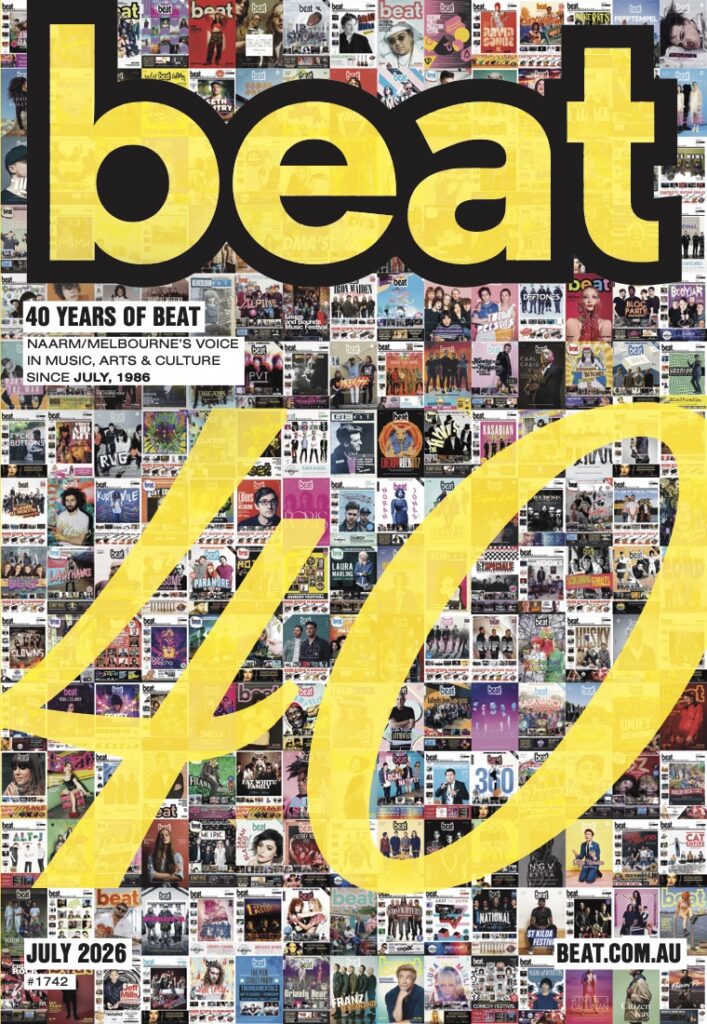
A milestone like this invites the big, sweeping statement.
“Beat is an absolute institution,” Taryn says. “I reckon not just for me, but for most people who passed through its doors, it played an outsized role in our becoming,” she writes. Then she raises a glass to the lot of it: “So cheers to the covers, the colleagues, the readers, the venues, the deadlines, the gigs, the bands, the chaos and the way all of these things have threaded together to bring life to blank pages, to Melbourne’s music scene, and to us all. But especially me.”
James reaches for the cosmic. “40 years of Beat is a testament to grassroots music journalism, community, and grand visions played out on local stages,” he says.
“Media empires will come and go: but the indomitable spirit of Beat is forever. Viva la Beat!”
For Ali, the milestone is personal: she’s turning 40 this year too. “It’s nice to be sharing a significant birthday with Beat! Having just turned 40 myself this year, I’ve found myself somewhat sentimental about life recently, and that extends to my feelings about Beat, too.”
Rob takes a more deadpan view. He was, he admits, “never entirely convinced about all that stuff we ran between the ads. What’s it called again? Oh yes. Editorial.” His version of the story is blunter than the editors’: “Beat was always powered by advertising,” he says – the ads “kept the whole circus on the road”.
Beat, of course, is still free – which loops Furst back to the question he put to readers in his very first editorial: “What do you expect for nothing?” His verdict: “Apparently, quite a lot. And somehow, Beat delivered.”
40 years on from that first issue in July 1986, the bands have changed, the festivals have come and gone, the CDs have given way to streams, and Beat’s HQ has moved plenty of times. But the thing we all keep circling back to hasn’t shifted an inch – a scrappy, fiercely loved magazine that gave a generation of Melbourne music obsessives their start, their friends, and in at least one case, their whole family.
Here’s to the next 40.
To see the best of Beat, follow us on Instagram here.