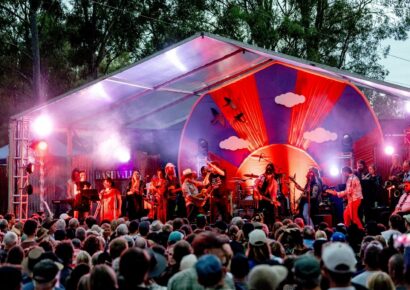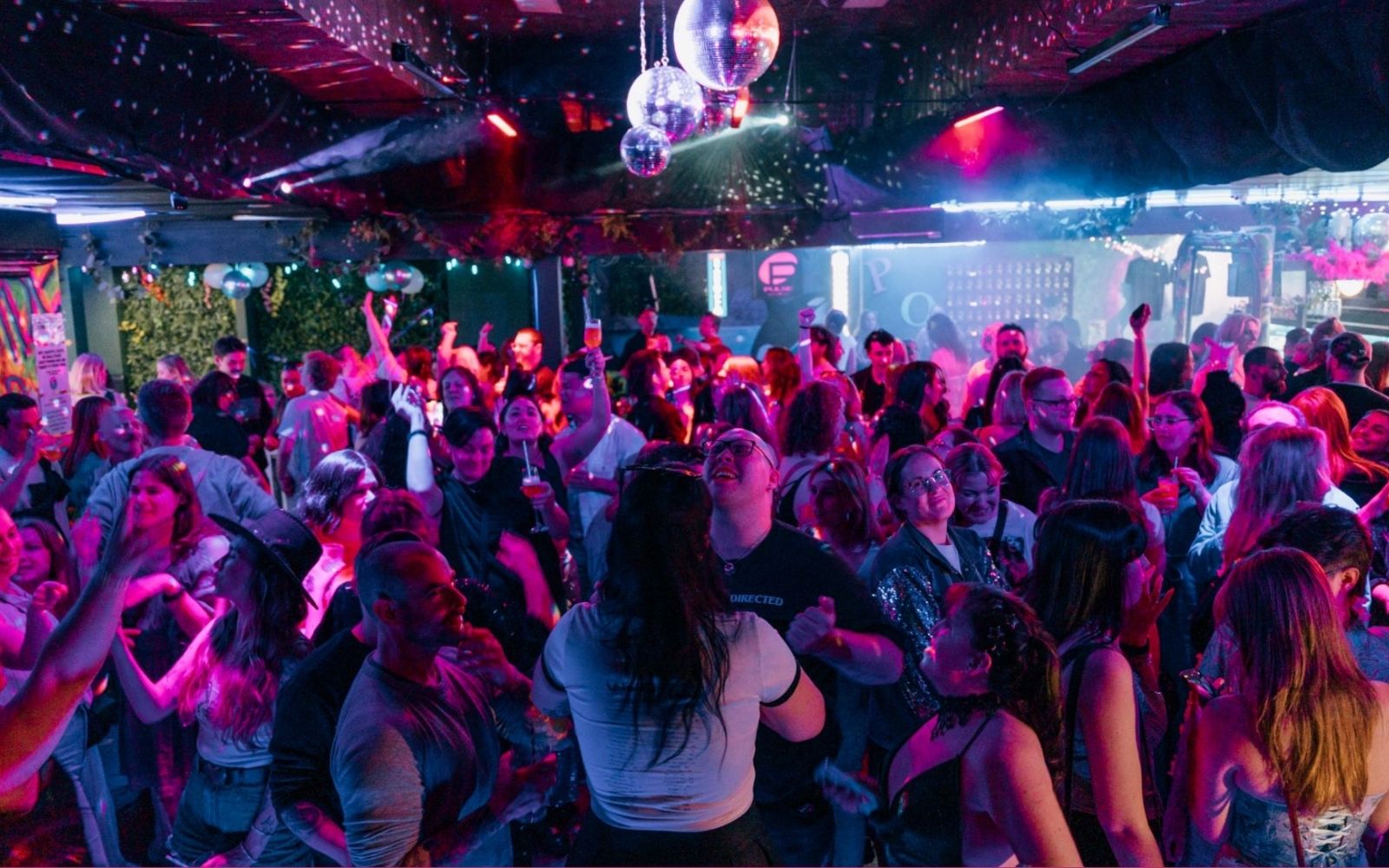
This is a community bar being charged more for insurance than a demolition site.
Pride of Our Footscray is a 200-capacity, community-owned venue in Melbourne’s inner west that hosts drag, comedy, poetry, live music and theatre. It’s owned by roughly 200 local shareholders, holds a five-star Liquor Control Victoria rating — the highest possible — and has never made a single insurance claim across eight years of trading. By any standard metric, it’s a textbook low-risk business.
None of that matters to insurers. The venue’s annual public liability premium has surged from around $6,000 in 2020 to $142,890 in 2024, a figure that balloons to $157,179 once financing costs are factored in. That’s a 2,506 per cent increase in four years — with zero claims, zero incidents and no change to the venue’s operations.
Insure Good Times
- What: Insure Good Times campaign supporting the Parliamentary Joint Committee on Corporations and Financial Services inquiry into small business insurance
- Submissions close: 6 March 2026
- Make a submission: insuregoodtimes.com.au
- Reporting date: 27 October 2026
Stay up to date with what’s happening in and around Melbourne here.
View this post on Instagram
Insurance now 13% of total revenue
To break that down further, Pride is paying roughly $3,022 per week just to remain insured. That works out to $75 per trading hour before a single staff member is paid, a drink is poured or rent is covered. Insurance alone now accounts for roughly 13 per cent of the venue’s total revenue — a staggering burden for a small business sector where survival margins typically sit between five and 10 per cent.
The situation gets bleaker when you look at the broader market. When Pride’s broker approached 19 insurers for quotes, 18 refused outright. The single quote that came back landed at $142,890. The refusals weren’t based on safety concerns, claims history or compliance issues. Insurers simply categorised Pride as a “nightclub” and applied blanket exclusion policies — lumping drag bingo, poetry readings and community fundraisers into the same risk bucket.
That $150,000 premium range is typically associated with demolition contractors, high-rise construction sites, hazardous materials handlers and motorsport operators. For a venue that uses plastic glassware, employs professional security and enforces strict capacity controls, the pricing disconnect is extraordinary.
A far-reaching insurance crisis
The crisis extends beyond public liability. In August 2023, WFI — a brand owned by Insurance Australia Group — cancelled the building insurance for the entire property at 86–88 Hopkins Street, where Pride operates alongside an Asian grocery and a 24-hour gym. WFI specifically targeted Pride’s tenancy as the reason, despite never assessing the venue’s actual fire or structural risk. The landlord’s building insurance premium subsequently jumped from approximately $8,000 to $37,000, with Pride’s share of recoverable outgoings rising from around $3,000 to over $18,500.
View this post on Instagram
During negotiations with IAG’s corporate affairs department, Pride was told coverage might be reconsidered only if the venue closed at midnight, halved its capacity to 100 and removed the dancefloor entirely — effectively demanding the business cease to exist in its current form.
This is the case study now anchoring the Insure Good Times campaign, a newly established association pushing for structural reform through the federal Parliamentary Joint Committee on Corporations and Financial Services inquiry into small business insurance. The inquiry was referred by Assistant Treasurer Dr Daniel Mulino on 30 October 2025 and is chaired by Senator Deb O’Neill. Submissions close 6 March 2026, with the committee due to report by 27 October 2026.
The campaign is advocating for six key reforms including a federal statutory insurance scheme modelled on New Zealand’s Accident Compensation Corporation, a discretionary mutual fund for the live entertainment sector, expansion of the Australian Reinsurance Pool Corporation’s mandate to cover cultural infrastructure, and legislative changes compelling insurers to offer public liability coverage to compliant small businesses.
If a venue with a perfect safety record, maximum regulatory compliance and deep community support can be priced to the point of extinction, the implications stretch well beyond live music. The inquiry’s submission window closes in days — and the campaign is urging anyone who cares about keeping Australian venues alive to lodge their input before it shuts.
For more information, head here.