Excavation on the North East Link tunnels has finished, with fit-out now beginning ahead of a 2028 opening.
Tunnelling on the North East Link is complete, with the second boring machine breaking through at Bulleen on 24 July.
The machine, named Gillian, finished the southbound bore after excavation of the northbound tunnel wrapped in May. Both run 6.5 kilometres between Watsonia and Bulleen, sitting as deep as 45 metres below the surface.
The tunnels sit at the centre of a three-part road program that also takes in an overhaul of the Eastern Freeway and the completion of the M80 Ring Road at Greensborough. All three are scheduled to open in 2028, jointly funded by the Australian and Victorian governments.
Stay up to date with what’s happening in and around Melbourne here.
What the North East Link tunnels involve
The twin bores are the longest road tunnels built in Victoria. They carry traffic beneath Watsonia, Yallambie, Macleod, Heidelberg and Bulleen rather than through them, an alignment chosen to keep more of Borlase Reserve, Banyule Creek and the Yarra (Birrarung) corridor intact.
Detailed design and construction has been managed by the Spark consortium, appointed in June 2021 after the tunnelled section was lengthened by 1.9 kilometres. That change replaced cut-and-cover trenching with machine boring across a longer stretch.
Once open, the project is forecast to take 15,000 trucks a day off local roads and cut as much as 35 minutes from trips between Melbourne’s north and east.
Inside the boring machine campaign
The first machine, Zelda, launched in August 2024 from a 40-metre-deep box at Watsonia and headed south to build the northbound tunnel. Gillian followed a month later on the opposite alignment.
Both ran around the clock, each crewed by as many as 20 people — operators, electricians, mechanics, ring builders and tunnel engineers working in rotation. Between them the machines shifted 2.5 million tonnes of rock and soil and installed close to 43,000 pre-cast concrete segments to line the bores.
Victoria’s Big Build maintained a public tunnel boring machine tracker through the campaign, plotting each machine’s position beneath the suburbs.
What happens during the fit-out phase
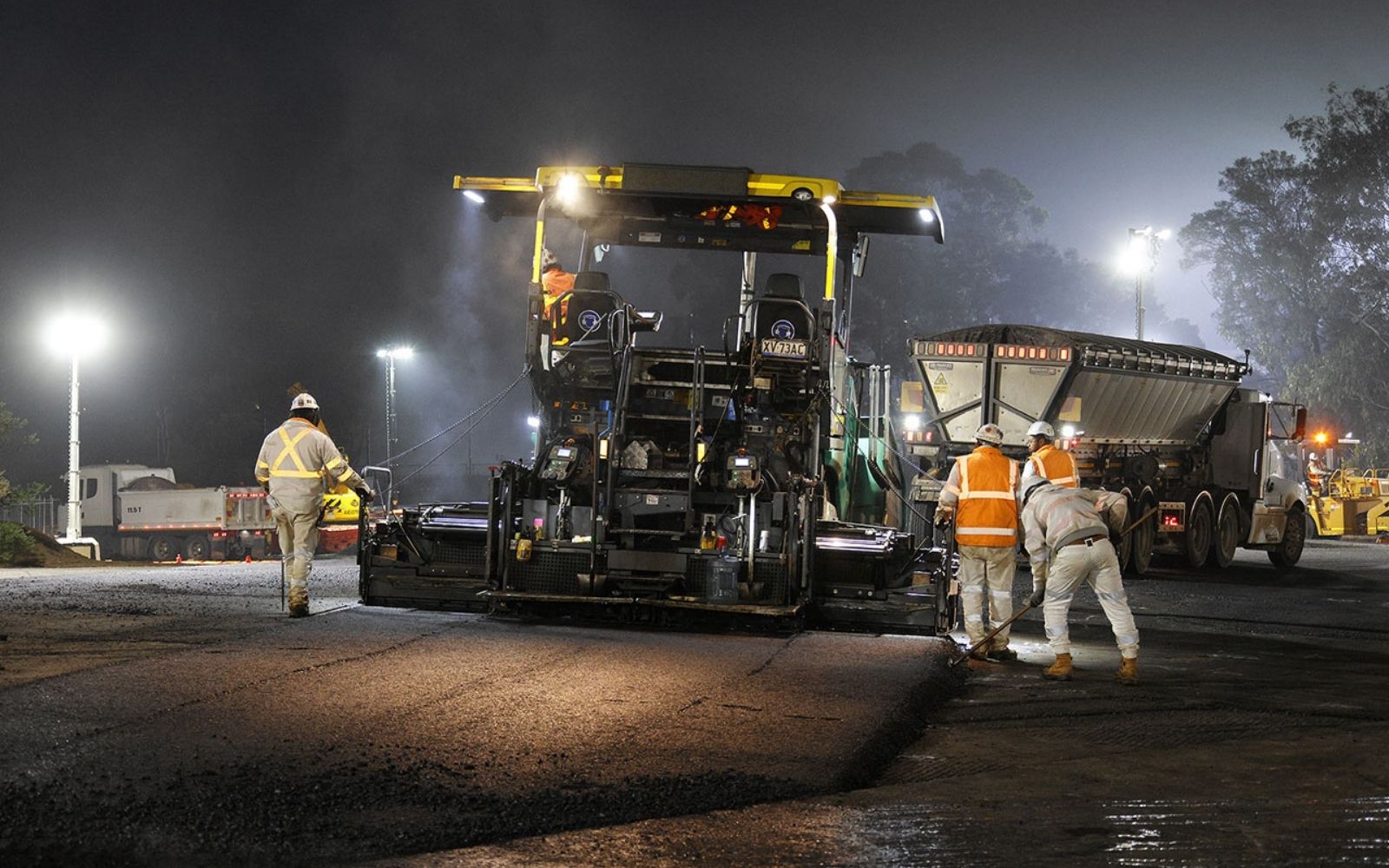
With excavation finished, crews shift to the interior. That work covers 700,000 tonnes of road surface, 3,300 kilometres of cabling for lighting and signage, and 51 emergency cross-passages linking the two bores.
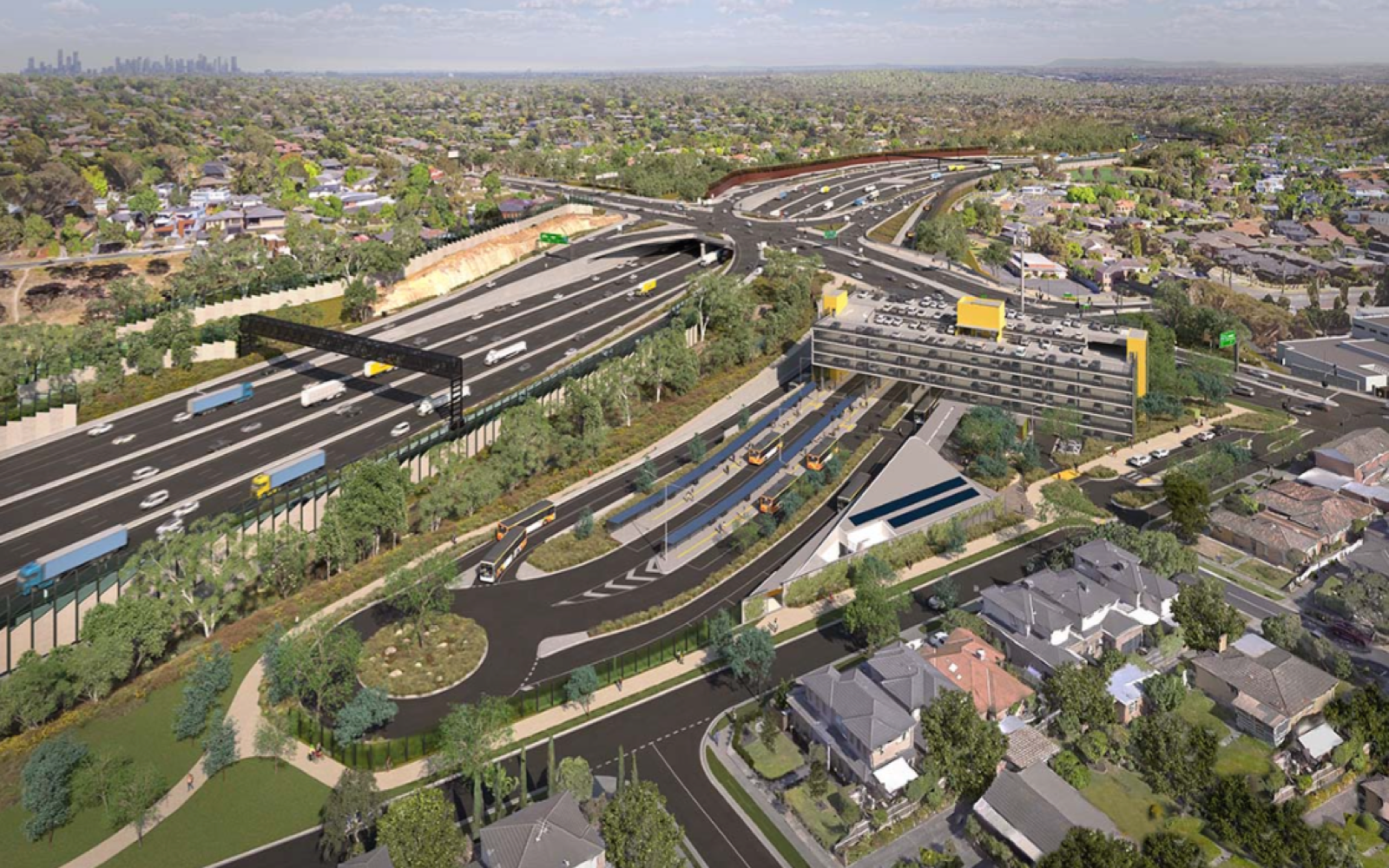
Surface works are running in parallel. Crews are building the interchange ramps, a motorway control centre and a tree-lined boulevard along Greensborough Road between Watsonia and Rosanna.
Further south, the Manningham Road interchange is under construction alongside a new wetland and a First Nations cultural precinct on the banks of the Yarra at Bulleen. A pedestrian bridge, Eel (Iuk), will span Lower Plenty Road to connect Borlase Reserve with River Gum Walk.
How the Eastern Freeway and M80 works connect

The tunnels only function as a through route once the freeway at either end is rebuilt. Work on the Eastern Freeway runs in stages from Hoddle Street out to Springvale Road, delivering new express lanes across the corridor along with smart traffic management.
It also delivers Melbourne’s first dedicated busway, running express services from Doncaster toward the city, plus more than 10 kilometres of walking and cycling paths. The final delivery contracts were locked in last year.
Drivers have already worn the disruption. Getting the flyover lanes into position required full weekend closures of the freeway, a pattern that has repeated as the program pushes toward 2028. At the northern end, the M80 Ring Road at Greensborough gains five lanes and a direct connection into the tunnels.
What the auditor-general found on cost
The Victorian Auditor-General’s Office reported in 2024 that the road packages were expected to cost $26.21 billion, some $10.42 billion above the figure Infrastructure Australia originally assessed, following design and scope changes made in late 2018.
The office found no evidence that the project’s benefit-cost ratio had been formally reassessed after those changes, meaning the current economic case has not been re-established publicly.
Where this sits in Melbourne’s construction decade
The breakthrough lands in the middle of the heaviest run of transport building the city has seen. Suburban Rail Loop machines are excavating beneath the south-east on a 2035 timeline, and the network is still absorbing the changes the Metro Tunnel brought to the rail map.
For residents of Banyule, Manningham and Whittlesea, the practical question is how much of the surface disruption eases now that the machines have stopped. Above-ground works at Bulleen, Watsonia and along the Eastern Freeway continue for another two years regardless.
The North East Link tunnels are due to carry traffic in 2028, alongside the freeway upgrades and the completed ring road.
For more information, head here.
