Pick your own microgreens from a living vertical farm, try on experimental mycelium garments, fire-retardant for a world of bushfires, undermine democracy with AI and lie in bed as an act of resistance against capitalist productivity.
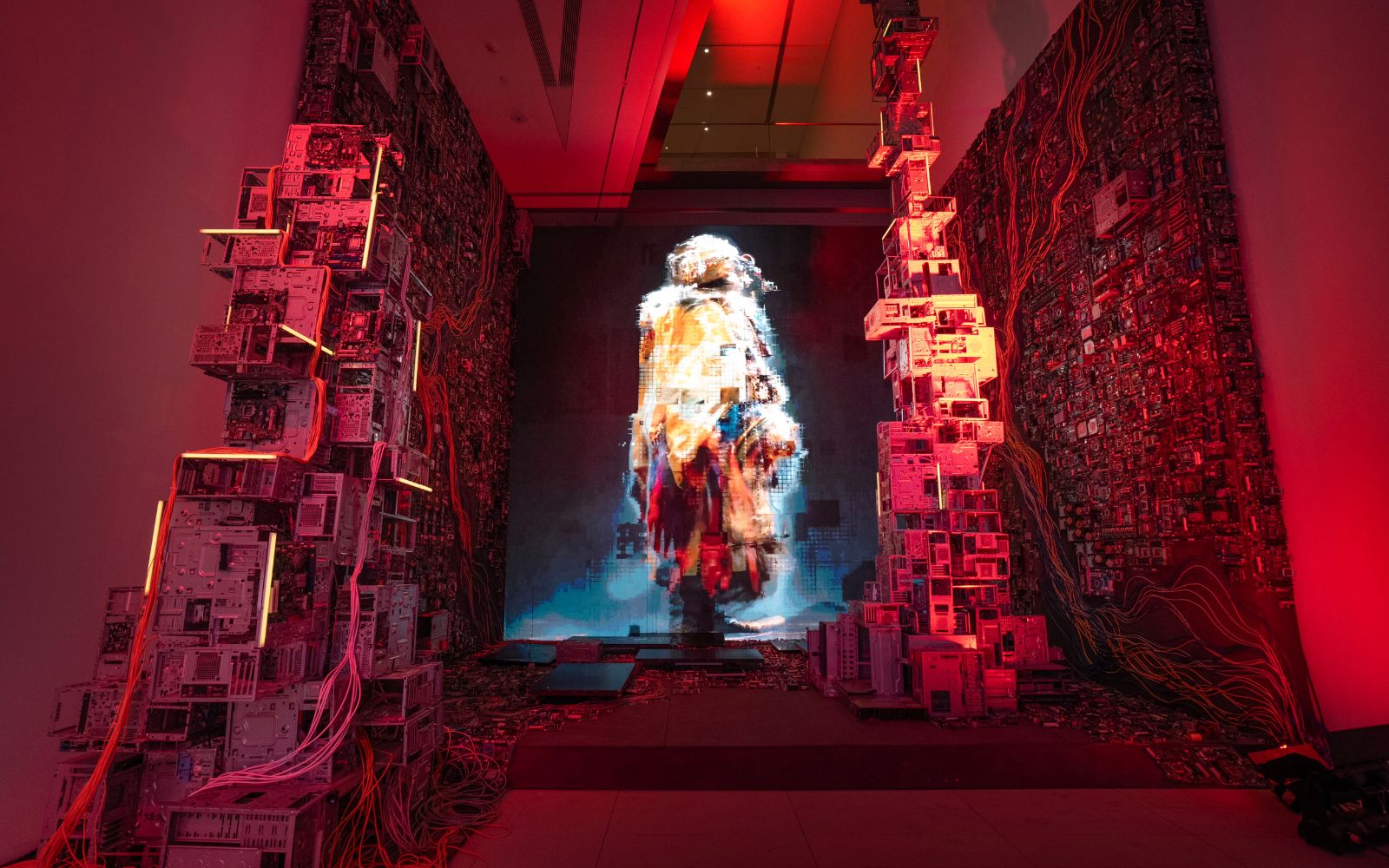
Opening during Rising Festival, EMERGENCE[Y] (June 6-December 5) at Science Gallery at the University of Melbourne explores our changing, terrifying, hopeful and astonishing world and its future(s).
The 17 works are a dynamic interplay of arts and science, covering everything from ecologies and technologies to indigenous knowledge and new windows into empathy and connection.
EMERGENCE[Y] at Science Gallery at the University of Melbourne
- Where: Science Gallery Melbourne, University of Melbourne
- When: 6 June – 5 December 2026
Stay up to date with what’s happening in and around Melbourne here.
View this post on Instagram
“Artists have always been part of connecting people to big and scary ideas, opening the door to critical thinking, active listening, and shifting perspectives, making the future feel possible and less daunting,” Head of Curatorial Tilly Boleyn says.
“The through-line between science and arts people is the passion that drives them, and creativity, curiosity and experimentation.”
A centrepiece of the exhibition is Patricia Piccinini’s major new commission, revisiting her iconic Still Life With Stem Cells series nearly 25 years on.
In this new sculpture, the little girl no longer has her biomatter blobs, but has become a grown woman with a baby of her own, reaching out to touch a new, organic “otherworldly” being. It will be shown ‘in conversation’ with the original piece, on loan from Monash Museum of Art.
It’s the first time Piccinini has collaborated directly with stem cell research scientists, as part of her year-long residency with Science Gallery Melbourne.
“She wanted to capture the care,” Boleyn says. “It reframed how she viewed the scientists, as farmers caring for their flocks. This real altruistic approach, all their hopes and dreams they’re working towards… for future generations.”
While everyone will find timely and intriguing ideas in EMERGENCE[Y], the gallery particularly aims to spark the curiosity of young minds aged 15-30.
“We’re trying to connect with them and shift their ways of thinking about the world and their future,” Boleyn says.
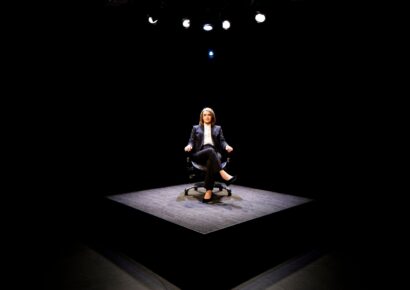
Democracy in the rise of AI is a hot topic, skewered in the interactive piece Simulated Consensus where audiences can manipulate language to influence voting outcome, running it through Ryuta Aioki’s AI models.
The works can get downright confronting. K.S. Brewer’s ‘Ecstatic Corpse’ makes use of the university’s anatomical models to re-evaluate how much we can keep death and decay at arm’s length in our climate future.
“K.S. is trying to [change] it into a feeling of transformation,” Boleyn says.
“Being more connected with the idea of decay as an ecstatic feeling rather than a fearful one, an inevitability for all of us.”
Marco Barotti’s ‘Coral Sonic Resilience’ is an uplifting insight into the coral reef regeneration projects. Using 3D printed sculptures and recordings of healthy reef soundscapes, marine life is enticed to return to struggling areas and help restore it.
“The topics we’re covering can get dark,” Boleyn says. “What we want to bring to our audience is hope and resilience… for action to be taken.”
The exhibition weaves in perspectives of students and young people, and varied experiences of culture and bodies in this pivotal moment. Chelle Destefano is a Deaf artist who has worked with Deaf students to create a video piece exploring the Deaf perspective in a rapidly changing world.
Radio Climate shares audio works pulled together by a First Nations-led group of young people and curators. Hear reflections gathered from climate researchers and artists and respond, adding your own in a collaborative piece about what we owe to each other and to Country, and how we can work together to do better.
Jarra Karalinar Steel and Troy Innocent’s ‘Memory Code’ is an interactive game connecting you to Country and the waterways of the Birrarung. With soundwork, wayfinding and gameplay, you’ll explore how we find our way in space and time without phones, through Indigenous place, language and knowledge.
“We are in an urgent time, but there are these emergent futures and possibilities,” Boleyn says. “It’s not all doom and gloom. There are amazing possibilities we can create. We can shift the dial and make a new future for ourselves and each other.”
For more information, head here.
This article was made in partnership with Science Gallery at the University of Melbourne.