Flora, a co-production between The Australian Ballet and Bangarra Dance Theatre, was commissioned by The Australian Ballet.
These premier Australian dance companies have previously collaborated on shorter pieces three times over the years – including 1997’s Rites, choreographed by Stephen Page, which premiered at the Melbourne International Festival of the Arts – but Flora marks their first combined full-length work.
Choreographer Frances Rings (also Bangarra’s Artistic Director and Co-CEO) developed Flora in five weeks, when a combined ensemble of more than 35 dancers – drawn from both companies – assembled to rehearse at Bangarra’s studios on Gadigal Country.
Flora melds 65,000 years of Aboriginal and Torres Strait Islander storytelling with classical technique. The systems of ballet and contemporary dance training are antithetical in so many ways, so we’re tipping that The Australian Ballet’s dancers found Bangarra’s more earthy, grounded style challenging at times. And while mastering Bangarra’s movement vocabulary, these ballet dancers also had to dig deep to interpret Flora’s cultural importance.
Stay up to date with what’s happening in and around Melbourne here.
For Indigenous people, caring for the land, sea, sky and waterways is a responsibility passed down by ancestors, whose understanding of Country is held in ancient knowledge. This work explores the evolution, resilience and ecology of Australian flora. The natural world is presented as a living witness to Australia’s unfolding history, including the devastating impact of colonisation and introduced species on the flora of Australia.
Act I takes us below the surface of the Earth, as sinewy roots slowly burrow down from the top of the proscenium arch into the stage space. Occasional flashes of light briefly reveal dancers writhing within the root system. The aerial Sleeping Yams movement mesmerises, as inverted dancing couples clutch one another and then drift apart as they’re hoisted up and down using indiscernible cables. Callum Linnane’s Yams Solo is a standout moment as he demonstrates how well the Bangarra technique sits on his body.
The original score by Kalkadungu man and internationally renowned composer William Barton effortlessly combines ancient instrumentation, including didgeridoo, with Western classical orchestral traditions.
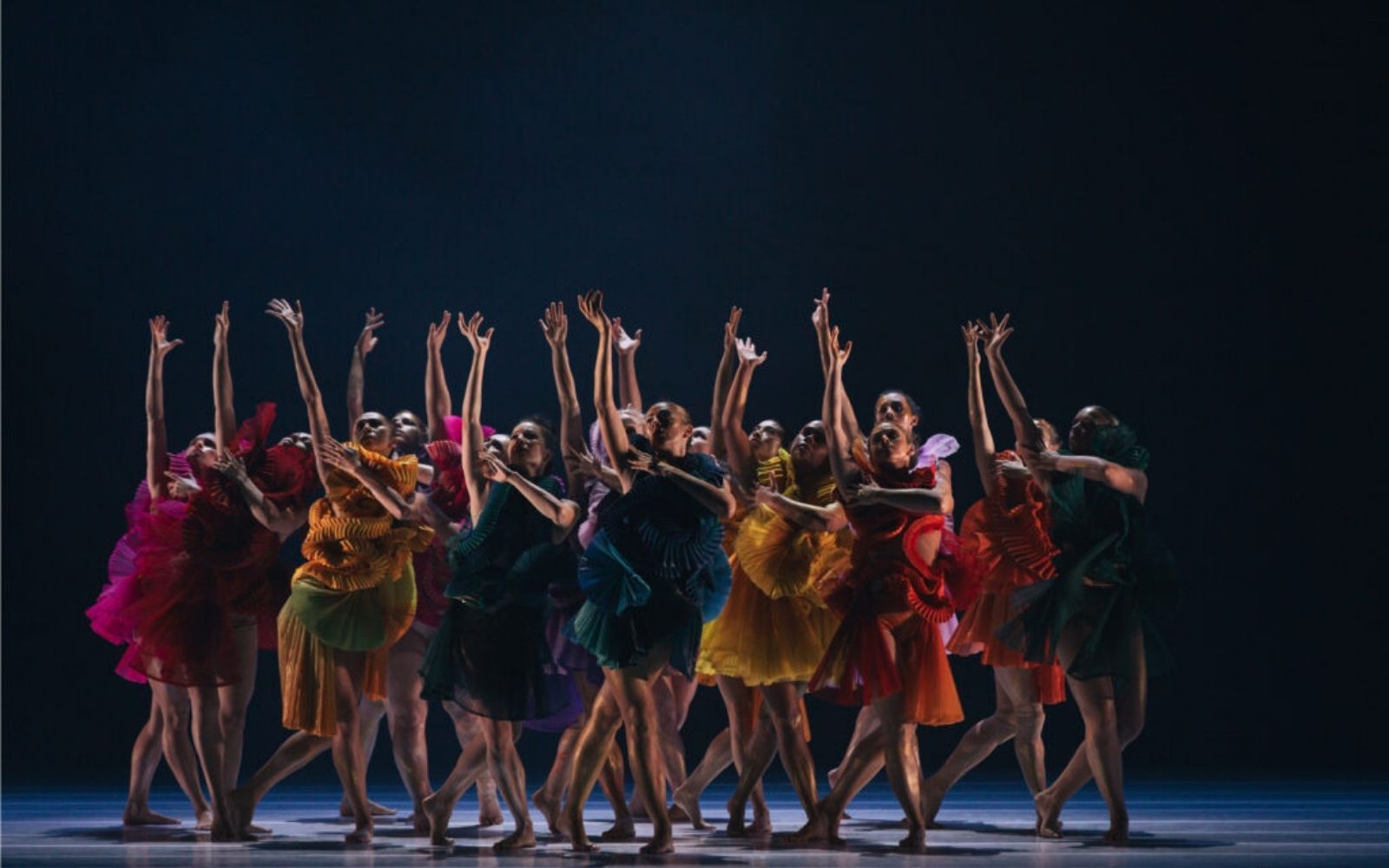
Thanks to Elizabeth Gadsby’s innovative sets, inspired lighting design by Karen Norris and Meriam Samsep woman Grace Lillian Lee’s sculptural costumes (the vibrant Bush Flowers are simply stunning), Flora unfurls like a vivified painting – visually breathtaking throughout. While we’re busy admiring the combined company’s deft use of props (eg. striking the stage rhythmically with digging sticks, which enhances Barton’s score), the dancers effortlessly pause in tableau. Manipulated mounds of spinifex amalgamate, forming patterns. Dancers vocalise here to great effect, recreating the rustle and swoosh of wind through grass.
Hooves Are Coming, Act I’s concluding movement, sees Barton incorporating the sound of hooves and pickaxes. This signals colonisation’s destruction of this country’s delicate ecosystem.
To open Act II, suspended, human-size plant specimen bags hang from a circular gantry, each containing a dancer depicting a flora sample trying to escape captivity. This section represents the destructive impact that removing species from their natural environment – to display in museums – had on our local ecosystems.
Jill Ogai (The Australian Ballet) dances a harrowing Golden Wattle solo, backed by projected phrases (eg. “Aboriginal people shall not be counted”), which are also narrated. After being reduced to “artefact status”, it wasn’t until 1967 that First Nations Peoples were included in the population count.
Fire – wielded live on torches and also slowly spreading across the cyclorama in visual form – ultimately symbolises renewal. We’re left with a message of hope, healing and reparation.
During an interview, Rings explained Flora’s significance: “Plants are messengers and indicators of the health of Country. As we face increasing environmental challenges, we all share responsibility for protecting our unique landscapes for future generations.”
Flora educates audiences about custodianship and caring for Country, preserving history through movement far more effectively than most verbal conversations. Furthermore, observing and collaborating with a different company can’t help but improve Flora’s cast as both dancers and performers, which promises exciting things for the Australian dance community.
Flora runs until 21 March at the Regent Theatre.