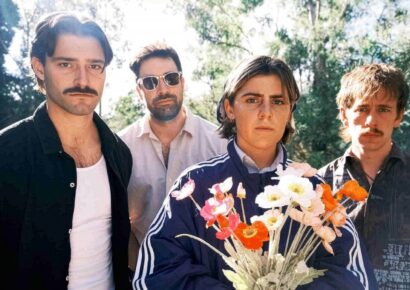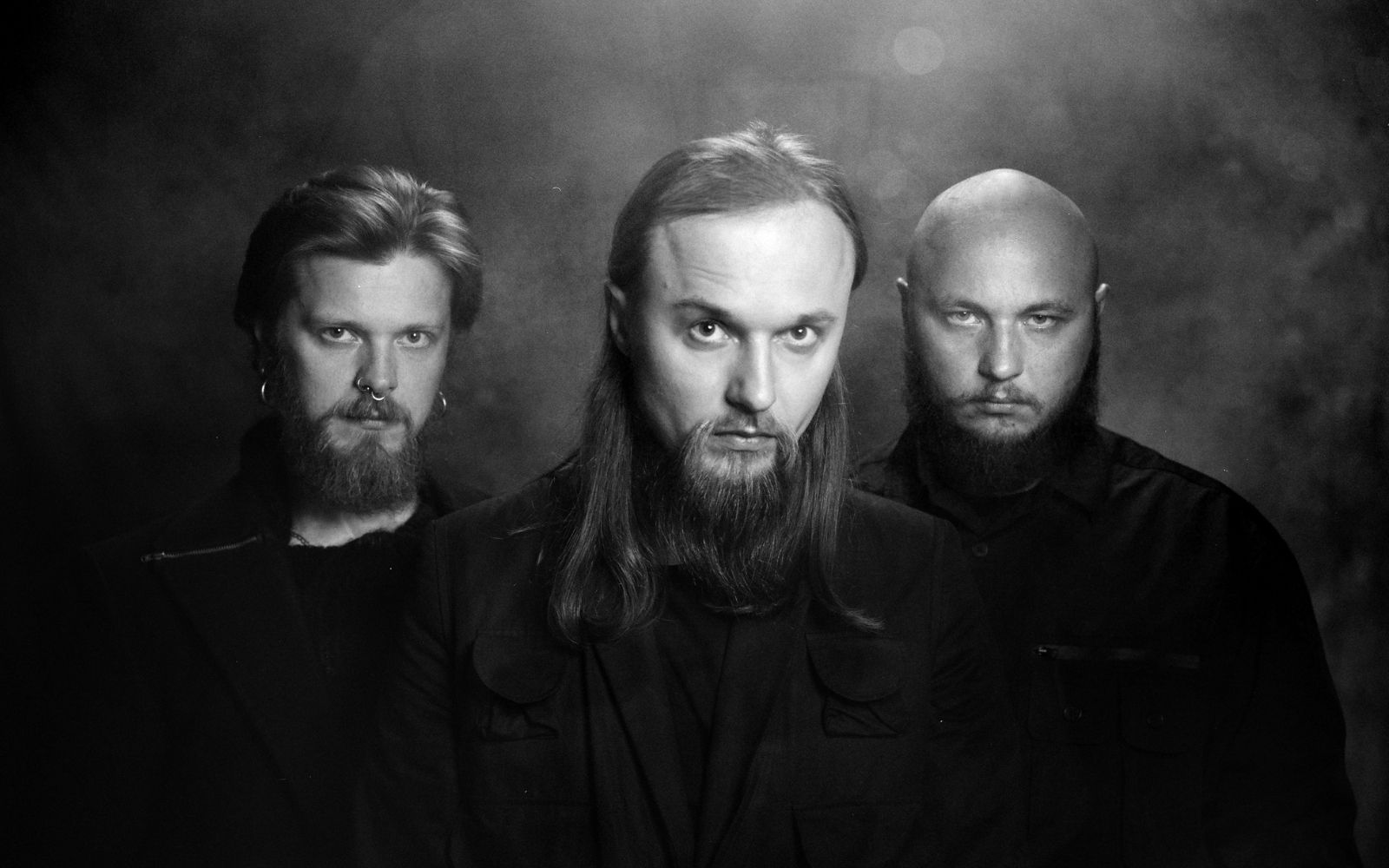
There are few bands out there whose sound is so instantly recognisable.
A Molchat Doma album is typically fuelled by a seemingly chthonic resonance, a melancholic stream of synth-lead sensibilities that cut through the pressure cooker of performative contentment found in modern pop tastes and allows the listener to revel in a sumptuous atmosphere of post-punk malaise.
The Belarusian band’s influence was solidified by their album Этажи (Etazhi) whose oppressive danceability almost singlehandedly revived a gothic sensibility in international pop. Songs such as Судно (Борис Рыжий) or Sudno/Bedpan by Boris Ryzhy insist on a ferocious ability to dance to the ineffable beat of the sadness of the everyday. The band have since continued this mixture of lo-fi aestheticism with continuing new wave and synth-pop influences with their albums Monument and Belaya Polosa.
Check out our gig guide here.
I asked Molchat Doma about the inherent appeal of this sound. “At one point, lo-fi was our way of expressing emotion and preserving a certain atmosphere. It really does give the music a feeling of something raw, a little rough, but very alive. But with the Belaya Polosa album, we moved away from that concept. It sounds completely different. We’ve grown, gained access to new tools and possibilities, and wanted to explore a cleaner, more spacious sound. It’s not a rejection of the past, but rather the next stage of evolution,” says the band.
An inherent consequence of this particular sound has been the band’s association with ‘doomer’ aesthetics, the term associated with resigned depression over the state of the world. “We know that people often associate us with that aesthetic. It’s become part of internet culture, and we’re fine with that. If our music helps someone cope with emotions or find comfort, that means we’re doing something important. That said, we’ve never called ourselves a ‘doomer band’ or tried to fit into any particular genre.”
Molchat Doma’s association with the embrace of nihilistic stupor is not lost on them. Whether one dances through the darkness or loses themselves in its embrace, the band are happy to allow people to work through the embrace of the void. “Some people find a reflection of their own emotions in our music and dive into it to really feel and process everything,” they say. “Others find release through the music and come out of that state. We just create an atmosphere and everyone decides for themselves how to interact with it.”
The band have collectively found many ways to expand on their ideas with multiform musical toolsets, some they value more heavily than others. “We never try to impose our interpretation on the listener. Some elements probably do stay in the background, for example, how much attention we pay to sonic detail, mixing, synth textures, atmosphere. These things aren’t always obvious, but they’re important to us. The influence of the ’90s electronic scene, dance music, minimalism – all of that is present too, but rarely mentioned in the context of Molchat Doma. We like experimenting and looking for interesting solutions, which is why Belaya Polosa sounds so different from our previous records. And the next album will also differ from everything we’ve done before, including Belaya Polosa.”
Despite some of their music pertaining particular lyrical relevance to aspects of their Belarusian upbringing (the above mentioned Sudno’ for example is based on the works of a Belarusian poet), Molchat Doma’s focus is uniquely on the emotional honesty of their unique soundscape.
“We try not to think about how to be appealing to a broad audience. We just do what interests us and try to do it sincerely,” they say. “Maybe that’s the secret: listeners can feel that the music is made without calculation, without the desire to please someone. It’s born out of emotion, out of a search for a sound that feels honest to us. We’ve always strived to be genuine, and maybe that resonates with people from different countries.”
Now that Molchat Doma find themselves in Australia all through December, local audiences can get a taste of the band’s unique sensibilities. One can expect many things from a show like theirs, but the band are clear in their visual direction as well as with their sonic ambition.
“Our concerts aren’t theatrical shows or conceptual performances. It’s more like an energetic exchange between us and the audience. We try to keep the sound powerful, the visuals minimal but striking, and the atmosphere honest. People who’ve been to our shows often say they’re completely different from what they expected, in a good way.”
Molchat Doma are playing the Forum on 17 December. Tickets here.