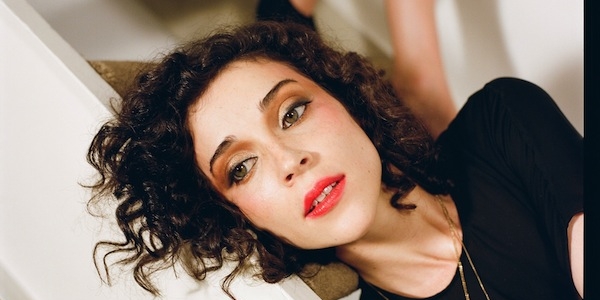
Feminist themes pervade her third album, especially in the tracks, Cruel and Cheerleader. Clark expresses that life would be easier if she conformed, but she can’t and she won’t. This is potently expressed in Cruel’s key lines: “Bodies, can’t you see what everybody wants from you / For you could want that, too / They could take or leave you / So they took you, and they left you / How could they be casually cruel?”
In Cheerleader, Clark sings: “I’ve seen America / With no clothes on / I don’t wanna be a cheerleader no more / I don’t wanna be a dirt eater no more.”
Does she consider herself a feminist? “The truth is I feel like there is some body of knowledge of feminist theory that I don’t know anything about,” Clark concedes. “All I really know about is my own experience.
“I definitely am fascinated with the human experience and a lot of times these archetypes – the down side of the American dream and the housewife who’s on white wine and barbiturates – I have a very soft spot in my heart for these kind of characters. In Surgeon, I take a line from Marilyn Monroe’s diary – ‘best find a surgeon, come cut me open’ – and that really resonates with me.”
Essentially, feminism is rooted in the values of respect and human equality. Progress has been made, but there’s still a long way to go. Some female singer-songwriters have had a profound impact on culture-shifting; some have contributed in their own unique way. Gender inequality contributes to most of the biggest problems in the world today, and Clark refuses to ignore this. In the video for Cruel, Clark is kidnapped by a motherless family, forced to become the wife in the family and then buried alive… no softie, this Annie.
Although born in Oklahoma, Clark grew up in Texas and has been a guitar nerd since picking up her main instrument at the age of 12. She also plays piano, organ and bass, while string, brass and unconventional arrangements continue to render her musical style (a fusion of baroque pop, art/math-rock, cabaret jazz and chamber music) both refreshing and unique. Clark gives new meaning to the term ‘college dropout’, just like Kanye West did back in 2004. As Clark notes, sometimes you learn all you can before being required to forget everything in order to make music and to create what it is that you envision in your own mind. After three years at Berklee University’s College Of Music, Clark dropped out, returned home to Texas and joined The Polyphonic Spree. After departing The Polyphonic Spree, she joined Sufjan Stevens’ touring band in 2006.
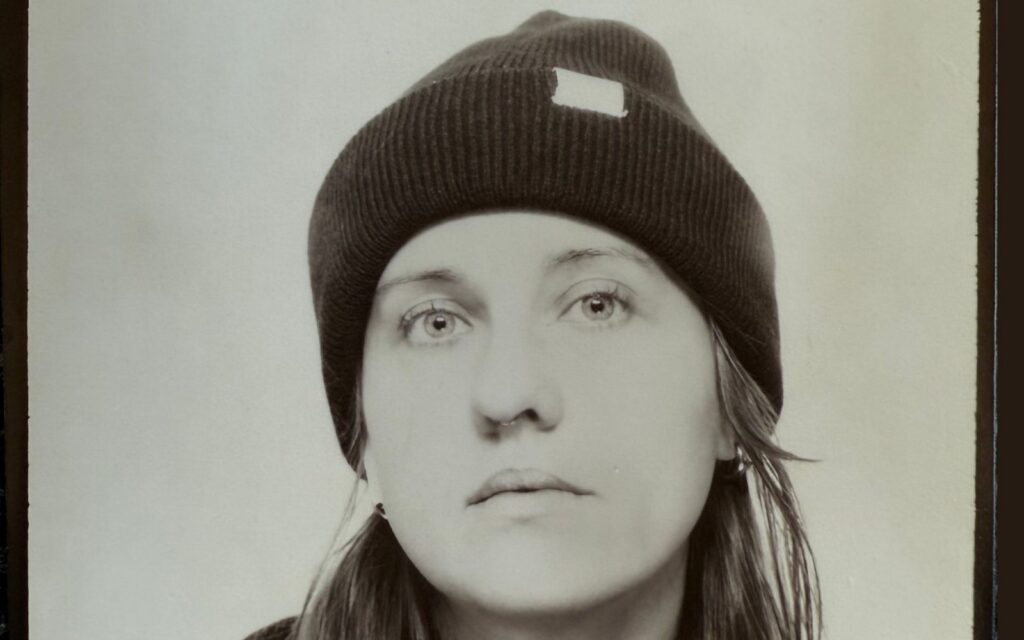
Clark is dreamy, demure, charming, chatty and just old-fashioned nice. Having released three distinctive albums under the moniker of St. Vincent, Clark has grown into an incredibly gifted storyteller, nimble multi-instrumentalist and seasoned performer. She’s supported Arcade Fire, Andrew Bird, Television and Grizzly Bear, and collaborated with Bon Iver and Kid Cudi.
St. Vincent’s debut album, Marry Me (2007), found critics comparing Clark to Kate Bush and David Bowie; sophomore album, Actor (2009), attained commercial success, but it was her exceptional third album – Strange Mercy (2011) – that rendered her an important modern voice. Garnering both critical acclaim and chart success, Strange Mercy manages to be accessible while simultaneously questioning and dissecting pop’s natural order.
Regarded by many critics and music aficionados as one of the best albums of 2011 (including Beat Music Editor’s favourite album of last year), Strange Mercy is a truly notable, poignant and versatile record. From starting in the Polyphonic Spree and then working with Sufjan Stevens, it seems to have been a slow-burning, organically-built achievement for Clark.
“I guess I’ve always tried to release the best record I could every time and not worry too much about the expectation of where it would end up and how it would be received,” says Clark. “I’m glad that I had time to really develop my craft and that people enjoy it along the way.”
Strange Mercy is a beautiful-sounding pop album, enhanced by Clark’s expressive vocals, but upon repeated listens there are sinister, aggressive undertones and manifestations of overwhelming depression as the songs often swell to the point of discomfort. What sort of place was she coming from whilst writing this album?
“2010 was the Year of the Tiger and it was actually quite a sad year for me personally, so I was coming at it needing to pick up a few things,” Clark relates. “My anger gets kind of subverted a lot of times. I always like the idea of a little bit of poison in there with the sugar or the picture that looks pretty pleasant on the surface but there’s one little detail that makes the whole thing creepy or askew.”
On a purely musical level, Clark approached her third album in a completely different manner.
“I did basically the opposite thing to when I wrote my last record,” Clark affirms. “[For my last record] I wasn’t going to touch any physical instruments to write the record, so I wrote everything on the computer and then moved into the studio to try and make pop songs out of them.
“With this record, I knew that it needed to come from the heart first and be simple and direct. I took the songs into the studio with my wonderful friend and producer John Congleton and then we kind of dissected things and put things together and made it more interesting than an acoustic record.” When it’s not Clark’s lyrics or vocal delivery providing the menace, it’s the hissing, fuzzed up guitars.
Clark is a compelling storyteller whether she’s writing from the point of view of a woman with a loved one in jail, as a wife addressing an estranged husband or through characters by the names of Chloe and Elijah. It feels as though the listener is peeking through the shades into the life of a neighbour or friend, but do all these stories carry a personal element or are some of them pure fiction?
“The second you start writing a song it becomes fiction,” says Clark. “That doesn’t mean it’s not true but it becomes a story and it’s more important to me as a songwriter to make a compelling story than it is to tell what I ate for breakfast. The story is really paramount.”
What’s her favourite part of the album? “I really like that solo in Surgeon, that random punk solo that my friend Bobby Sparks played. I really like the riffs of Chloe In The Afternoon. That’s really fun.”
St. Vincent performed solo at the Sydney Festival in January of 2009 and returns to our shores for the Australian debut of her full-band show next month – a much-anticipated tour that follows a hectic February schedule comprising stops in Turkey, Italy, France, the UK, Belgium, Netherlands and Portugal. What’s she looking forward to most about touring Australia this time around? “The weather and the flat whites,” Clark grins. “I’m going to have like, 20 flat whites per day in Australia. The set’s only going to take 20 minutes – we’re going to be caffeine freaks.”
Indeed, caffeine helps when one’s leaping off in new directions all the time. “I’m making a record with David Byrne and we’re working on releasing that this year,” Clark enthuses. “That will be in September and we’re going to tour that as well, so I’ll be on tour the whole year.”
Considering all the touring that she’s done for Strange Mercy, Clark must be getting used to thebase-shifting life. “At this point, I don’t know how else to be,” she muses. “I’ve been touring in bands since I was 21, so I’ve gone all of my adult life knowing I won’t be in any one place for more than a month. I do like it. I don’t even know what else I would do. When I go out on tour, I do get to scavenge through different cultures and later put it into songs. That aspect is really fun. There’s a certain amount of alienation or loneliness that goes along with it, but I’m confident that it’s similar to the alienation that probably everyone feels, so it’s a good problem, you know?”
BY T.S. AND C.L.